


KEB Combivert Repair, Refurbishment & Replacement – F5 Drives, R6 Units, EMC Filters & Spring Brakes
Learn how to identify problems and see why Wake Industrial is the premiere choice for repair, refurbishment, and replacement of these KEB systems. We combine technical expertise with fast, reliable service to minimize your downtime. To receive an industry competitive quote FAST, send an email to sales@wakeindustrial.com or call 1-919-443-0207 to speak with a Wake Industrial representative. No hold, no robots, no mess. You’re going to speak with a real human immediately.
KEB products are renowned the industrial automation space for their performance and reliability. However, even the best equipment can require maintenance or encounter errors over time. This page provides a comprehensive overview of common issues and error codes associated with KEB Combivert F5 drive controllers, R6 regenerative units, Combiline EMC filters, and Combistop spring-applied brakes.
Overview of KEB Combivert Product Lines
KEB’s Combivert line spans multiple product series that work together in motion control systems. The F5 Combivert Axis Drives are advanced frequency inverters (drive controllers) for motor control, the R6 Line Regen Units recapture braking energy to improve efficiency, the Combiline EMC Filters ensure electromagnetic compatibility and clean power, and the Combistop Spring Brakes provide fail-safe braking for motors. Each of these plays a critical role in industrial machines. When any component fails or shows an error, it can bring production to a halt. That’s where Wake Industrial’s repair and refurbishment services come in – we specialize in diagnosing fault codes, repairing electronic boards, replacing worn components, and fully testing KEB Combivert units to restore them to optimal working condition.
In the sections below, we detail each product series, typical error codes or problems to watch for, and how our team can help. Whether your goal is to repair a faulty drive, refurbish a worn brake, or find a replacement unit, Wake Industrial offers a one-stop solution. Click here to navigate to our Contact Us page.
KEB Combivert F5 Axis Drives – Common Issues & Repair
The KEB Combivert F5 series comprises high-performance drive controllers for AC motors, used across industries from packaging and textiles to woodworking. These drives cover a wide power range (from 0.37 kW up to 900 kW) to accommodate diverse automation needs. 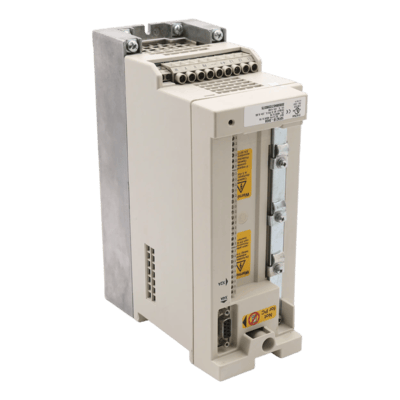 F5 drives feature modular design with flexible I/O and a sensorless vector control algorithm (KEB SMM) for efficient motor operation. An intuitive multilingual interface on the F5 allows technicians to navigate parameters in plain text, simplifying setup and diagnostics, as seen in the 05.F5.B3A-090A. Despite their robust design, F5 drives can experience faults due to electrical stress, environmental conditions, or component aging. When a fault occurs, the drive will typically display an error code on its front panel. Common error codes on Combivert F5 drives include:
| Code | Name / Meaning | Likely Causes | First-Aid Checks | When to Escalate to Wake Industrial |
|---|---|---|---|---|
| E.OC | Overcurrent trip (output current exceeded limit) | Shorted motor/lead, jammed load, failed IGBT, accel ramp too aggressive | Megger motor/cable, inspect for phase-to-phase/ground shorts; lengthen ramp; check load for binding | Repeated E.OC after basic checks, or evidence of blown power devices/current sensors |
| E.OP / E.OV | DC bus overvoltage | Braking energy not dissipated, failed brake chopper/resistor, missing/undersized regen | Verify braking resistor and wiring; check decel ramps; look for regen sizing | Frequent overvoltage during decel, chopper failures, or need to spec an R6 regen solution |
| E.OL | Overload (thermal or torque overload) | Undersized motor/drive, seized mechanics, wrong motor data | Verify nameplate params; measure load current vs. rated; inspect mechanics | Persistent overload with correct setup or evidence of thermal damage |
| E.br | Brake control error | Brake coil open/short, brake not releasing, feedback mismatch | Measure coil resistance & supply; check air gap and mechanical release | Coil rewinds/replacement, drive brake-supply repair, or repeated E.br after mechanical fix |
| E.buS | Fieldbus/comm watchdog timeout | Bad cable, PLC/option card offline, noisy EMC environment | Inspect bus cabling/terminations; cycle the network node; check EMC grounding | Intermittent bus loss traced to drive comms hardware or option card faults |
| E.EnC / E.Enc1/2 | Encoder/resolver feedback error | Broken cable, miswire, failed encoder, noise | Scope A/B/Z (or resolver signals); reseat connectors; verify shield/ground | Bad feedback interface on drive, repeated faults under load despite good wiring |
| E.OH | Overtemperature | Clogged heatsink/fan, high cabinet temp, high carrier freq | Clean cooling path; verify fans; reduce carrier freq if allowed | Thermal sensor/fan drive failures or recurring OH under normal loads |
| E.EEP | EEPROM/parameter memory error | Parameter corruption, control board fault | Backup/restore params; reinitialize defaults | Control PCB repair/replacement if memory errors persist |
KEB Combivert R6 Line Regen Units – Common Issues & Repair
The KEB R6 Combivert Line Regen series consists of regenerative drive units that absorb and return excess energy from motor braking back to the AC line. Instead of wasting braking energy as heat in resistors, an R6 unit actively feeds it into the facility power grid or supply bus. This not only improves energy efficiency but also reduces heat and wear on braking components. 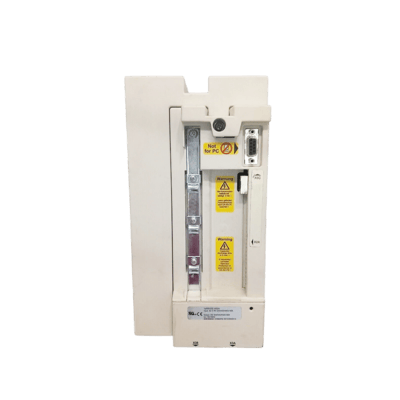 The R6 series was a significant technological advancement – it effectively replaces traditional brake resistors by using KEB’s proprietary Natural Current Modulation (NCM) control algorithm to synchronize with line power. These units are built to integrate seamlessly alongside standard drives (like the F5), automatically activating during motor deceleration to manage regenerative power. The R6 line supports flexible three-phase input voltages (commonly 230 V or 480 V AC) and can even be parallel for larger systems, making them suitable for applications like elevators, cranes, and test stands where heavy braking occurs.
Despite their robust design, R6 regen units can encounter faults due to issues like improper installation, line disturbances, or internal component failures. The R6 will display error code on its status panel or communicate them to the master drive.
Some typical error codes and problems on R6 units include:
| Code / Message | Name / Meaning | Likely Causes | First-Aid Checks | When to Escalate to Wake Industrial |
|---|---|---|---|---|
| ERROR net | Missing/incorrect line phase or sync | Blown input fuse, wiring error, phase loss | Verify all 3 phases present; check fuses/contactor; confirm phasing | Input rectifier/line-sense circuit repair; repeated net errors with good mains |
| E.OC / Overcurrent | Regen current too high / ground fault | DC bus short, undersized R6, transient surge | Check DC link wiring, insulation; review regen sizing & setpoints | IGBT/gate driver damage, current sensor faults, repeated trips under spec load |
| Overvoltage | DC link exceeded safe level | R6 disabled/late enable, saturated capacity, line disturbance | Confirm enable timing; check DC cap bank; verify mains stability | R6 power stage repair, firmware/parameter review for sync & response |
| Undervoltage | DC link too low during feed-in | Mains dip, contactor drop-out, wiring | Monitor line voltage; check control power; review contactor logic | DC link/capacitor health issues, control-power stage faults |
| Sync / Line-freq error | Cannot lock to mains frequency | Out-of-tolerance Hz, phasing noise, PLL issue | Measure line Hz; inspect EMC/filters/grounding | PLL/measurement circuitry repair; persistent sync faults across sources |
| E.Puci / E.Puch | Power unit ID invalid/changed | Power board swap, firmware/config mismatch | Reload correct firmware/params; reseat ribbons | Board-level rework or NVM repair if ID faults persist |
KEB Combiline EMC Filters – Ensuring Clean Power and Compliance
KEB’s Combiline EMC filter series is designed to maintain electromagnetic compatibility in industrial installations. These filters are typically installed on the input or output of drives to suppress electrical noise and interference. In modern automated factories, with many variable frequency drives (VFDs) and servo systems operating, meeting EMC standards is crucial both for regulatory compliance and for the reliable operation of sensitive equipment. 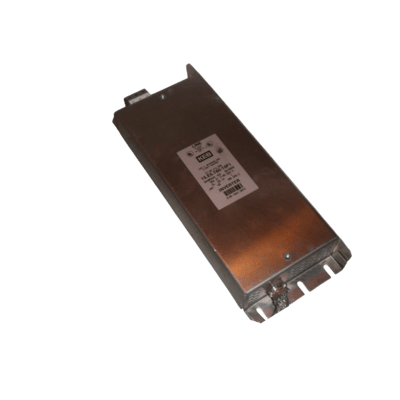 The Combiline filters are built specifically to help customers meet stringent standards (like EN 61800-3 for drive systems) by attenuating conducted and radiated interference. They come in various configurations: line filters for mains input, motor output filters (sine wave filters), and harmonic filters, all under the Combiline family.
Since EMC filters are passive components (consisting of inductors, capacitors, and resistors), they don’t have digital error codes like drives do. However, they can still fail or cause issues in your system if they degrade. Here are some common problems related to Combiline EMC filters and how we address them:
| Symptom / Fault | What It Means | Likely Causes | Quick Tests | Corrective Actions |
|---|---|---|---|---|
| Breaker/RCD nuisance trips | Excess leakage/short inside filter | Aged capacitors, moisture ingress, wiring nick | Insulation test; ESR on caps; inspect enclosure for moisture | Replace caps, reseal/replace filter; ensure correct leakage rating for site |
| Excess radiated/conducted EMI | Filter not attenuating noise | Undersized filter, wrong type (need HF/sine), poor layout | Check currents vs. rating; spectrum snapshot; inspect grounding | Up-rate filter; add/replace with HF/sine output filter; optimize cable routing/shields |
| Overheating filter/chokes | Thermal stress at/over rating | High harmonic currents, loose lugs, poor ventilation | IR temp check; torque terminals; airflow inspection | Correct sizing; retorque; improve cooling; replace heat-stressed components |
| Audible buzz / vibration | Saturating choke or loose core | Overcurrent spikes, mechanical looseness | Current waveform check; physical inspection | Replace saturating unit; refasten cores/mounts; address drive PWM with output filter |
| Premature capacitor failure | High ripple or temp | PWM harmonics, ambient heat | ESR trends vs. spec; ripple current calc | Fit ripple-rated caps; add output sine filter; improve cabinet cooling |
| Ground noise coupling | Poor EMC bonding path | Long PE runs, paint/oxide on bonds | Continuity/impedance of bonds; inspect paint under lugs | Star-point bonding; clean/bite-through bonds; shorten PE runs |
It’s worth noting that a healthy EMC filter not only protects other equipment but can also prevent drive trips. For example, if excessive electrical noise is present, drives might register false triggers on their protection circuits (like ground fault alarms or encoder errors). By maintaining your Combiline filters, you help ensure all connected drives and controls operate smoothly. Need a replacement filter? Send an email to sales@wakeindustrial.com and you'll receive a quote within 15 minutes.
KEB Combistop Spring Brakes – Maintenance & Replacement
The Combistop Spring Brake series by KEB provides fail-safe braking for electric motors and machinery. These are spring-applied, electrically released brakes – meaning they use spring force to engage (lock) the motor shaft when power is removed, and they release (free the shaft) when powered with electricity. This design makes them inherently safe: if power is lost or an emergency stop is triggered, the brake engages and holds the load. 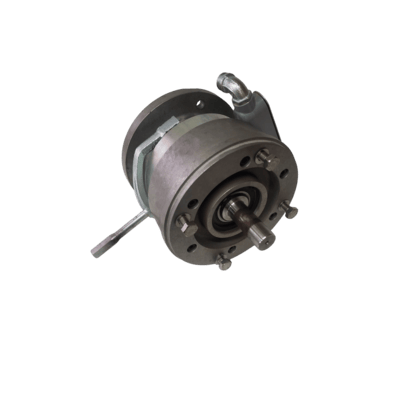 Combistop brakes are used in elevators, cranes, wind turbines (yaw and rotor brakes), servo axes, and other systems where holding position or controlled stopping is critical. They are built with high-quality friction materials and robust coils, offering reliable performance over many cycles. Some models even support energy recuperation features to reduce coil power draw and heat.
While mechanical in nature, these brakes do interface with the drive controllers (like the F5 drives often have a brake control output). Therefore, brake issues can manifest as drive errors or physical symptoms in the machine. Common issues and maintenance needs for Combistop spring brakes include:
| Symptom / Fault | What It Means | Likely Causes | Quick Checks | Corrective Actions |
|---|---|---|---|---|
| Won’t release | Coil not energizing or mechanical bind | Burned/open coil, wrong voltage, jammed armature | Measure coil resistance/voltage; test manual release; check rectifier | Replace/rewind coil; correct voltage/rectifier; clean/relube guides |
| Slips under load | Insufficient torque (air gap too large/wear) | Worn friction, mis-set air gap, oily surfaces | Measure air gap vs. spec; inspect friction for glazing/oil | Replace disc/linings; set air gap; clean mating surfaces |
| Drags / overheats | Brake not fully disengaging | Air gap too small, warped disc, residual magnetism | Run-out check; thermal check after release | Re-set air gap; replace warped/friction parts; demagnetize if needed |
| Noisy (squeal/chatter) | Uneven contact or vibration | Glazed pad, debris, misalignment | Visual inspection; clean; check pilot fit | Resurface/replace friction; realign mounting; secure fasteners |
| Intermittent drive E.br | Brake control/feedback mismatch | Coil sag, faulty sensor/feedback, timing | Scope brake supply; check feedback wiring/logic | Repair brake supply on drive; replace sensor; tune timing params |
| RCD trips on engage | Rectifier/cabling issue | Faulty rectifier, wiring nick to ground | Rectifier diode test; insulation test | Replace rectifier; repair wiring; ensure correct DC coil voltage |
Why Choose Wake Industrial for KEB Combivert Service?

If you’re experiencing issues with any KEB Combivert F5 drives, R6 regen units, EMI/EMC filters, or Combistop brakes, don’t hesitate to reach out to Wake Industrial. Call us at 1-919-443-0207 or send an email to sales@wakeindustrial.com. We offer free quotes – just tell us the part number and the fault symptoms (or error code). Our team will promptly assess and provide you with repair options or replacement availability. With industry-leading expertise and a commitment to fast, reliable service, Wake Industrial is your premier source for KEB Combivert repair, refurbishment, and replacement. Contact us today to get your automation system back on track and minimize your downtime!
Popular KEB Products
BR Braking Resistors
G6 Combivert IO Inverters
H6 Combivert Multi-Axis Drives
SM Synchronous Servo Motors
P1 Encoders and Brakes
Request a Quote

Cary, NC 27513











