


RS-232, RS-422, and RS-485 Explained: How Serial Communication Standards Work in Industrial Automation
29 May, 2026 | RS-232 industrial communication, RS-422 serial communication, RS-485 industrial automation, serial interface standards, industrial serial communication, RS-232 vs RS-485, RS-422 vs RS-485, legacy automation communication, control system communication, operator panel communication, industrial communication modules, Wake Industrial automation parts
RS-232, RS-422, and RS-485 are some of the most common serial communication standards used in industrial automation. Before Ethernet-based networks became common on plant floors, these standards gave controllers, operator panels, instruments, drives, I/O devices, and peripheral equipment a reliable way to exchange data. Even today, they remain important in legacy machines, retrofit projects, test stations, embedded devices, and mixed-generation systems where serial hardware still performs an essential job.
For maintenance teams, the difference between these standards is not just academic. A machine may have a connector that looks familiar, but the electrical interface behind that connector determines whether communication works correctly or fails completely. RS-232, RS-422, and RS-485 each handle signal transmission differently, and those differences affect cable length, noise resistance, device count, wiring layout, and replacement compatibility.
That is why serial communication still matters when troubleshooting older industrial systems. A communication fault can look like a bad controller, failed operator panel, damaged module, or software problem, when the real issue is a mismatched interface, incorrect wiring, missing termination, poor shielding, or a replacement device that does not match the original communication standard. Wake Industrial supports facilities that need replacement, repair, and sourcing help for industrial automation hardware used in legacy and mixed-generation systems. If a failed communication component is causing downtime, call Wake Industrial at 1-919-443-0207, email sales@wakeindustrial.com, or submit a quote request through the form on this page.
What Are RS-232, RS-422, and RS-485?
RS-232, RS-422, and RS-485 are serial communication standards. They define how electrical signals are transmitted between devices, but they do not automatically define the full communication protocol. In simple terms, the standard describes the physical communication method, while the controller, software, or device protocol determines what the exchanged data means.
That distinction is important in industrial automation. A port may use RS-485 wiring, but the actual data being carried over that wiring could belong to a field device protocol, a proprietary machine interface, a diagnostic channel, or a simple ASCII data exchange. The same idea applies to RS-232 and RS-422. The electrical layer gives the system a way to move data, while the higher-level protocol gives that data meaning.
RS-232 is usually the simplest of the three standards. It is commonly used for point-to-point communication between two devices, such as a PC and a controller, a service tool and a machine interface, or a terminal and a control device. Because it is single-ended, the signal is measured against a common ground rather than through a differential pair.
That simplicity made RS-232 widely used for programming ports, diagnostic ports, local terminals, configuration tools, and short service connections. A technician working on a legacy machine may still use an RS-232 connection to access parameters, load settings, troubleshoot faults, or communicate with a device during setup.
The tradeoff is that RS-232 is not designed for long cable runs or harsh electrical environments. Around motors, drives, contactors, relays, and high-power switching devices, electrical noise can become a problem if the wiring is poor or the distance is too long. RS-232 is useful, but it is best suited to short, direct communication paths where only two devices need to talk.
RS-422 improves on RS-232 by using differential signaling. Instead of measuring one signal against a common ground, RS-422 sends signals over a pair of conductors and the receiver reads the voltage difference between them. This makes the communication more resistant to electrical noise.
In industrial systems, that added noise immunity can be valuable. Machines often place communication wiring in cabinets or cable routes that also contain power wiring, motor leads, relays, drives, and other interference sources. RS-422 is better suited for longer runs than RS-232 and can be used where reliable serial communication needs to move beyond a short cabinet-level connection.
RS-422 is commonly associated with full-duplex communication because separate wire pairs can be used for transmit and receive. That allows data to move in both directions at the same time when the connected devices and application support it. For fixed controller-to-device links, operator interface connections, and machine communication paths that need stronger signal integrity than RS-232, RS-422 can be a practical option.
RS-485: Multi-Device Serial Communication for Industrial Systems
RS-485 is one of the most common serial standards in industrial environments because it combines differential signaling with multi-drop capability. Multiple devices can share the same communication bus, which makes RS-485 useful for distributed equipment, serial device networks, remote panels, instrumentation, and systems where several field devices need to communicate over the same wiring structure.
RS-485 is often used in half-duplex systems, meaning devices take turns transmitting over the same pair of wires. It can also appear in four-wire arrangements depending on the application. The main advantage is that RS-485 can support longer cable distances and more devices than a simple RS-232 connection.
However, RS-485 depends heavily on correct installation. Termination, wiring polarity, shielding, grounding, cable routing, and device addressing all matter. A system may have the correct RS-485 hardware installed and still experience communication faults if the bus is wired incorrectly, if a device is configured differently from the rest of the network, or if a replacement part changes the electrical behavior of the line.
RS-232 vs. RS-422 vs. RS-485
Standard | Signal Type | Typical Layout | Common Use in Automation | Main Strength | Common Risk |
RS-232 | Single-ended | Point-to-point | Programming ports, diagnostics, service connections, local terminals | Simple and widely supported | Short distance and weaker noise immunity |
RS-422 | Differential | Point-to-point or one driver with multiple receivers | Longer serial links, operator interfaces, controller communication | Better noise resistance than RS-232 | Wiring pairs and polarity must be correct |
RS-485 | Differential | Multi-drop bus | Distributed serial devices, remote equipment, Modbus RTU-style networks | Strong industrial communication option for multiple devices | Termination, addressing, and bus wiring errors |
Why Serial Communication Still Matters in Legacy Machines
Industrial Ethernet has become common in newer automation systems, but serial communication has not disappeared. Many production machines still use RS-232, RS-422, or RS-485 because the original system was designed around those interfaces and continues to run reliably. Replacing every serial device in a working machine is often unnecessary, especially when the issue can be solved by sourcing the correct communication module, panel, controller, cable, or interface device.
Serial communication also remains common because many simple devices do not need the complexity of Ethernet. Scanners, displays, meters, weigh scales, temperature controllers, test instruments, and embedded devices may only need to send limited data at predictable intervals. For those applications, serial communication can still be stable, cost-effective, and easy to maintain.
The challenge comes when replacement hardware is selected without checking the communication standard. A technician may find a part that looks close, but if the interface does not match the original design, the device may not communicate. That can lead to wasted troubleshooting time, unnecessary downtime, and incorrect assumptions about the controller, device, or machine program.
Products That Use RS-232, RS-422, and RS-485
Serial communication standards appear across many types of automation hardware, including communication modules, operator panels, servo drives, industrial PCs, and controller interfaces. The following examples are available through Wake Industrial and were selected because their serial communication support can be cross-checked against manufacturer documentation.
Beckhoff EP6001-0002 Serial Interface Module
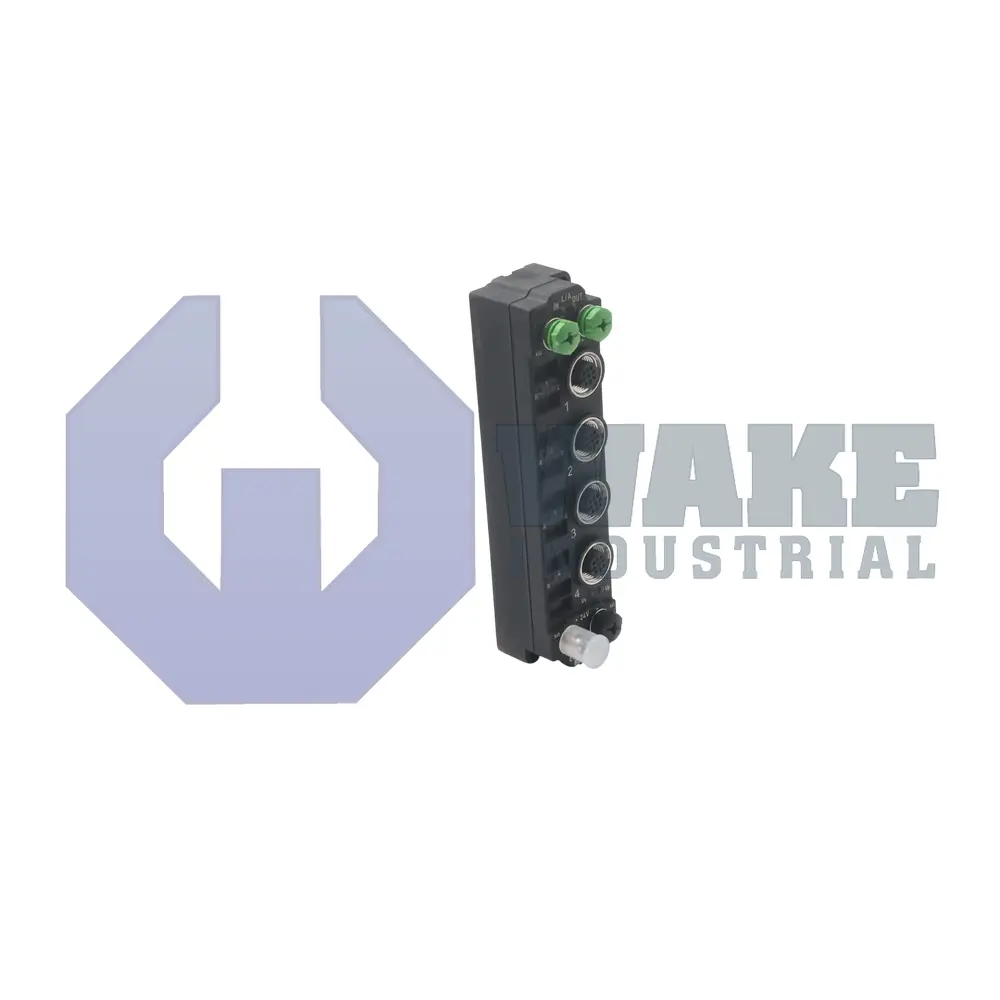
The Beckhoff EP6001-0002 is a one-channel serial interface module from the EP Digital Input Modules series. It is designed to connect serial devices into an EtherCAT-based automation system while allowing the serial data to pass transparently to the higher-level controller. In practical terms, it can help connect devices such as barcode scanners, serial terminals, measurement instruments, and other equipment that still communicates over a standard serial interface.
The EP6001-0002 supports RS-232 and RS-422/RS-485 interfaces. That makes it useful in systems where the main machine architecture may be based on EtherCAT, but certain field devices still rely on serial communication. The active serial communication channel operates independently of the higher-level bus system, which helps preserve the behavior of the connected serial device while still integrating it into the larger control platform.
B&R Automation 4C2000.01-110 Panel Controller
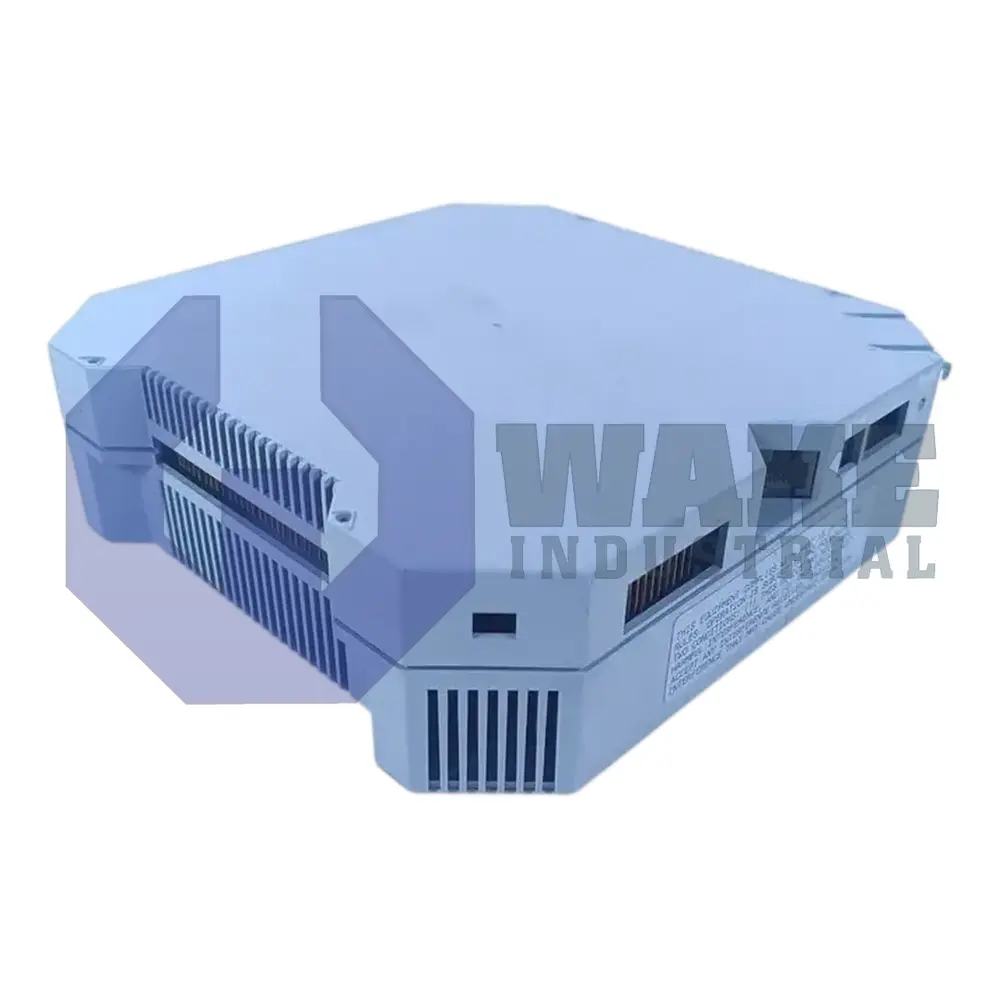
The B&R Automation 4C2000.01-110 is a 4C PanelWare Panel controller used in operator interface and machine control applications. It combines controller memory, a real-time clock, 24 VDC supply requirements, and multiple serial communication interfaces in a panel-based automation device.
The 4C2000.01-110 includes two RS-232 interfaces and one electrically isolated RS-485/RS-422 interface. That interface mix makes it useful in older and mixed-generation systems where the panel controller may need to communicate with local service tools, machine devices, and more noise-resistant serial links at the same time. The isolated RS-485/RS-422 interface is especially relevant in plant environments where electrical noise and ground differences can interfere with communication reliability.
Bosch Rexroth BTV06.1HN-RS-FW Miniature Control Panel
The Bosch Rexroth BTV06.1HN-RS-FW is a Miniature Control Panel used for local machine interaction. It combines display, keypad, I/O, and serial communication capability in a small control interface. In practical use, this type of panel may serve as the local point where operators view machine status, enter commands, respond to prompts, and interact with the control system.
The BTV06.1HN-RS-FW supports RS-232, RS-422, and RS-485 communication. That gives the panel flexibility in different machine designs. RS-232 may be used for shorter local links, while RS-422 or RS-485 may be selected when the system needs better noise resistance or a more industrial communication layout.

Final Thoughts
RS-232, RS-422, and RS-485 are older serial standards, but they remain active in real industrial automation systems. RS-232 is useful for short point-to-point connections, programming ports, and diagnostic access. RS-422 provides better noise resistance for longer and more robust serial links. RS-485 adds multi-drop capability, making it valuable for shared industrial communication buses.
Wake Industrial helps plants reduce downtime by supplying replacement, repair, and refurbishment options for industrial automation hardware, including communication modules, operator panels, controllers, drives, and related components. If an RS-232, RS-422, or RS-485 communication issue is slowing production, contact Wake Industrial with the part number and fault details. Call 1-919-443-0207, email sales@wakeindustrial.com, or request a quote using the form on this page to get support for the correct replacement or repair path.
Request a Quote

Cary, NC 27513












