


The Effect of Heat on Industrial Motors, Drives, and Equipment
20 June, 2025 | industrial motor heat damage, variable frequency drive overheating, Bosch Rexroth drive failure, overheating electric motor, VFD temperature fault, industrial automation cooling, manufacturing motor maintenance, servo motor overheating, drive controller thermal issues, Bosch Rexroth motor repair, MSK, DDS, HDD, DKC,
The Effect of Heat on Industrial Motors, Drives, and Equipment
Excess heat is often called the “silent killer” of industrial equipment. In manufacturing plants and other industrial settings, high temperatures can wreak havoc on electric motors, variable frequency drives (VFDs), and related automation components. Overheating not only reduces performance and efficiency, but also dramatically shortens the lifespan of these devices and can even create safety hazards. We’ll explore how heat impacts industrial motors and drives, explain the technical reasons behind heat-related performance degradation and failures, and offer practical maintenance tips to prevent industrial motor heat damage and Bosch Rexroth drive failures. By understanding and managing thermal stress, you can keep your operations running smoothly and avoid costly downtime. Wake Industrial offers comprehensive warranty backed replacements and repairs for motors damaged by excessive heat. Call 1-919-443-0207 or use the quote form on this page to receive a quote NOW.
(Note: Wake Industrial is not an authorized distributor of Bosch Rexroth but offers extensive repair services and refurbished equipment.)
Why Overheating is a Big Deal in Industrial Equipment
In heavy manufacturing environments, machinery often operates around the clock, sometimes in hot ambient conditions or near heat-generating processes. When motors or drives run too hot, their performance can suffer, and critical components begin to break down. Elevated temperatures degrade performance, impair reliability and shorten service life of industrial electronics. For motors, excessive heat weakens the insulation on windings and can lead to electrical shorts or motor burnout. For drives and electronic controls, heat puts stress on semiconductors and temperature-sensitive parts like capacitors, increasing the likelihood of failure. In essence, an overheated motor or VFD might still run for a time, but it’s living on borrowed time – and may be one power surge or hot summer day away from a breakdown.
Performance impacts are noticed even before outright failure. Motors running above their ideal temperature may produce less torque and can trip thermal overload protections, slowing down your production. VFDs that are too hot might automatically derate or intermittently shut down to protect themselves. Meanwhile, the safety implications of overheating should not be ignored: overheated electrical equipment can become a fire hazard or cause burns if touched. In fact, motor surfaces can exceed 60 °C during operation in normal conditions, and even higher if something is wrong, so personnel must exercise caution. Clearly, controlling heat is critical for both industrial equipment maintenance and workplace safety.
How Heat Impacts Industrial Motor Performance and Lifespan
Industrial electric motors – whether AC induction motors or high-precision servo motors – are designed with specific temperature limits. Most motors have an insulation class (e.g. Class F or H) indicating the maximum safe winding temperature. Pushing a motor beyond these thermal limits has an outsized effect on its longevity. Maintenance experts widely agree that for every 10 °C that a motor’s windings exceed their rated temperature, the insulation life is cut in half. This is a rule of thumb based on the Arrhenius equation for chemical reaction rates, and it highlights how even modest overheating dramatically accelerates insulation degradation. For example, if a motor would normally last 20 years under nominal conditions but it runs 40 °C above its rating, its expected life plummets to roughly 1/16 of the normal span (about one year). In industrial terms, that could mean a motor that should have powered a production line for decades might burn out in just a year or two due to chronic overheating.
Overheated motors also show immediate performance issues. As winding temperature rises, the resistance of the copper windings increases, which can reduce current and torque. The motor may not deliver the required power or may stall under loads it previously handled. Many modern motors include thermal sensors embedded in the windings or bearings; these will trip alarms or shutdowns if temperatures get too high – a clear sign that the motor is in distress. It’s worth noting that a significant portion of motor failures stem from insulation breakdown. Industry studies indicate roughly 30% of motor failures are due to insulation failure, and 60% of those insulation failures are caused by excessive heat. In short, heat is one of the leading root causes of motor downtime in manufacturing.
Beyond the windings, heat also affects motor bearings and lubrication. Bearings are designed to operate within a certain temperature range, and overheating can cause the lubricant to break down or carbonize. Lubrication failure in the bearings is the most common reason for temperature rise and rapid deterioration in rotating machinery. As bearings lose lubrication or are exposed to excessive internal heat from overload, they experience metal-to-metal contact and wear out faster. This creates a vicious cycle: worn bearings generate even more friction and heat, which can eventually lead to catastrophic bearing failure or motor seizure. Excessive heat can also cause the bearing seals to harden or melt, allowing contaminants in. In practical terms, a motor running hot to the touch is likely also cooking its bearings – a recipe for unplanned downtime.
Bosch Rexroth’s IndraDyn series servo motors such as the MSK IndraDyn S motors are built for high performance in automation. Even these advanced motors must operate within specified thermal limits to maintain their efficiency and lifespan. While specific models vary, a typical Rexroth motor might use Class F insulation (rated for 155 °C) and have an internal temperature sensor to prevent overheating. The Rexroth MSK076C servo motor, for instance, is an industrial synchronous motor with sophisticated design, yet it still relies on proper cooling in the application environment. If such a motor is overworked without adequate cooling or runs in a high ambient temperature, it will trigger its temperature sensor or eventually suffer insulation damage. The bottom line: no matter the brand or model, keeping motor temperature under control is key to preserving performance. If your MSK or other Bosch Rexroth motor is suffering from heat damage contact Wake Industrial immediately via 1-919-443-0207 or sales@wakeindustrial.com to get expert help repairing your motor.
| INSULATION CLASS STATS | |||||
|---|---|---|---|---|---|
| Insulation Class | Max Ambient Temperature | Max Temperature Rise | Hot Spot Allowance | Max Winding Temperature | Typical Applications |
| A | 40 °C / 104 °F | 60 °C / 140 °F | 5 °C / 9 °F | 105 °C / 221 °F | Obsolete; low-power equipment |
| B | 40 °C / 104 °F | 80 °C / 176 °F | 10 °C / 18 °F | 130 °C / 266 °F | Small motors, household appliances |
| F | 40 °C / 104 °F | 105 °C / 221 °F | 10 °C / 18 °F | 155 °C / 311 °F | Standard for industrial motors, pumps, fans |
| H | 40 °C / 104 °F | 125 °C / 257 °F | 15 °C / 27 °F | 180 °C / 356 °F | High-performance or harsh-duty motors |
| N | 40 °C / 104 °F | 150 °C / 302 °F | 15 °C / 27 °F | 200 °C / 392 °F | Aerospace, specialty motors |
How Heat Affects Variable Frequency Drives and Electronic Drives
Variable frequency drives and other power electronic controllers are just as susceptible to heat – if not more so – than motors. Modern VFDs pack a lot of high-power semiconductor components (IGBTs, rectifiers, etc.) into compact units. As a result, VFDs are “hot” in a literal sense: the dense electronics can generate intense heat during operation, and without proper cooling, this heat has nowhere to go. Most VFDs used in industrial automation are specified to run in ambient temperatures of about 0 to 40 °C without derating. For instance, Bosch Rexroth’s IndraDrive Cs series drive controllers are rated for full performance up to 40 °C ambient, and if you need to run them in hotter conditions (up to 55 °C), the output power must be derated according to a factor (about 2% power reduction per degree above 40). Operation beyond the 55 °C limit is not allowed at all, which underscores how seriously manufacturers take these temperature thresholds.
Inside a VFD, the components most vulnerable to heat are typically the electrolytic capacitors, power transistors, and circuit boards. Excess heat – often caused by clogged cooling vents or dust buildup – can lead to blown capacitors, short circuits, or accelerated wear of many components. Capacitors are especially prone to heat-related failure: they contain electrolyte fluids that dry out faster at high temperature. In fact, capacitors are extremely temperature sensitive; operating them above the manufacturer’s recommended temperature (even by only a few degrees) will significantly reduce their lifespan, as the electrolyte evaporates more quickly. What might have been a 10-year life capacitor could fail in a couple of years if it's consistently running too hot. Likewise, the semiconductors in a drive may derate their current capacity at elevated junction temperatures, meaning an overheated drive cannot deliver the same current to the motor and may trigger fault codes.
Manufacturers implement various cooling methods in drive designs. Many smaller VFDs use passive cooling (heat sinks and fans) to move heat out of the unit, while larger drives or enclosed drive cabinets might use active cooling like air conditioners or water-to-air heat exchangers. For example, Bosch Rexroth Indramat drives in the DDS series are built with internal cooling fans to force air over their heat sinks. The Rexroth HDD drive controllers even come with an integrated blower fan for internal air cooling to handle the heat generated at high output currents. These design features are there to maintain safe operating temperatures. However, if those fans fail or vents become blocked, the drive can quickly overheat. It’s not uncommon in manufacturing plants to find a VFD that has tripped on an “over-temperature” fault simply because its cooling fan died or its filter is clogged with dust and oil from the production environment.
Beyond performance loss, an overheated VFD poses a risk of sudden failure that can halt a production line. Most VFDs will try to protect themselves by shutting down when internal temperatures get excessive. But if the thermal protection fails or is set improperly, components could literally burn out. The cost of a drive failure is twofold: the replacement or repair cost, and the downtime cost of lost production. In industries like food processing or materials manufacturing where VFDs often reside in sealed NEMA 12 or NEMA 4X enclosures (to keep out dust or moisture), the heat issue is even more critical – those sealed enclosures trap heat, so you must actively remove it with fans or coolers. Temperature inside an enclosure can rise well above ambient if not managed, creating a hot spot that bakes the drive electronics. That’s why specifying the right cooling and regularly cleaning filters is a vital part of industrial equipment maintenance for drives.
Wake Industrial is on standby to help you deal with heat damaged drives whether its a DDS02.1-A050-DA02-01-FW, HDD02.2-W040N, DKC01.3-016-7-NN-FW, or other Bosch Rexroth drive model, our team has years of experience in diagnosing and repairing heat damaged equipment. Just fill out the quote form or call 1-919-443-0207 and our team will get you a quote in as little as 15 minutes during business hours.
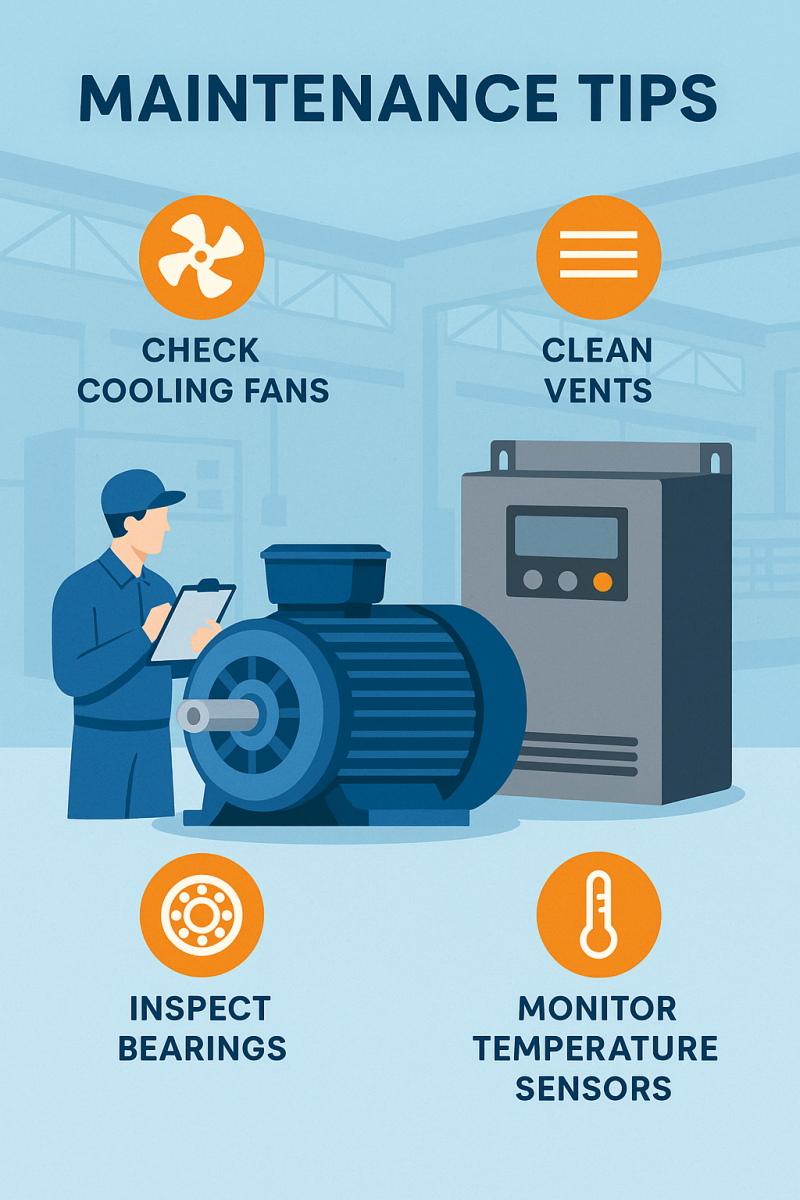
7 Maintenance Tips to Prevent Heat-Related Damage
Thermal issues in industrial motors and drives are largely preventable with proactive maintenance and smart operating practices. Here are some actionable tips to help mitigate heat-related damage and ensure your equipment stays within safe temperatures:
Keep It Clean and Cool
Regularly clean air filters, vents, and cooling fans on motors and drives. Dust and grime buildup is a leading cause of heat accumulation, as it insulates surfaces and blocks airflow. Excessive contamination in a VFD can turn into excess heat because the cooling can’t work properly. For motors, ensure that cooling fins are not clogged and that any auxiliary fans (like on high-power motors) are operational. In high-dust environments (wood shops, textiles, etc.), consider using filtered enclosures or positive pressure cabinets to keep contaminants out.
Ensure Adequate Ventilation
Check that drive enclosures or motor control panels have sufficient ventilation or cooling systems for the ambient conditions. If your facility is not air-conditioned and temperatures routinely exceed 40 °C in summer, recognize that standard drives will need derating or extra cooling. You may need to install cabinet fans, ventilation louvres, or even air conditioning units for critical drive cabinets. Make sure there’s space around motors and drives as recommended by the manufacturer for heat dissipation – crowded panels with no clearance can lead to heat buildup. Also verify that cooling fans are functioning – these have a finite life and often fail after a few years. A small investment in replacing a $50 cooling fan can save you from replacing a $5,000 drive.
Monitor Operating Load
Often overheating is a symptom of the motor or drive being pushed beyond its design limits. Avoid overloading motors – consistently running a motor near or above its rated full load amps (FLA) will cause excessive heating. Similarly, ensure VFDs are sized with some headroom; a drive running at 100% capacity continuously will run hotter than one sized at 125% capacity for the same load. If your motor frequently trips on overload, that’s a clear sign it’s either undersized or needs maintenance. Either reduce the load, improve cooling, or consider a higher-rated motor/drive for the application. Using equipment beyond recommended limits “by choice or accident” will decrease its lifespan, so always operate within the specs.
Check Electrical Connections
As part of routine maintenance, tighten the terminals and inspect wiring on motors, drives, and associated control gear. Loose or corroded connections cause higher resistance, which generates heat under current. This can lead to burned connector lugs or even electrical fires. During scheduled downtime, use a thermal imaging camera to scan junction boxes and drive cabinets – this can easily pinpoint a hot connection that needs tightening. It’s far better to re-tighten a lug than to discover a burnt wire after it has already caused a failure.
Maintain Bearings and Lubrication
For motors, never overlook the mechanical side of heat management. Keep the bearings properly lubricated on the schedule recommended (too little grease causes friction heat; too much grease can also cause heat and drag). Use the correct grease type for high-temperature operation if your motor runs hot. Listen for any bearing noise (grinding or squealing) and check for vibration – these often precede a heat-inducing bearing failure. If a motor’s bearings are running hot to the point of smoking or causing the casing to be untouchable, you should shut it down and service or replace the bearings. Remember that excessive bearing temperature often originates from lubrication failure or overload, so address the root cause by re-lubricating or reducing the mechanical load.
Utilize Thermal Protection and Monitoring
Make sure all built-in thermal protection devices are functional. Many motors have thermostats or thermistors in their windings – ensure these are correctly connected to drives or motor starters so they can trip the circuit or alarm when necessary. Configure VFD parameters for over-temperature alarms at conservative levels. If the drive allows it, logging temperature over time can be useful. In critical systems, consider external temperature sensors and alarms on motor bodies or in control panels. Some facilities use continuous thermal monitoring or IIoT sensors that send alerts if temperatures exceed preset thresholds. Such measures can prompt maintenance intervention before a failure happens.
Environmental Controls
If your industrial process involves high ambient heat (for example, a foundry or a glass manufacturing line), try to shield motors and drives from direct heat sources. Use heat shields or move sensitive electronics into cooler, ventilated MCC rooms if possible. In humid environments, keep equipment dry – humidity by itself doesn’t cause overheating, but it can lead to corrosion and make cooling less effective. For VFDs in washdown areas (food/beverage plants), the required sealed enclosures can trap heat, so consider water-cooling plates or specify drives rated for higher temperatures.
By implementing these maintenance practices, you can significantly reduce the risk of heat-related failures. In many cases, avoiding an overheating incident is as simple as “keeping it clean, cool, and dry,” which extends the life of your equipment. And if you’re not sure about the best cooling or maintenance strategy for a particular machine, consulting with an expert can be invaluable.
When to Repair or Replace Heat-Damaged Equipment
Even with good maintenance, industrial motors and drives eventually wear out – and excessive heat accelerates that timeline. So how do you know when it’s time to repair a heat-stressed component or replace it altogether? Here are a few guidelines:
- Frequent Overheating Trips: If a motor or VFD triggers over-temp alarms regularly despite your cooling and cleaning efforts, it’s a sign that internal damage may have occurred. For a motor, this could mean the insulation is degraded (running “hotter than it used to” for the same load). For a VFD, it could indicate aging capacitors or damaged heat sinks. In such cases, have the equipment inspected by a qualified technician. Wake Industrial’s experienced technicians can evaluate whether a drive or motor can be repaired.
- Visible Heat Damage: Any visible signs of overheating warrant immediate action. This includes burned insulation on motor windings, melted cable connectors, charred circuit boards, or a discoloration on electronic components. If you open a drive and see or smell burnt electronics, it likely needs component-level repair or replacement. Similarly, a motor that has a burnt smell or signs of melted varnish has been seriously overheated – a rewind or swap-out might be necessary. Wake Industrial can often provide refurbished or surplus replacement units for common models, minimizing your downtime.
- Declining Performance: Heat-damaged motors may start to lose torque or run inconsistently. Drives might not hold consistent output frequency or may trip at lower currents than they should. These subtler signs indicate the equipment is on its last legs. It’s far safer and cheaper in the long run to proactively replace a failing VFD or motor than to run it to failure. For instance, if a Bosch Rexroth drive failure is imminent due to heat stress, you could arrange a replacement drive in a planned outage rather than suffer an unexpected line stop.
- Age and Environment: Consider the age of the equipment and the harshness of its environment. If a VFD has been in service for 10+ years in a hot, dirty environment, even with good maintenance it may be near end-of-life. Capacitors inside drives naturally age and are usually a limiting factor around the 7-10 year mark (sooner if run hot). Motors, if run hard, might not reach their nominal decades-long life. In manufacturing, many companies adopt a policy of having critical spares on hand for drives/motors that are known to be in heat-intensive service. This way, a failed unit can be swapped quickly. If you don’t have a spare, a company like Wake Industrial can often source a surplus or reconditioned unit quickly from stock, since they specialize in Bosch Rexroth Indramat servo motors and drives among other brands.
Not sure whether to repair or replace? It can be helpful to talk to specialists who deal with these issues daily. Wake Industrial’s team can offer guidance on typical failure modes for your specific motor/drive model and whether a refurbished unit might be available off-the-shelf as a quick fix. Just contact sales@wakeindustrial.com to receive a quote from an expereinced sales tech.
(Note: Wake Industrial is not an authorized distributor of Bosch Rexroth but offers extensive repair services and refurbished equipment.)

Conclusion: Beat the Heat Before it Beats Your Equipment
Heat is a relentless enemy of industrial motors, drives, and electronic equipment. It sneaks up in the form of a dusty cooling fan or an overworked motor and can rapidly turn into a costly failure. By understanding the effects of heat – from motor insulation damage to Bosch Rexroth drive failures – you can take proactive steps to safeguard your machinery. Ensuring proper cooling, keeping equipment clean, staying within design load limits, and monitoring temperatures are all part of a robust strategy to combat overheating. The result is improved performance, longer equipment life, and a safer work environment.
However, if you do encounter heat-related equipment problems, remember that you’re not alone. Wake Industrial is here to help diagnose issues and provide solutions, whether that means repairing your existing unit or quickly supplying a replacement to get you back online. We have deep experience in industrial equipment maintenance and repair, particularly with the Bosch Rexroth motors and drives common in manufacturing settings. Don’t let a small heating issue turn into a major breakdown – if you notice warning signs like frequent over-temp trips or scorching-hot components, contact Wake Industrial by calling 1-919-443-0207 or emailing sales@wakeindustrial.com to discuss your options. Our team will work with you to keep your operations running cool and efficient.
Request a Quote

Cary, NC 27513












