


Modbus Explained: How the Modbus Industrial System Works in Automation
7 May, 2026 | Modbus industrial system, Modbus industrial protocol, how Modbus works, Modbus in industrial automation, Modbus RTU drive communication, Bosch Rexroth Modbus drive, Danfoss Modbus drive, KEB Modbus drive, variable frequency drive Modbus, industrial drive networking, Modbus automation systems, Wake Industrial Modbus drives

Modbus is one of the most established industrial communication systems still used across manufacturing, utilities, material handling, and general machine automation. Long before newer Ethernet-based protocols became common, Modbus gave machine builders and plant operators a practical way to connect controllers, drives, HMIs, and other field devices without relying only on hardwired point-to-point signaling. That legacy still matters because many production environments continue to use Modbus-compatible hardware for everyday control, monitoring, troubleshooting, and replacement work.
For facilities running existing equipment, understanding Modbus is not just about learning an older protocol. It is about keeping proven machinery operating, replacing failed components with the right communication match, and avoiding downtime caused by installing a part that fits electrically but does not fit at the network level. When a machine or process system was built around Modbus communication, protocol compatibility can matter just as much as voltage, power rating, or control method.
If your operation depends on Modbus-capable drives or legacy communication hardware, Wake Industrial can help source replacement parts, repairs, and refurbished inventory. Call 1-919-443-0207, email sales@wakeindustrial.com, or use the quote form on the Wake Industrial website to get fast support for obsolete, surplus, and hard-to-find automation components.
What Is Modbus?
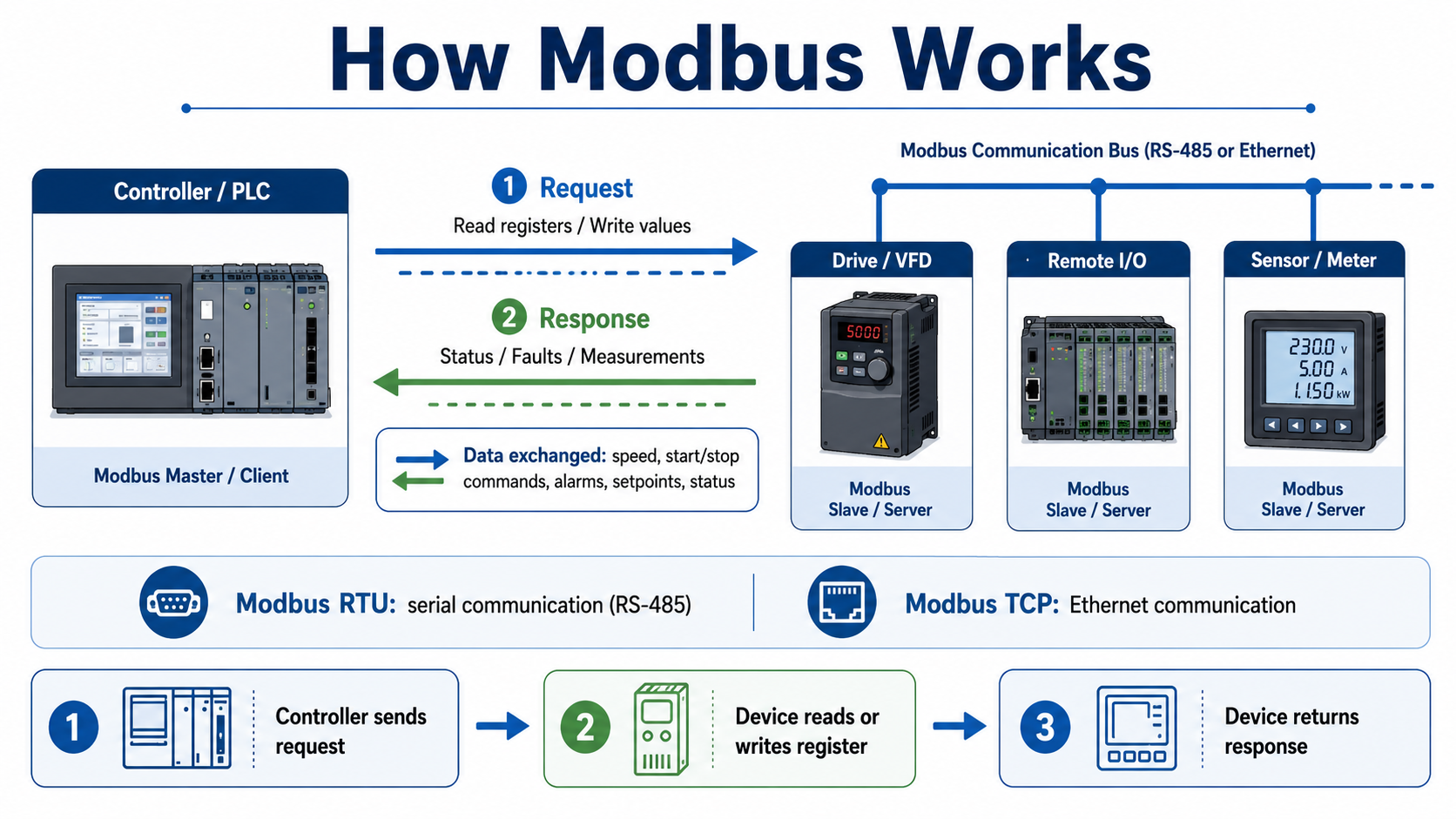
Modbus is an industrial communication protocol used to exchange data between control devices and field equipment. In practical terms, it allows a controller, PLC, HMI, or gateway to read status information, write command values, access parameters, and monitor alarms from connected devices such as variable frequency drives and other automation hardware. That made Modbus especially useful in applications where plant teams needed organized communication without the complexity of more advanced network architectures.
Two of the most common versions are Modbus RTU and Modbus TCP. Modbus RTU is commonly used over serial communication, often through RS-485, while Modbus TCP moves similar communication concepts onto Ethernet. Both remain relevant because many industrial products still support one or both forms depending on the application, the installed control system, and the level of network complexity the machine actually requires.
How Modbus Works
At its core, Modbus works through structured requests and responses between automation devices. A controller or supervisory device requests information or sends a command, and the connected device responds with the corresponding data or action. In a drive application, that can mean reading running status, checking fault conditions, writing speed references, or adjusting operating parameters through the communication network instead of relying only on discrete wiring.
That matters because industrial systems often need more than simple start and stop signals. They need consistent visibility into device behavior. Modbus helps create that communication layer so the controller can exchange useful operating data with drives and connected hardware across the machine. In many real-world systems, that makes commissioning, diagnostics, and replacement planning easier because the equipment is part of a readable network rather than isolated wiring points.
When a communication issue or drive failure interrupts production, the correct replacement is not always determined by power specs alone. The protocol matters. Wake Industrial helps customers identify the right replacement part before a communication mismatch creates more downtime, more troubleshooting, and more cost. If you need help matching a Modbus-capable drive, contact Wake Industrial at 1-919-443-0207 for a quote.
Why Modbus Still Matters
Modbus is not the newest communication system in industrial automation, but that does not make it obsolete. Many facilities still use it because it is familiar, dependable, and well suited to practical machine control. A production line does not always need the most advanced network available. In many pump, fan, conveyor, process, and general drive applications, what matters most is dependable communication for control and monitoring, and Modbus continues to serve that role well.
The real challenge often appears when a drive fails or a spare is needed. A replacement may look correct in terms of power and voltage, but if it does not support the communication method the machine expects, the system may not return to service cleanly. That can lead to integration issues, commissioning delays, or avoidable downtime. For many plants, maintaining the existing communication structure with the correct compatible hardware is far more practical than redesigning the entire control architecture.
That is where Wake Industrial becomes a valuable resource. If you are trying to keep a Modbus-based machine online, source a discontinued drive, or find a replacement that matches both the electrical and communication requirements of the application, Wake Industrial can help. Reach out today by phone or email to get pricing and availability on replacement, repair, and refurbishment options.
Products That Use Modbus
Bosch Rexroth EFC5610-37K0-3P4-MDA-7P-00002-L1NN
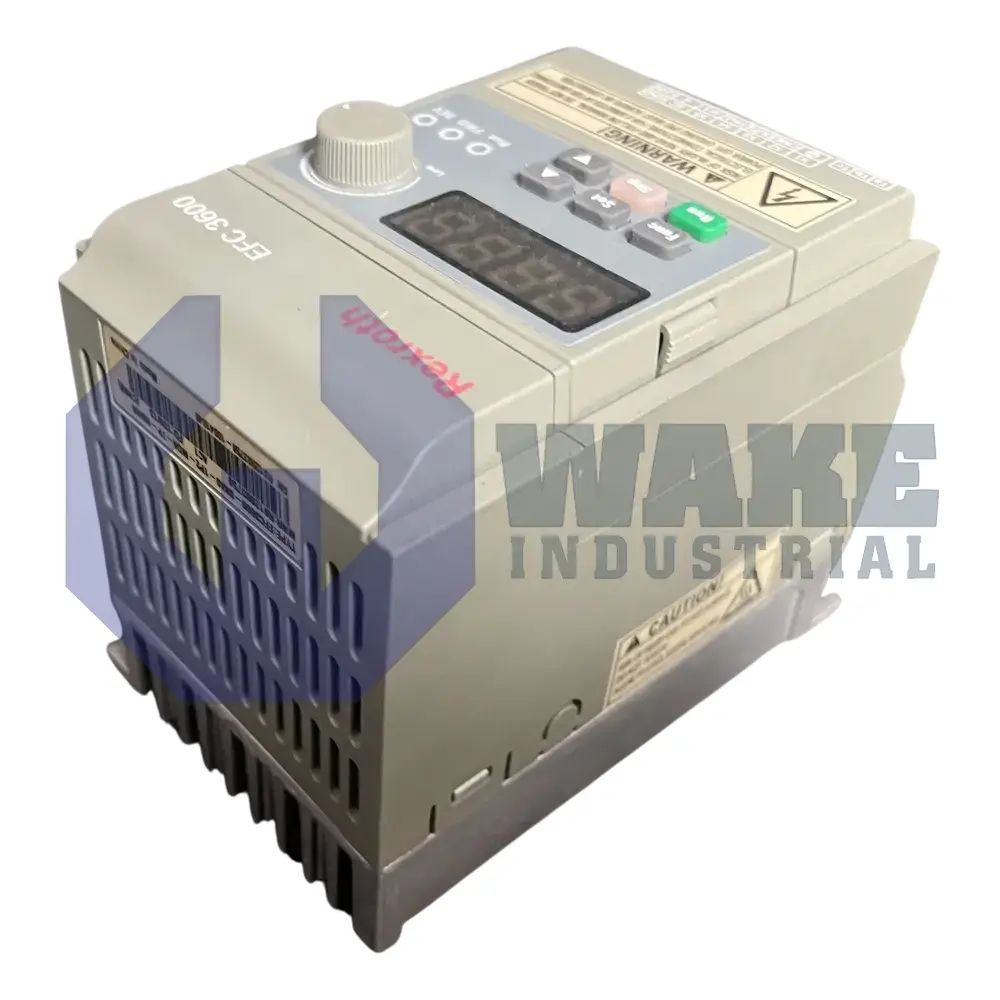
The Bosch Rexroth EFC5610-37K0-3P4-MDA-7P-00002-L1NN is a strong Modbus example at the drive level. This frequency converter is a good fit for applications where a controller needs to exchange operating data and commands with the inverter over a Modbus-based architecture. In systems built around networked drive communication, a product like this helps illustrate how Modbus supports practical control and monitoring tasks in industrial machinery.
If a drive fails in a Modbus-based machine, replacing it with a unit that lacks the expected communication capability can create just as many problems as the original hardware failure. Matching the protocol is part of keeping the system usable, not just powered. For facilities using Bosch Rexroth frequency converters, Wake Industrial can help identify the right replacement fast.
Need this Bosch Rexroth drive or a compatible replacement? Use the quote form on this page or email sales@wakeindustrial.com to request a quote from Wake Industrial.
Danfoss FC302PK75T5E
The Danfoss FC302PK75T5E is another useful Modbus example because it shows how the protocol appears outside the Bosch Rexroth ecosystem. In a broader automation setting, a Modbus-ready Danfoss drive shows how plants can maintain communication consistency even when multiple brands are used across different machines or process areas.
This is one reason Modbus remains practical in so many industrial environments. It gives controls teams a familiar communication method that can extend across different drive families, making troubleshooting, integration, and replacement planning more manageable. For operations trying to maintain uptime, that kind of communication continuity matters.
KEB 12.F5.H1D-3A0A
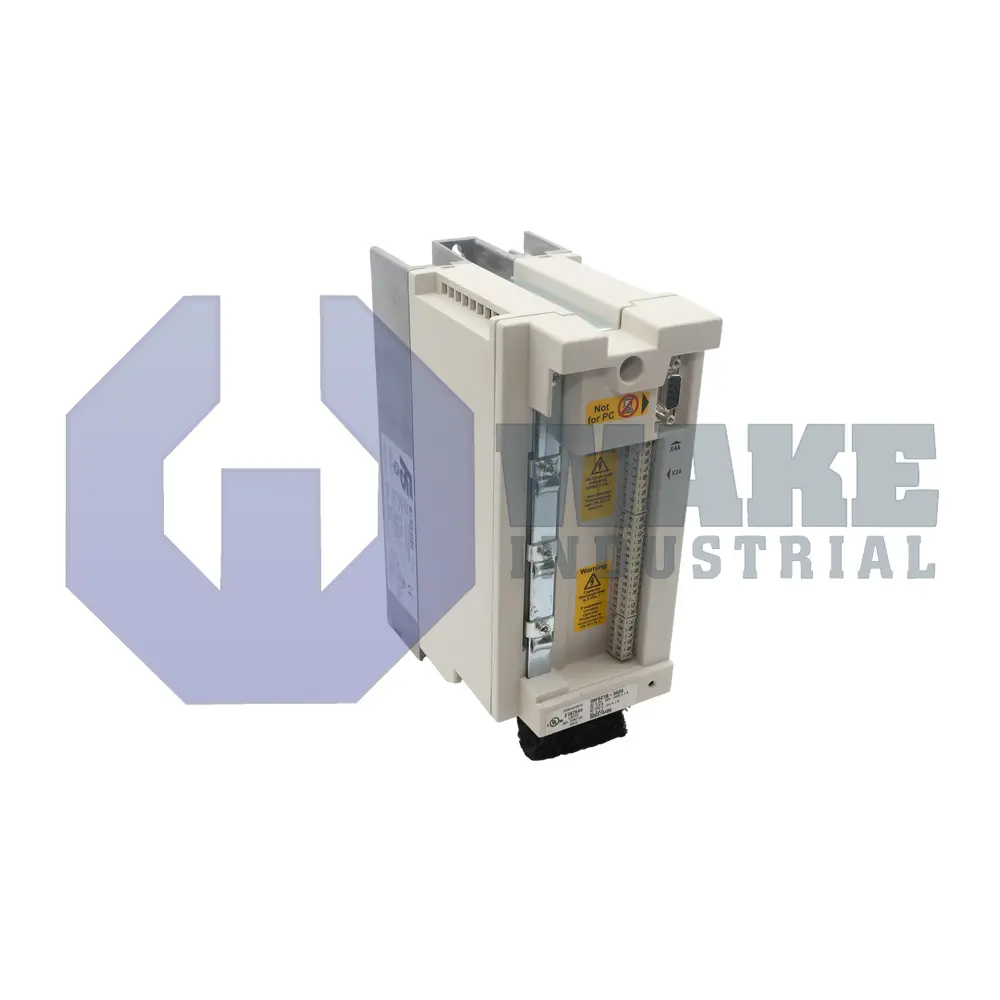
The KEB 12.F5.H1D-3A0A is another Modbus example. This drive helps show that Modbus is not tied to one manufacturer’s product line or one type of machine. Instead, it remains a practical communication option across multiple drive families, especially in retrofits, mixed-platform systems, and applications where different brands need to coexist under the same general communication structure.
That kind of flexibility is one of the reasons Modbus continues to show up in industrial facilities that value maintainability and compatibility. When plants need to replace equipment without redesigning the entire control approach, Modbus-capable products across multiple brands make that much easier.
Conclusion
Modbus helped shape industrial automation by giving manufacturers a dependable way to connect controllers, drives, and field devices through a structured communication system. Even though many newer installations now use Ethernet-based networks, Modbus still plays an important role in the maintenance, replacement, and continued operation of established machinery. For many facilities, it remains part of the real-world job of keeping production equipment running.
The best way to think about Modbus is not as outdated technology, but as installed technology. If your machine was built around it, communication compatibility still matters. Products like the Bosch Rexroth EFC5610-37K0-3P4-MDA-7P-00002-L1NN, Danfoss FC302PK75T5E, and KEB 12.F5.H1D-3A0A show how Modbus appears across multiple drive manufacturers and application types. When those components fail, accurate replacement sourcing becomes essential.
If your operation depends on Modbus-capable hardware, Wake Industrial can help you keep that system running. For fast quotes on replacement, repair, and refurbishment options, call Wake Industrial at 1-919-443-0207, email sales@wakeindustrial.com, or submit a request through the form on this page. When protocol compatibility, uptime, and part availability matter, Wake Industrial is ready to help.
Request a Quote

Cary, NC 27513












