


INTERBUS Explained: How the INTERBUS Industrial System Works in Automation
30 April, 2026 | INTERBUS industrial system, INTERBUS protocol, how INTERBUS works, INTERBUS communication, INTERBUS fieldbus, INTERBUS automation, INTERBUS in industrial automation, INTERBUS network architecture, ring-based industrial communication, cyclic data exchange industrial automation, deterministic industrial communication, remote I/O communication, servo drive communication, PLC fieldbus communication, Bosch Rexroth INTERBUS, Bosch Rexroth EcoDrive INTERBUS, DKC04.3 INTERBUS, legacy Bosch Rexroth drives
INTERBUS is one of the classic industrial communication systems that helped manufacturers move beyond hardwired point-to-point control and into more coordinated, networked automation. Long before industrial Ethernet became the default choice for many new installations, INTERBUS gave machine builders a practical way to link controllers, drives, remote I/O, and other field devices into one structured communication system. That legacy still matters today because many production lines, packaging systems, motion platforms, and machine tools continue to rely on INTERBUS-compatible hardware to stay in service.
For plants running established equipment, understanding INTERBUS is not just about learning an older protocol. It is about keeping proven machinery operating, replacing failed components with the right communication match, and avoiding downtime caused by using a part that fits electrically but not at the network level. When an automation system was originally designed around INTERBUS, the communication layer is part of the machine’s working architecture. That means fieldbus compatibility can be just as important as voltage, current, or control format when it comes to repairing or replacing a component.
If you need help with legacy INTERBUS-capable equipment, Wake Industrial can help you source, repair, and refurbish legacy automation hardware. Call 1-919-443-0207, email sales@wakeindustrial.com, or use the quote form on the page to get fast help.
What Is INTERBUS?
INTERBUS is a serial fieldbus system created for industrial automation environments that need deterministic communication between a central control platform and distributed field devices. Instead of relying on large bundles of individual signal wires, INTERBUS lets data move through a structured network so the controller can exchange commands, status information, and process data across the machine.
In real-world operation, that made INTERBUS especially useful for systems with multiple axes, distributed I/O, operator interfaces, and coordinated machine functions. Rather than building every signal path separately, machine designers could use a fieldbus architecture that supported organized data exchange and easier integration across the control system. This reduced wiring complexity, improved maintainability, and helped standardize machine communication.
How INTERBUS Works
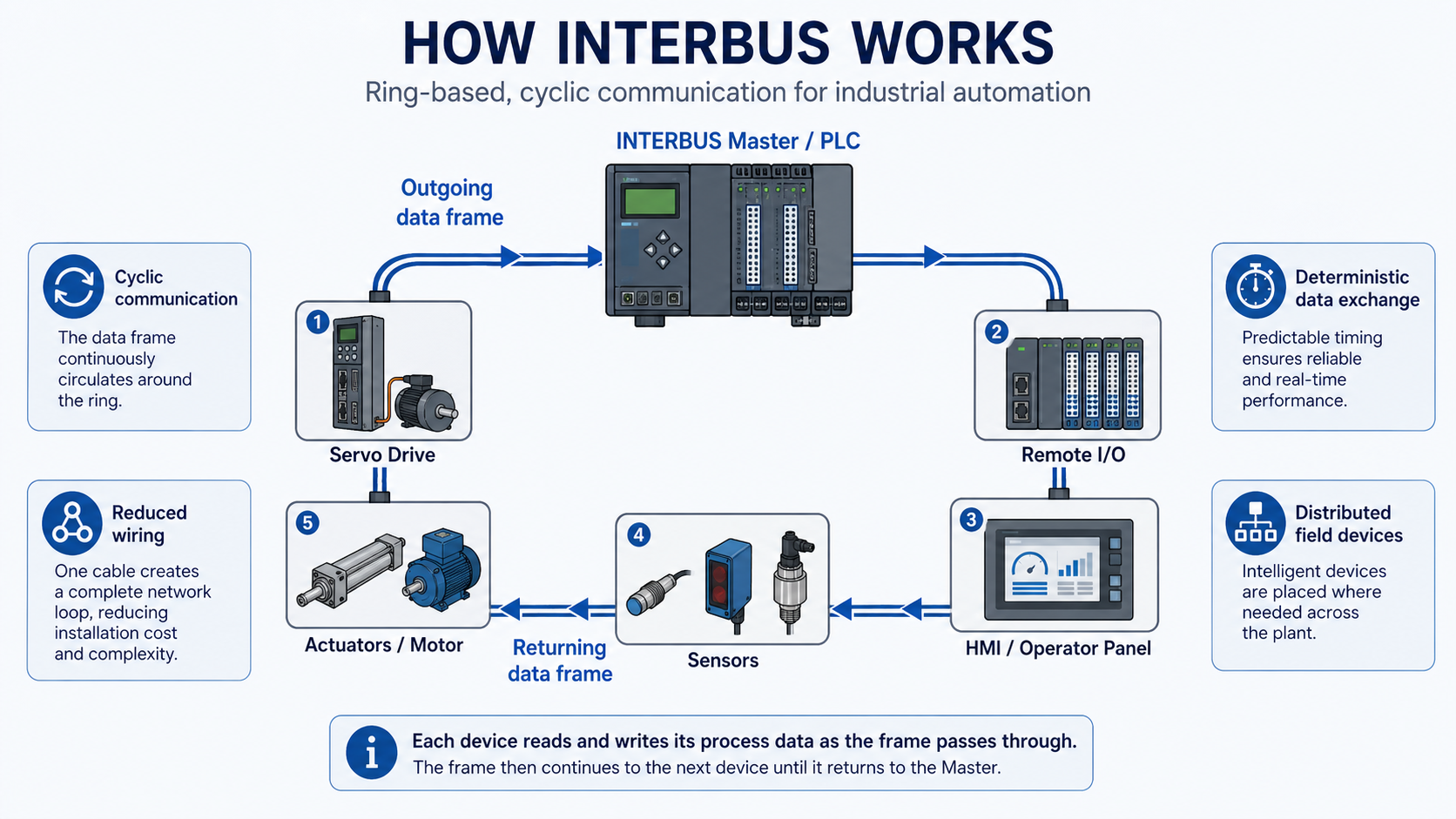
At its core, INTERBUS operates as a cyclic communication network. A master device communicates with connected nodes in a defined sequence, and each device contributes its assigned process data to the communication cycle. Because the network structure is organized and repeatable, it supports the kind of predictable data flow that industrial machinery depends on.
That predictability matters in motion control and automation because the network is not just passing general information. It is moving position-related commands, operating states, field signals, and feedback that can affect how a machine accelerates, stops, sequences, or responds to changing conditions. In a production system, stable cyclic communication helps the controller and connected devices act as one coordinated platform instead of a loose collection of components.
INTERBUS also became valuable because it fit well into distributed automation. A machine builder could connect controllers, drives, and peripheral devices across the machine while keeping the communication system more organized than traditional discrete wiring. That made it easier to expand systems, diagnose communication issues, and maintain consistent data handling across different machine sections.
Why INTERBUS Still Matters
INTERBUS is no longer the newest option in industrial networking, but that does not make it irrelevant. Many manufacturing facilities still run machines that were engineered around it, and those systems often continue to perform well years after installation. The challenge is not usually whether the machine still works. The challenge is what happens when a drive fails, a controller board becomes unreliable, or a spare is needed for a critical line.
In those moments, knowing the original network matters. A replacement part may appear similar on paper, but if it does not support the required fieldbus architecture, integration problems can appear immediately. That can mean communication faults, commissioning delays, or a machine that cannot return to service without broader rework. For many plants, replacing the whole control structure is far more expensive than maintaining the existing INTERBUS-based system with the correct compatible hardware.
If your facility is trying to keep legacy drives or controllers online, Wake Industrial can help you find the right replacement faster. Call 1-919-443-0207 for a quote on repair, refurbishment, or replacement before a communication-related failure turns into extended downtime.
Products That Use INTERBUS
Bosch Rexroth DKC04.3-040-7-FW
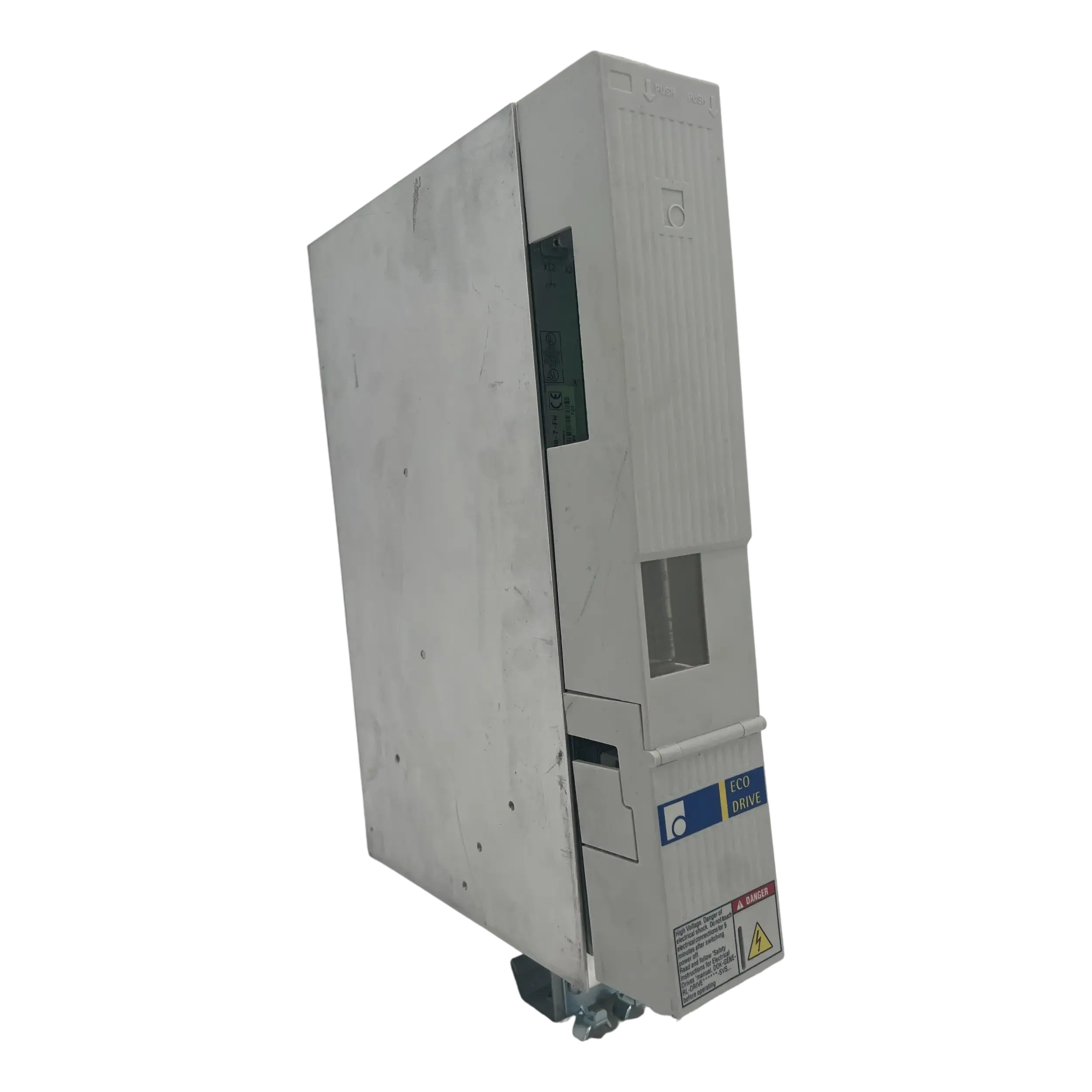
The Bosch Rexroth DKC04.3-040-7-FW is a strong example of INTERBUS at the servo drive level. Within the EcoDrive 03 family, the DKC04.3 branch is associated with INTERBUS communication. In practical terms, that makes it the kind of drive controller used when a legacy Rexroth motion system needs to exchange cyclic fieldbus data with the rest of the machine.
If an axis drive fails on an INTERBUS-based machine, replacing it with a controller that lacks the right communication path can create just as many problems as the original failure. Matching the fieldbus capability is part of keeping the system usable.
If you need a Bosch Rexroth DKC replacement, Wake Industrial can help you. Call 1-919-443-0207 or email sales@wakeindustrial.com for fast support.
Bosch Rexroth PPC-R01.2
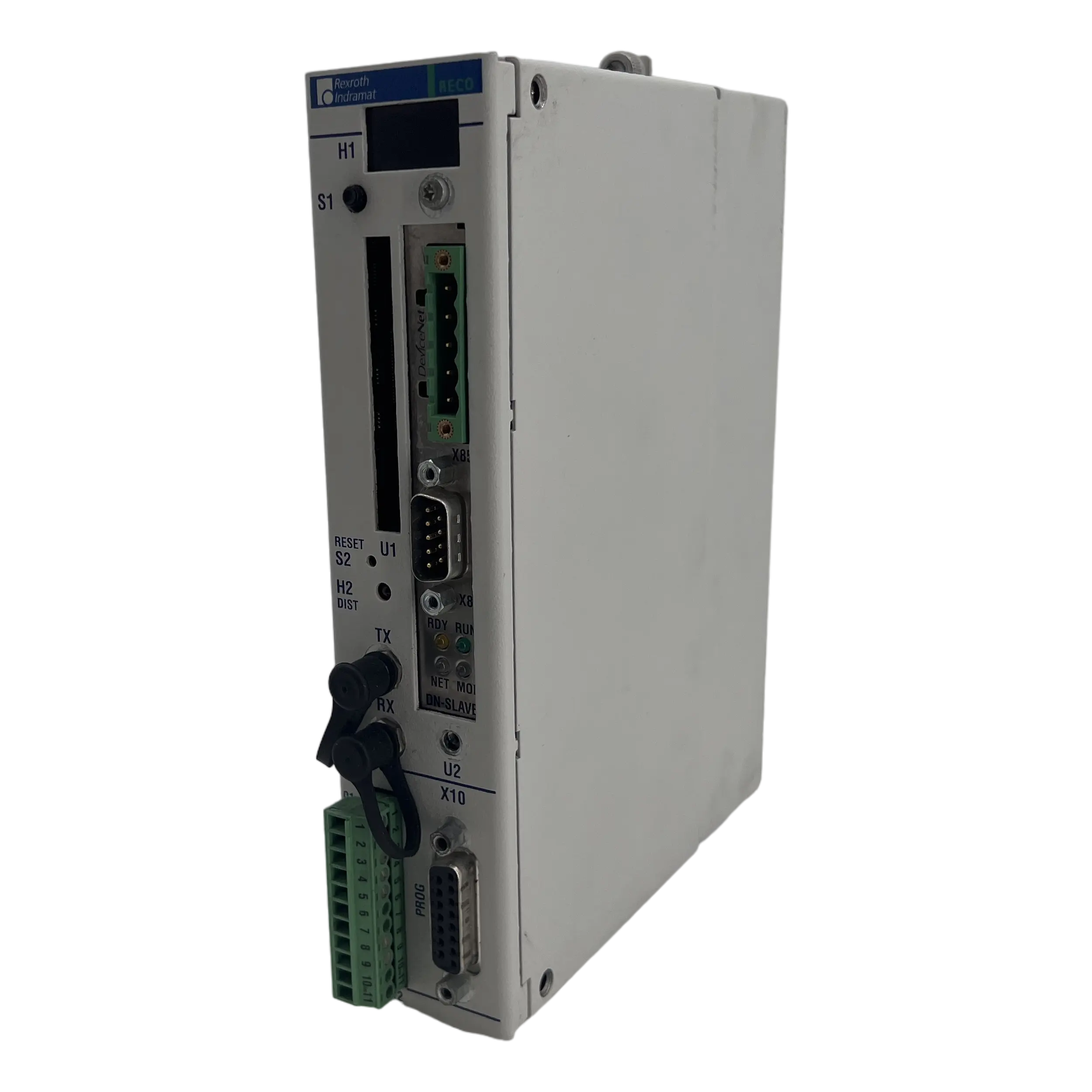
The Bosch Rexroth PPC-R01.2 shows how INTERBUS can also appear at the machine-control level rather than only at the drive level. This controller platform supports integration with different fieldbus interfaces, including INTERBUS, making it relevant in control architectures where the controller has to coordinate communication across the machine.
That is important because INTERBUS was not only used for isolated device communication. It was often part of a larger automation structure involving machine control, operator interfaces, and connected motion hardware. In legacy systems, the controller’s network capability can be central to how the machine organizes commands, status data, and process communication across connected devices.
KEB 12.F5.B1D-3A0A
For a non-Rexroth example, the KEB 12.F5.B1D-3A0A is a useful reminder that INTERBUS was not limited to one manufacturer’s ecosystem. That matters for machine builders and maintenance teams working across mixed-brand environments. A line may include multiple communication-capable devices from different manufacturers, and INTERBUS was one of the protocols that helped connect them into a functioning system. The KEB F5 family is a good example of how drive manufacturers supported a range of fieldbus options so the same base drive platform could fit different plant communication requirements.
Conclusion
INTERBUS helped shape industrial automation by giving manufacturers a dependable way to connect controllers, drives, and field devices through a structured communication system. Even though many newer installations now rely on Ethernet-based networks, INTERBUS still plays an important role in the maintenance of legacy machinery. For many facilities, it remains part of the real-world job of keeping proven production equipment operating.
The best way to think about INTERBUS is not as outdated technology, but as installed technology. If your machine was built around it, communication compatibility still matters. Products like the Bosch Rexroth DKC04.3-040-7-FW, Bosch Rexroth PPC-R01.2, and KEB 12.F5.B1D-3A0A show how INTERBUS can appear across both drive and controller applications. When those components fail, accurate replacement sourcing becomes essential.
If your operation depends on INTERBUS-capable hardware, Wake Industrial can help you keep that system running. To receive a comprehensive, industry competitive quote now, call Wake Industrial at 919-443-0207. Wake Industrial has the experience and inventory to support your business and keep your production line going. You can also contact Wake Industrial by filling out the quote form embedded on the page or by sending an email to sales@wakeindustrial.com.
Request a Quote

Cary, NC 27513