


Hydraulics and Automation: How Fluid Power Drives Industrial Motion
10 July, 2026 | ydraulics and automation, hydraulic automation, fluid power automation, industrial hydraulic systems, hydraulic control components, hydraulic control cards, hydraulic valve amplifiers, proportional valve amplifier, servo valve amplifier, hydraulic pump control card, electro-hydraulic control
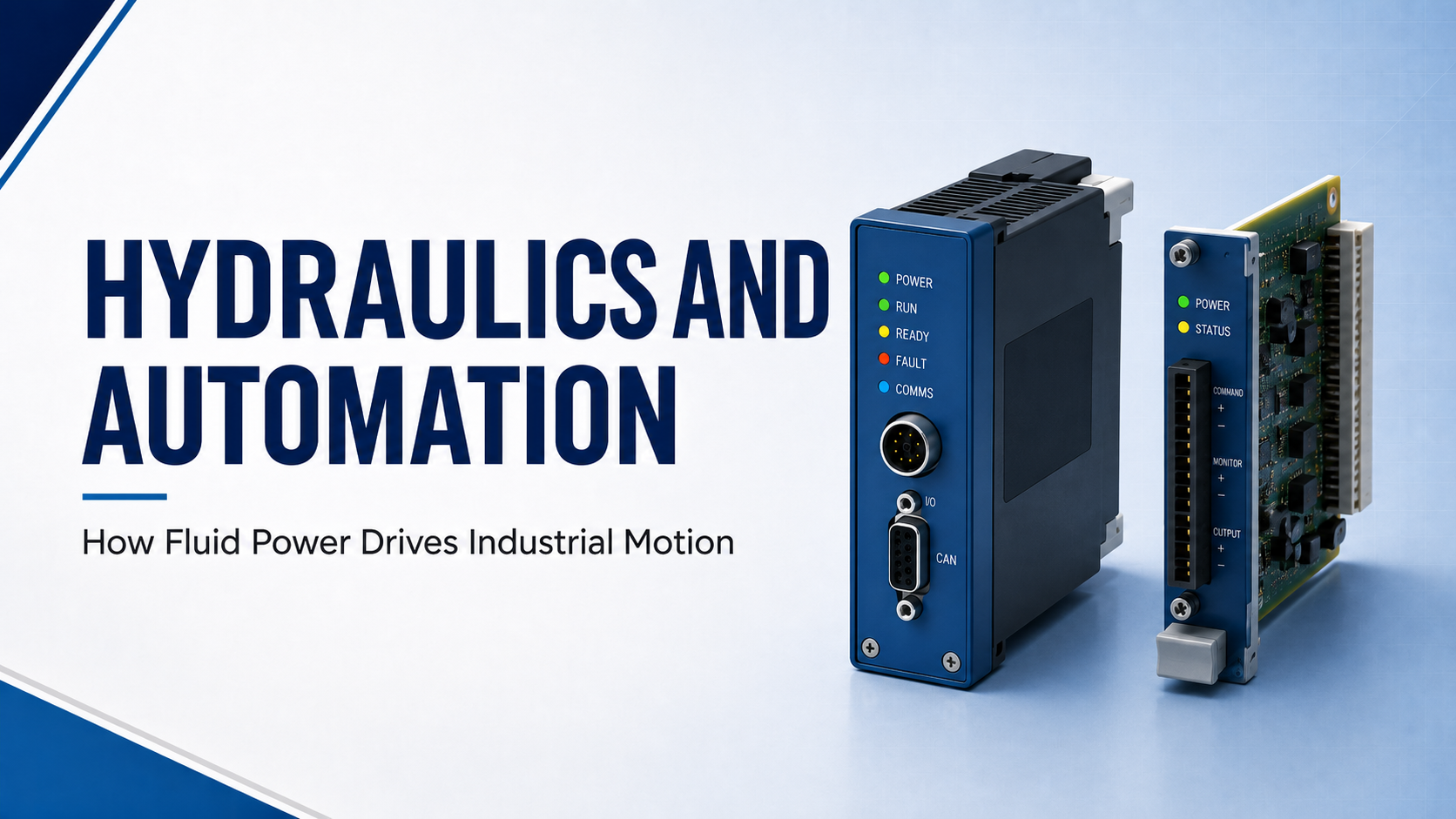
Hydraulic systems are one of the main ways industrial machines turn control signals into physical force. While automation is often discussed in terms of PLCs, drives, motors, and software, those controls still need a motion system that can press, lift, clamp, bend, move, and hold loads. Hydraulics use pressurized fluid to create controlled mechanical output, making them valuable in applications where force and repeatability matter.
In industrial automation, motion is commonly produced by electric, pneumatic, and hydraulic systems. Electric systems are often used for precise rotary motion, pneumatic systems are useful for simple fast actuation, and hydraulic systems are preferred when high force is needed in a compact package. This is why hydraulic automation remains common in presses, forming equipment, injection molding machines, test stands, material handling systems, and heavy production equipment.
If your facility needs Bosch Rexroth, Vickers, or other hydraulic control components, Wake Industrial can help with repair, replacement, and surplus sourcing. Call 1-919-443-0207, email sales@wakeindustrial.com, or submit a quote request through the form on the page for pricing, availability, repair, or replacement options.
What Makes Hydraulics Useful in Automation?
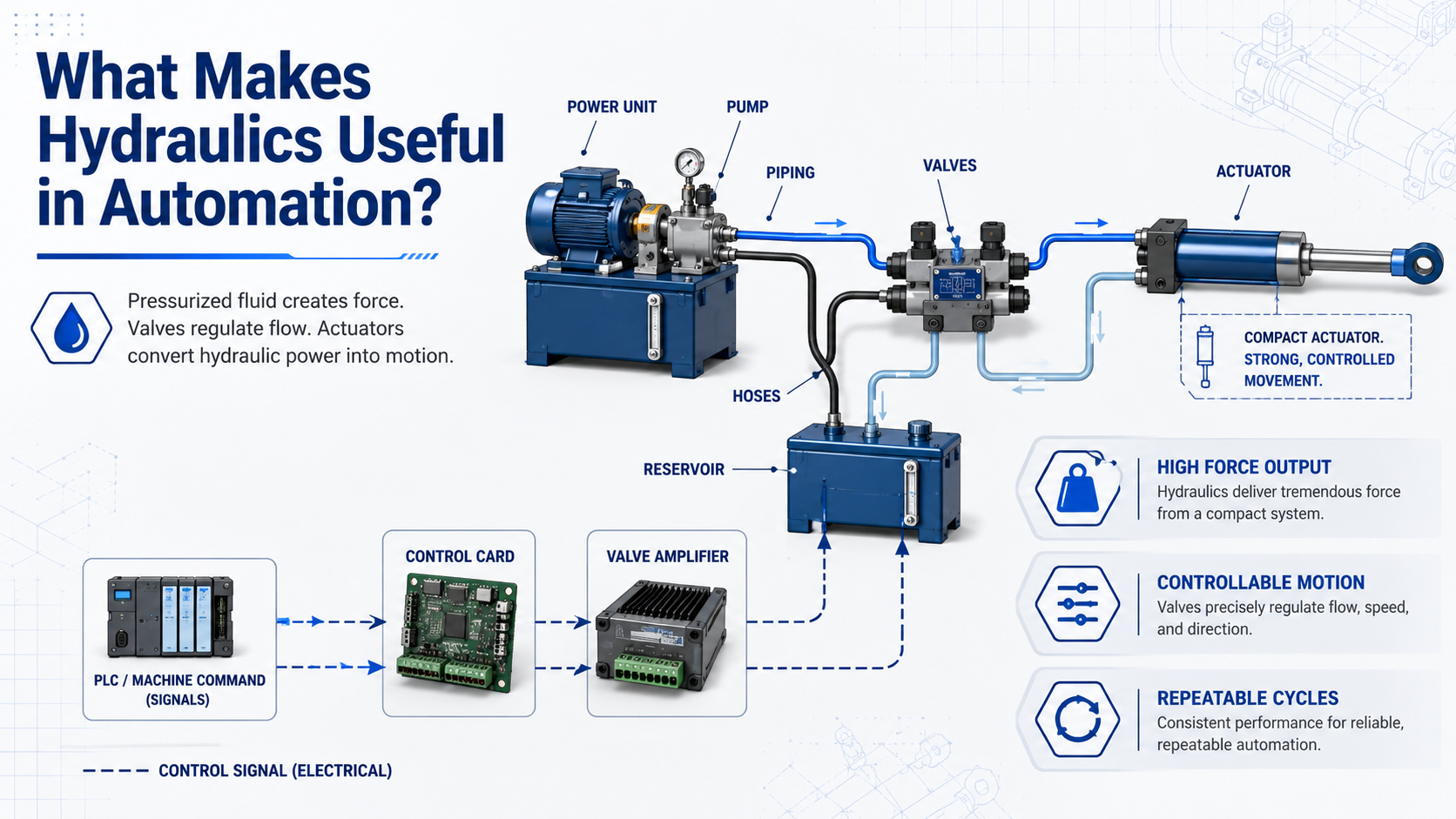
Hydraulics use liquid under pressure to transmit force. Because hydraulic fluid is much less compressible than air, a hydraulic system can generate strong and controllable movement from a relatively compact actuator. This makes hydraulics useful when a machine needs to apply force consistently across repeated production cycles.
A typical hydraulic system includes a power unit, pump, reservoir, piping, hoses, valves, and actuators. The power unit creates pressure and flow, the valves direct or regulate that flow, and the actuator converts hydraulic power into mechanical motion. In automated equipment, electronic control cards and valve amplifiers help connect PLC or machine commands to the hydraulic hardware.
This electrical-to-hydraulic connection is critical. A controller may send the command, but the amplifier, valve card, pump controller, or hydraulic axis control component helps turn that signal into motion. When one of those control components fails, the machine may lose valve response, pressure control, actuator movement, or repeatable positioning.
Why Hydraulic Systems Are Still Used
Hydraulic systems are widely used because they can deliver high force in a small footprint. A hydraulic cylinder can create powerful linear motion without requiring the same size or structure as some equivalent electric systems. For machines that need pressing, clamping, lifting, forming, or holding force, hydraulics remain a practical option.
Hydraulic systems can also provide smooth and repeatable motion when the system is properly designed and maintained. Valves, sensors, feedback devices, amplifiers, and controllers can regulate pressure, flow, and position so the machine performs consistently. In production environments, that consistency can affect cycle time, part quality, and machine uptime.
The tradeoff is maintenance. Hydraulic leaks, contamination, worn seals, clogged filters, unstable valve response, and aging control electronics can all affect machine performance. High-pressure hydraulic fluid can also create safety hazards, so inspection and service should always be handled by qualified personnel following proper lockout and pressure-release procedures.
Hydraulic Control Product Examples
Wake Industrial supports hydraulic control hardware used in industrial automation systems, including Bosch Rexroth and Vickers products. These components help connect electrical machine controls to hydraulic valves, pumps, and actuators.
Hydraulic Product Example | Manufacturer | Product Type | What it is |
Bosch Rexroth | Hydraulic control module | Hydraulic control component used to support electro-hydraulic valve positioning and machine control | |
Bosch Rexroth | Hydraulic pump control card | Pump control card used in hydraulic systems that require electronic control and adjustment | |
Bosch Rexroth | Proportional valve amplifier | Amplifier used with proportional hydraulic valves and pump control applications | |
Vickers | Servo valve amplifier card | Electro-hydraulic amplifier used for valve control in hydraulic automation systems | |
Vickers | Proportional valve power amplifier | Power amplifier used to convert command input into controlled valve coil output | |
Vickers | Plug-in proportional valve amplifier | Proportional valve amplifier used to help hydraulic valves follow command signals |
If your plant is replacing a failed Bosch Rexroth VT card, Vickers EEA-PAM amplifier, proportional valve amplifier, pump controller, or hydraulic control module, Wake Industrial can help. Call 1-919-443-0207, email sales@wakeindustrial.com, or submit a quote request through the form on the page and receive a quote within 15 minutes during business hours.
When Hydraulic Control Components Fail
Hydraulic problems are not always caused by the cylinder, pump, or valve body. In automated hydraulic systems, electronic control components are often just as important as the fluid-power hardware. A failed amplifier card, control module, feedback interface, or pump control card can cause unstable motion, missing valve response, pressure errors, or inconsistent actuator movement.
If you need a Bosch Rexroth hydraulic control card, Vickers valve amplifier, proportional amplifier, pump controller, electro-hydraulic module, or another hydraulic automation replacement, Wake Industrial can help with repair and replacement. Call 1-919-443-0207, email sales@wakeindustrial.com, or submit a quote request through the above form.
Request a Quote

Cary, NC 27513












