


Ethernet/IP Industrial Protocol Explained: How Ethernet/IP Works in Industrial Automation
2 April, 2026
A Brief History of Ethernet/IP
Ethernet/IP developed as industrial automation moved away from strictly isolated communication networks and toward more open, Ethernet-based connectivity. It was introduced in the early 2000s as a way to bring the Common Industrial Protocol, or CIP, onto standard Ethernet infrastructure, allowing industrial devices to communicate using a structured control-oriented model over widely accepted networking technology. That timing mattered because manufacturers were looking for ways to connect plant-floor control systems more easily while also improving data visibility and integration. As a result, Ethernet/IP gained traction as a practical way to combine industrial communication needs with the growing adoption of Ethernet across manufacturing environments.
What Is Ethernet/IP?
At its core, Ethernet/IP is an industrial communication protocol built on standard Ethernet technology and the Common Industrial Protocol. Standard Ethernet provides the physical and transport foundation, while Ethernet/IP adds the structure needed for industrial devices to exchange meaningful operating data. That means it is not just about putting automation hardware on a network. It is about allowing drives, controllers, remote I/O, and operator interfaces to communicate using organized data models that support control, monitoring, diagnostics, and configuration. In real-world industrial systems, that gives engineers a reliable way to move information across a shared network environment without sacrificing the structured communication needed for automation.
How Ethernet/IP Communication Works
One of the reasons Ethernet/IP has remained so relevant is that it supports both real-time and non-real-time communication needs within the same framework. In industrial motion systems, some data must be exchanged continuously. Command values, status words, actual speed, torque feedback, and fault states often need to move between the controller and the drive on a repeating cycle. Ethernet/IP handles that through cyclic I/O-style communication that supports machine operation during runtime. At the same time, industrial systems also need a way to read parameters, adjust settings, retrieve diagnostics, and support commissioning tasks. Ethernet/IP supports that type of communication as well, making it useful for both machine control and service access.
Why Ethernet/IP Matters in Motion Control Systems
This dual-purpose communication model is one reason Ethernet/IP is such a practical protocol for industrial automation. A network becomes much more valuable when it can do more than simply switch devices on and off. In a modern servo application, the controller may need to issue motion-related commands while the drive reports feedback data, internal conditions, warning states, and fault information. If the communication platform can also support configuration and troubleshooting without requiring a completely separate system, integration becomes more streamlined. That is especially useful in large production lines where uptime, maintainability, and standardized hardware matter just as much as raw machine performance.
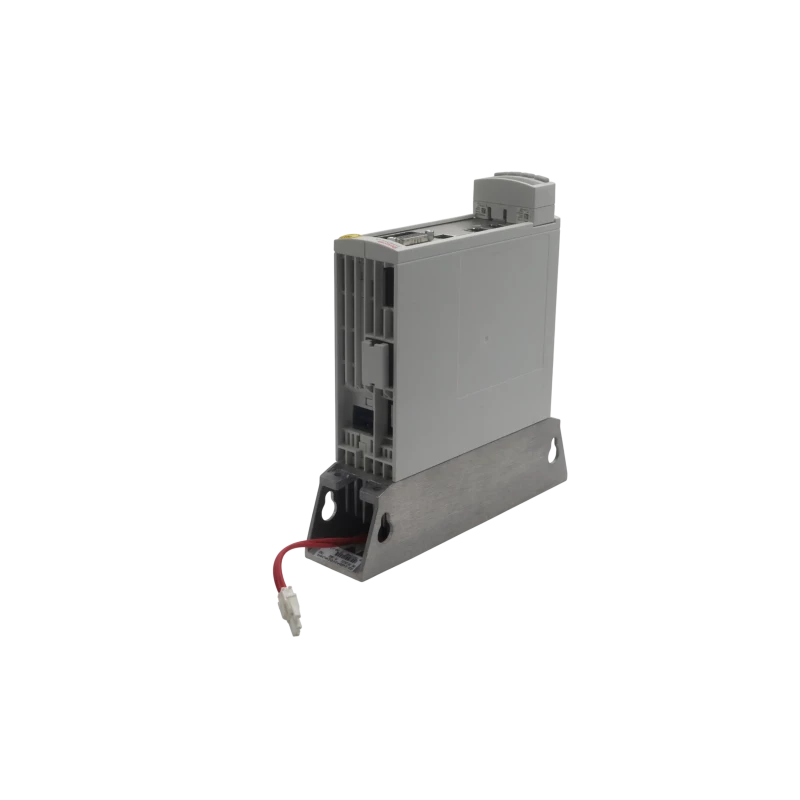
The HCS01.1E-W0005-A-03-B-ET-EC-EM-L3-NN-FW is an IndraDrive Cs drive converter model that supports Ethernet/IP
Product Examples
Bosch Rexroth HCS01.1E-W0005-A-03-B-ET-EC-EM-L3-NN-FW
A strong example of this is the Bosch Rexroth HCS01.1E-W0005-A-03-B-ET-EC-EM-L3-NN-FW. This IndraDrive component is part of a compact converter platform built for motion applications that require both control performance and flexible communication capabilities. In systems using Ethernet/IP, hardware in this class can serve as a networked motion device that exchanges command and feedback data with the higher-level control system while also supporting parameter access and diagnostic visibility. Instead of acting only as a plant-wide networking concept, the protocol becomes part of the actual axis control structure.
Bosch Rexroth CSH02.1B-ET-EC-EC-L3-DA-NN-FW
Another useful Bosch Rexroth example is the CSH02.1B-ET-EC-EC-L3-DA-NN-FW. This advanced control section shows how Ethernet/IP fits into more sophisticated servo architectures where the control section plays a major role in communication, feedback handling, and drive intelligence. In a motion-control system, the control section is where the network interface, command interpretation, and control functions come together. When Ethernet/IP support is present, that allows the drive to communicate more naturally with control platforms built around that protocol. For machine builders, this can simplify integration decisions and make it easier to standardize network communication across more of the machine.
Bosch Rexroth CDB02.1B-ET-EC-EC-NN-L3-L3-NN-NN-NW
The CDB02.1B-ET-EC-EC-NN-L3-L3-NN-NN-NW offers another practical example. As a Bosch Rexroth double-axis control section, it helps show how Ethernet/IP can fit into more complex motion-control arrangements involving multiple coordinated axes. In those types of systems, communication consistency becomes even more important because multiple motion channels may need to share commands, feedback, and diagnostics with a centralized controller. Ethernet/IP helps support that exchange while allowing the broader machine network to remain aligned with the plant’s communication strategy. For end users, that can translate into a cleaner architecture that is easier to maintain and easier to scale.

Benefits of Ethernet/IP for Industrial Networks
A major advantage of Ethernet/IP in industrial automation is interoperability. Many facilities want machine-level communication that fits smoothly into existing controller environments without requiring excessive protocol conversion or custom gateways. When a drive family can support Ethernet/IP as part of its communication options, it becomes easier to integrate motion hardware into networks that already rely on that standard. This is particularly important in North American industrial settings where Ethernet/IP has established a strong presence. It also supports retrofit work, where replacement hardware often needs to fit into a communication environment that is already in place rather than forcing a broader system redesign.
Conclusion
From a machine design standpoint, Ethernet/IP offers a practical balance between familiar infrastructure and industrial-specific communication. It gives controllers and devices a common language for operational data while making use of Ethernet technology that is already widely understood. In motion control applications, that combination is especially useful because drives need more than a simple connection. They need a communication platform capable of handling commands, feedback, diagnostics, and set up information in a structured way.
If you’re supporting legacy Bosch Rexroth Indramat parts and need help sourcing replacements or arranging repair/refurbishment for Ethernet/IP based products, Wake Industrial is set up to keep older systems running with dependable turnaround and availability. Just call 1-877-968-1360 or email sales@wakeindustrial.com to get a comprehensive and competitive quote from Wake Industrial.
(Please be advised that Wake Industrial does not offer troubleshooting assistance through phone or email. For repair, replacement, or refurbishment needs, we invite you to use our quote form or call us at 1-877-968-1360.)
Request a Quote

Cary, NC 27513












