


R45HCNA-R2-NS-NV-00 Pacific Scientific
Wake Industrial LLC is not an authorized distributor of this product.
Wake Industrial LLC is not an authorized distributor of this product.
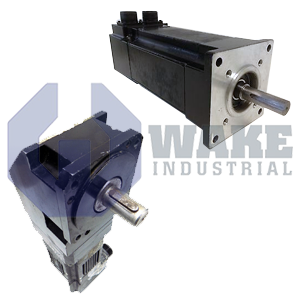
The Pacific Scientific R45HCNA-R2-NS-NV-00 is a servo motor from the R Servomotors series with a continuous stall torque of 5.7 Nm and a peak torque of 15.1 Nm. It features a 4.25 inch square frame size, five inch stack length, and uses rare earth samarium cobalt magnets. The motor has a NEMA face mounting type and includes a frameless resolver as primary feedback.
Internal Product Review
The R45HCNA-R2-NS-NV-00 is a Pacific Scientific servo motor configured with a high-speed winding. Continuous stall torque of 5.7 Nm and peak torque of 15.1 Nm give the design strong dynamic performance for demanding motion profiles. Rare earth samarium cobalt magnet material paired with a frameless resolver primary feedback makes this model especially attractive for precise servo control.
 Have a part to sell?
 Wake Industrial Warranty
To contact sales for pricing and lead time:
Payment Methods


Shipping Methods


Our Credentials


Product Description:
The R45HCNA-R2-NS-NV-00 is a brushless servo motor manufactured by Pacific Scientific as part of the R Servomotors series. This motor is intended for precision positioning and velocity control in automated machinery such as indexers, material-handling arms, and conveyor drives. When paired with a compatible digital drive, it converts commanded current into proportional rotary torque for medium-duty industrial motion tasks. The brushless design eliminates commutator wear and supports repeatable response in cyclic motion systems. That makes it suitable for axes that require frequent starts, stops, and speed changes during normal machine operation.
The motor uses a 4.25-inch square frame with a NEMA face mounting pilot, which supports installation on equipment designed around common NEMA dimensions. Inside the standard housing, rare-earth samarium cobalt magnets provide high magnetic energy density. This magnetic design supports a continuous stall torque of 5.7 Nm while the rotor inertia remains at 0.31 kg·m² × 10⁻³. The combination of magnetic strength and modest rotor inertia helps the axis respond quickly to command changes. The motor housing is standard, and the unit is supplied without a holding brake, so static holding must be provided externally. It also has no shaft seal, so the installation area should be kept free of liquids at the shaft exit.
The electrical design uses a high-speed winding and a 5-inch lamination stack, which helps increase back EMF while keeping coil resistance moderate. Under transient demand, the motor can produce 15.1 Nm of peak torque, giving the drive added torque reserve during indexing and rapid starts. Rotor position is reported by a frameless resolver of the transmitter type in size 21, and no secondary feedback device is included. Because no secondary feedback device is included, feedback wiring remains limited to the resolver circuit. The controller therefore relies on the resolver for commutation and servo loop closure.









