


R33SSNA-SS-NS-NV-02 Pacific Scientific
Wake Industrial LLC is not an authorized distributor of this product.
Wake Industrial LLC is not an authorized distributor of this product.
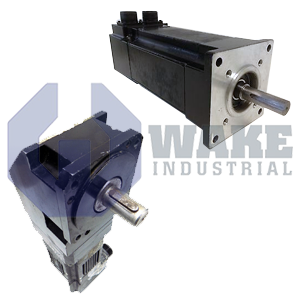
The Pacific Scientific R33SSNA-SS-NS-NV-02 is a servo motor from the R Servomotors series with a continuous stall torque of 2.5 Nm and a peak torque of 6.54 Nm. It features a 3.25 inch square frame, a standard housing style, and rare earth samarium cobalt magnets. The servo motor has an inertia of 0.093 kgm² x10⁻³ and a stack length of 3 inches.
Internal Product Review
The R33SSNA-SS-NS-NV-02 is a Pacific Scientific servo motor with 2.5 Nm continuous stall torque and 6.54 Nm peak torque. Rare-earth samarium cobalt magnet construction and low 0.093 kgm²x10⁻³ inertia support responsive motion control and stable servo performance. A strong servomotor option for applications that benefit from dynamic torque delivery.
 Have a part to sell?
 Wake Industrial Warranty
To contact sales for pricing and lead time:
Payment Methods


Shipping Methods


Our Credentials


Product Description:
The R33SSNA-SS-NS-NV-02 is a brushless servo motor produced by Pacific Scientific within the R Servomotors series. As a servo-class actuator, it supplies closed-loop rotary motion for positioning tables, pick-and-place heads, and similar automation axes that require accurate torque and speed regulation. When used with a compatible digital drive, the motor converts command current into repeatable shaft rotation, supporting consistent motion control in automated production equipment.
At rated conditions, the motor sustains a continuous stall torque of 2.5 Nm, which provides a steady output level for holding or low-speed indexing. During rapid acceleration, it can reach a peak torque of 6.54 Nm, allowing short overload events without exceeding its intended operating range. The square mounting face measures 3.25" square, which supports installation on legacy NEMA-style brackets while keeping the package compact. Rotor inertia is 0.093 kg·m² × 10⁻³, which helps the drive respond quickly during speed changes and positioning moves. High-energy rare-earth magnets made of samarium cobalt are bonded to the rotor, improving torque density and thermal stability compared with ferrite magnet designs.
The motor uses a standard housing, so its outer dimensions follow the common profile used across the series and fit clamp-ring or flange adapters without modification. It is supplied with no brake, so power-off holding must be provided by drive torque or an external locking method. The motor also has no shaft seal, which makes it better suited for dry areas where fluid entry along the shaft is not a concern. Overall depth is limited to 3 inches, allowing the assembly to fit inside compact machine spaces with limited clearance. Because there is no secondary feedback channel, only the primary position sensor requires cabling, which keeps wiring simpler and reduces connector count.









