


P21NSXA-LSS-NS-02 Pacific Scientific
Wake Industrial LLC is not an authorized distributor of this product.
Wake Industrial LLC is not an authorized distributor of this product.
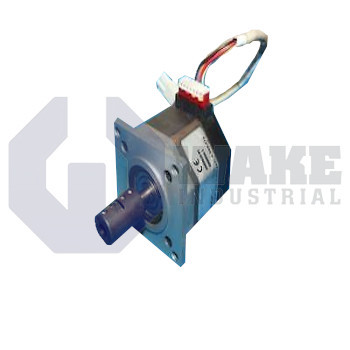
The Pacific Scientific P21NSXA-LSS-NS-02 is a stepper motor from the POWERMAX II P Motors series featuring a NEMA 23 frame size and standard construction. It has a holding torque of 0.81 Nm, operates at 5.6 amps per winding, and supports two phases. The motor delivers 200 steps per revolution with a step angle of 1.8 degrees and step accuracy of ±1.5 percent.
Internal Product Review
The P21NSXA-LSS-NS-02 is a Pacific Scientific POWERMAX II P stepper motor built in a NEMA 23 frame with a 2-phase configuration. With 0.81 Nm holding torque and a 1.8-degree step angle, the motor delivers steady positioning and dependable motion control in compact machinery. A ±1.5% step accuracy makes this model a strong choice for precise indexing applications.
 Have a part to sell?
 Wake Industrial Warranty
To contact sales for pricing and lead time:
Payment Methods


Shipping Methods


Our Credentials


Product Description:
The P21NSXA-LSS-NS-02 is a hybrid stepper motor manufactured by Pacific Scientific in the POWERMAX II P Motors series. It uses a two-phase electromagnetic design with standard rotor and housing construction to generate indexed motion for automated pick-and-place heads, light conveyors, and small positioning tables. Electrical power is supplied through a receptacle connector, mechanical mounting follows the NEMA standard, and the model is shipped without encoder feedback, so position verification is handled by open-loop step counting or external sensors. The hybrid stepper format is well suited to motion systems that need repeatable incremental movement without a closed-loop servo arrangement.
The motor occupies the NEMA 23 frame envelope, a size that sets the flange pattern and shaft height for compact drive stages. Each full step is 1.8°, producing 200 discrete positions per shaft revolution, so a controller can advance loads in fine indexed increments or subdivide motion further through microstepping. Static holding capacity reaches 0.81 Nm, while detent torque of 0.03 Nm characterizes inherent rotor cogging when power is removed. Phase windings draw 5.6 A at rated operation through the A winding scheme, and their 0.46 Ω resistance balances copper loss against torque output. The single-stack magnetic circuit concentrates flux without increasing length, which helps the motor maintain repeatable motion under moderate inertia and frequent start-stop duty.
Thermal and dielectric limits support reliable service in general automation equipment. The windings use Class B 130 °C insulation, verified for 100 Megohms of resistance and isolated to 340 Vdc, which helps prevent breakdown during drive transients. Inductive reactance remains low at 0.8 mH, allowing rapid current slewing so microstepping commands track accurately. Step fidelity is specified to ±1.5 %, which helps limit positional deviation across repeated moves. The unit tolerates ambient conditions from -20 °C to +40 °C, enabling installation in unconditioned panels. Stable step response depends on keeping the motor within its current, temperature, and insulation limits during operation.









