


40PA54-36-37-TEFC-S Pacific Scientific
Wake Industrial LLC is not an authorized distributor of this product.
- Straightforward Pricing: No Rush Fees, No Credit Card Fees
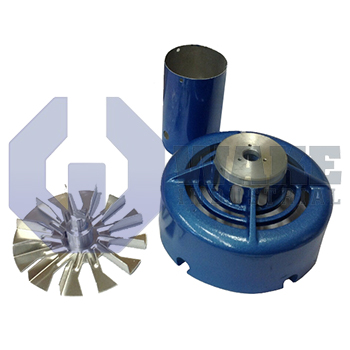
The Pacific Scientific 40PA54-36-37-TEFC-S is part of the Permanent Magnet DC Motors series and is intended for motor speed monitoring. This small kit includes parts and instructions and is compatible with SRF36 and SRF37 motors that have a -84 suffix. It features a TEFC motor enclosure and is designed for use with Servo-Tek tachometers such as the SA-757A, SA-7103A, and SA-7360-F-1.


To contact sales for pricing and lead time:
Payment Methods


Shipping Methods


Our Credentials


Product Description:
The 40PA54-36-37-TEFC-S is a tachometer accessory kit produced by Pacific Scientific for its Permanent Magnet DC Motors series. Installed on the rear of a motor, the kit generates a proportional DC signal that is read by drives or controllers to regulate speed in closed-loop industrial automation. Its primary role is to provide reliable feedback for motor speed monitoring so the associated drive can maintain commanded velocity under changing load conditions.
The kit mates mechanically with SRF36, SRF37 frame motors, and the default coupling accepts a shaft that is 0.187 in in diameter, eliminating the need for bushings on standard installations. A TEFC housing surrounds the tachometer, protecting the sensing elements from dust and directed splashes encountered on factory floors. Electrical output follows a gradient of 7 V/KRPM, meaning the device delivers seven volts for every thousand revolutions per minute and simplifies scaling in the drive control loop. The sensing unit is manufactured by Servo-Tek, and the compact kit format keeps added length to a minimum when space behind the motor is limited. Kit contents include the parts and instructions needed for field assembly, while the -84 suffix on the target motor indicates that the rear face is pre-machined for the tach adapter.
Three tachometer models, SA-757A, SA-7103A, and SA-7360-F-1, are supported, allowing users to select an output constant that matches drive input requirements without changing the mechanical interface. The kit requires user-supplied excitation power, so a dedicated low-voltage pair must be routed from the control cabinet. That arrangement lets the same kit support different control input needs while keeping the motor installation straightforward. Because the kit is compact, it maintains the original motor footprint and keeps wiring paths short.