


MIV0101-1-B5 Okuma
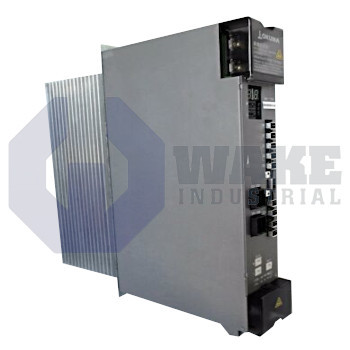
Wake Industrial LLC is not an authorized distributor of this product.
- Straightforward Pricing: No Rush Fees, No Credit Card Fees
The Okuma MIV0101-1-B5 is part of the MIV Servo Drives series and is designed as an inverter unit. It features an ICB1 inverter control board and is compatible with BL motors and PREX motors. Both the L and M sides have a capacity of 1.33 horsepower or 1.0 kilowatt each.


To contact sales for pricing and lead time:
Payment Methods


Shipping Methods


Our Credentials


Product Description:
The MIV0101-1-B5 is an inverter unit manufactured by Okuma and part of the MIV Servo Drives series. As an Okuma inverter unit, it supplies variable-frequency, variable-voltage three-phase power to matched servo or spindle motors, allowing machine-tool axes to accelerate, decelerate, and hold position under CNC control. By converting the fixed DC bus from the machine power supply into precisely timed AC waveforms, it forms the link between the numerical controller and the rotary actuators on production equipment.
The drive section is partitioned into a L side output stage and a M side output stage. Each stage can deliver a continuous 1.33 hp mechanical output, which corresponds to 1.0 kW of capacity, so the module can energize two identical axes without derating. All gate timing, current sensing, and alarm logic are processed by the dedicated ICB1 control board that plugs into the power base. This board sets carrier frequency, stores parameter tables, and opens the firing sequence only when temperature and bus voltage are within limits. By isolating the control electronics from the power section, the logic card can be exchanged independently of the IGBT stack while keeping motion profiles and tuning constants intact.
The inverter accepts feedback and commutation data for BL motors that rely on conventional magnet technology and for high-efficiency PREX motors used in rapid-response axes. Its dual output architecture lets either motor class be assigned to either channel, which helps when mixed inertia loads are present. The compatible motor type range also means the same enclosure can run a low-speed rotary axis alongside a high-speed spindle without changing core control settings. Once parameterized, each channel performs vector control independently, allowing synchronized yet individually optimized motion paths.