


BLII-D 5030A Okuma
Wake Industrial LLC is not an authorized distributor of this product.
- Straightforward Pricing: No Rush Fees, No Credit Card Fees
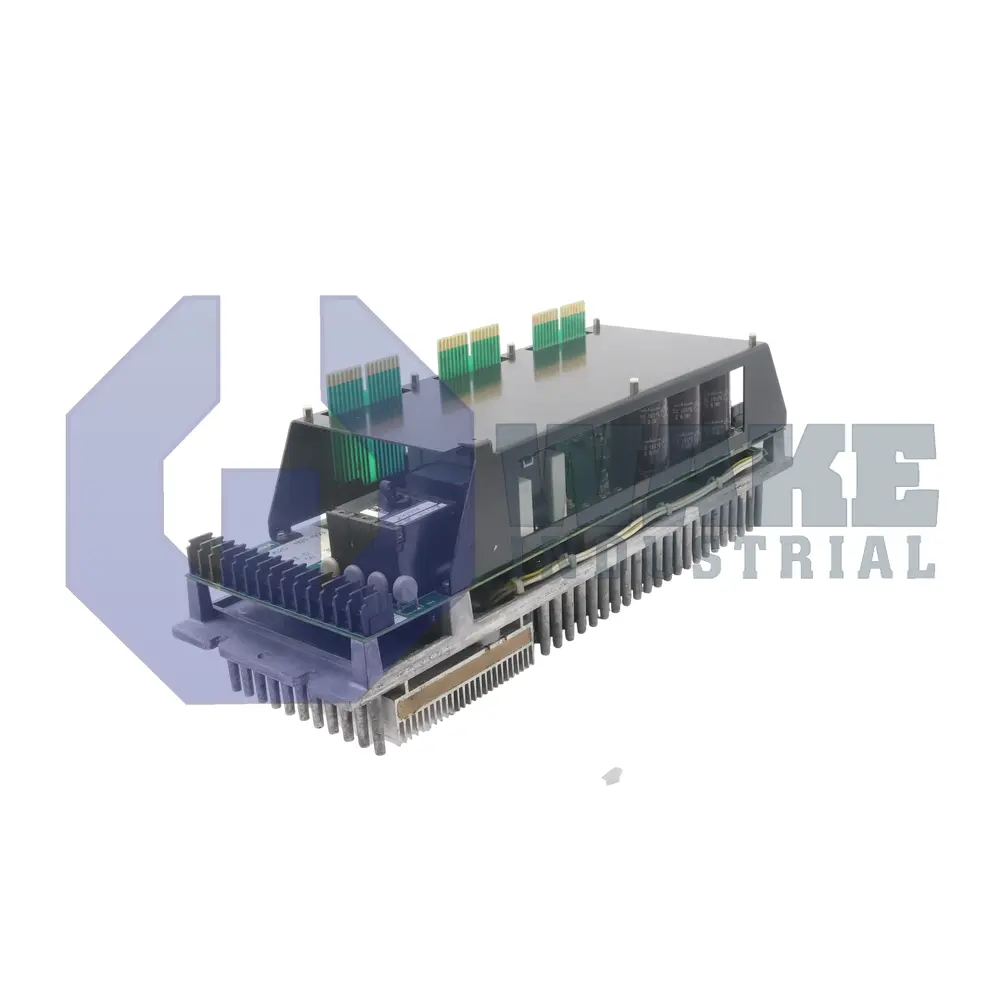
The Okuma BLII-D 5030A servo drive is part of the BL Servo Drives series and is designed as a 2-axis unit. It supports a three-phase power supply and features 3 control connectors along with 2 power connectors. The drive provides a torque monitor scale of 10 volts per torque limit and a velocity monitor scale of ±10 volts per ±3750 min-1.


To contact sales for pricing and lead time:
Payment Methods


Shipping Methods


Our Credentials


Product Description:
The BLII-D 5030A is a two-axis servo drive manufactured by Okuma within the BL Servo Drives series. It supplies and regulates current for paired brushless motors in machine tools and general automation systems. The drive converts a three-phase mains input into controlled motor voltage, supporting precise torque and speed regulation on both axes. Integrated monitor terminals provide scaled signals for external diagnostic equipment. Dedicated control and power connectors simplify cabinet wiring and keep command, feedback, and high-current circuits organized in multi-axis installations.
Axis 1 configuration parameters are set by hardware selectors on the front panel. The Axis 1 jumper is connected, and the switch bank has only switch 2 turned on to establish the reference polarity and feedback mode for that channel. The control interface uses three connectors to separate analog command references, encoder feedback, and status signals. Incoming power must come from a three-phase supply so the rectifier can produce balanced DC power for both motor channels. For process verification, the torque monitor has a scale of 10 V at the torque limit. This scaled output allows standard measurement equipment to display the applied torque limit through a conventional analog signal.
The Axis 2 jumper is connected, while its switch bank has only switch 1 turned on to create an independent gain path for the second motor. The power stage has two primary connectors that separate incoming line power from motor wiring and regenerated energy paths. Velocity feedback can be measured through a monitor with a scale of ±10 V at ±3750 rpm, which is compatible with common servo measurement equipment. The Sw1 selector remains off in every position to disable its associated option bits. A common monitor ground marked GND provides the reference point for the analog monitor signals and connects them to the chassis ground. These settings allow each axis to retain its own selector arrangement while sharing the drive’s rectifier, monitoring circuits, and cabinet connections.









