


502-03605-00R1 Kollmorgen
Wake Industrial LLC is not an authorized distributor of this product.
- Straightforward Pricing: No Rush Fees, No Credit Card Fees
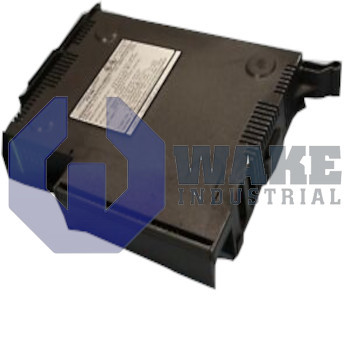
The Kollmorgen 502-03605-00R1 is part of the PIC900 Drives series and features 32 inputs with IEC 1131-2 Type 1 standard. It supports a nominal input voltage of 24 VDC and provides isolation voltage up to 4000 Vpk. The connector options include a 40-pin card edge and screw terminals, with a maximum power dissipation of 7.2 W.


To contact sales for pricing and lead time:
Payment Methods


Shipping Methods


Our Credentials


Product Description:
The 502-03605-00R1 digital input card is built by Kollmorgen for integration into the PIC900 Drives series control racks. By converting 24-volt field signals into TTL-compatible logic, the board allows the drive system to monitor limit switches, proximity sensors, and discrete status points with minimal external conditioning. Its purpose within an automated line is to provide electrically isolated feedback paths so the drive CPU can execute interlocks and sequencing without exposing low-voltage electronics to industrial noise.
Field wiring arrives through a 40-pin card edge connector backed by screw terminals, enabling quick replacement or hard-wired installation. The card supplies 32 inputs organized as four groups of eight, each built to the IEC 1131-2 Type 1 profile for consistent switching behavior. Normal operation centers on a nominal bus level of 24 VDC; an input is considered ON once it rises above 14 VDC and is forced OFF below 5 VDC. At the logic interface, the entire board requires 29 mA from the +5 V rail, keeping controller loading predictable. Input circuits can withstand up to 30 VDC and allow only 0.75 mA to leak when the source is disabled, preventing phantom states.
Electrical isolation between the field supply and the backplane is maintained by optocouplers rated to 4000 Vpk, protecting control silicon from high-energy transients. At worst-case loading, resistive dividers and indicator LEDs limit thermal rise to 7.2 W, so cabinet ventilation planning can be based on modest heat generation. Each channel can accept up to 7.5 mA of field current, while the logic interface caps steady-state consumption at 7 mA per point, preventing overstress of PLC outputs that may be driving the lines. Response time is bounded by 1 ms for both turn-on and turn-off transitions, allowing the drive to capture rapid machine events without added debouncing delays.









