


MTC306B1-E2C1 Kollmorgen
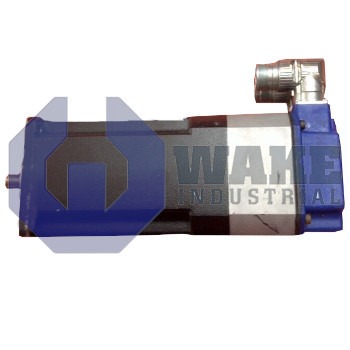
Wake Industrial LLC is not an authorized distributor of this product.
Wake Industrial LLC is not an authorized distributor of this product.
The Kollmorgen MTC306B1-E2C1 is a servo motor from the MTC Servo Motors series, offering a rated power of 1.47 kW and a rated speed of 4600 rpm. It produces a continuous stall torque of 3.54 Newton-meters at 25 degrees Celsius and has a peak torque of 11.29 Newton-meters. This motor operates with a maximum line voltage of 250 VRMS and weighs 4.8 kilograms with brake.
Internal Product Review
The Kollmorgen MTC306B1-E2C1 is a servo motor that stands out with 1.47 kW rated power and a 4600 rpm rated speed. Continuous stall torque of 3.54 N-m and peak torque of 11.29 N-m give the motor strong dynamic response, making the torque profile a key strength for precise motion applications.
 Have a part to sell?
 Wake Industrial Warranty
To contact sales for pricing and lead time:
Payment Methods


Shipping Methods


Our Credentials


Product Description:
The MTC306B1-E2C1 from Kollmorgen belongs to the MTC Servo Motors series. Built as a brushless rotary actuator, it converts drive commands into tightly regulated shaft motion for indexing tables, multi-axis gantries, and small conveyors on automated lines. An integral electromagnetic brake option lets machines hold position when power is removed, supporting controlled stop-and-hold sequences in industrial production.
At a shaft speed of 4600 rpm, the motor reaches its rated operating point while maintaining stable thermal behavior. The continuous mechanical output is 1.47 kW, which is the power the inverter and supply must sustain during normal duty. To reach that point, the windings can accept up to 250 VRMS line voltage, drawing 5.35 ARMS of continuous current that develops a stall torque of 3.54 N-m at 25 °C. For brief acceleration intervals, electromagnetic loading can climb to 11.29 N-m before current limiting is required. Torque scales predictably with current at 0.630 N-m/ARMS, allowing the controller to estimate load from current feedback. A back EMF constant of 38.1 VRMS per krpm means the drive voltage must match the commanded speed profile to avoid saturation.
The holding brake engages at 24 VDC, preventing drift during power loss. Electrical behavior is influenced by an inductance of 17 mH and a DC resistance of 1.94 Ω, which affect current-loop response and copper losses. Low rotational inertia of 0.000111 kg-m2 supports quick acceleration, while static friction is only 0.052 N-m, so small torque commands can start motion easily. Each watt of stall loss raises winding temperature by 0.795 °C/W, and the 31 min thermal time constant slows temperature rise during cyclic loads. With the factory brake installed, the assembly weighs 4.8 kg, which is useful when sizing couplings and related machine components.









