


M-207-C-39-078 Kollmorgen
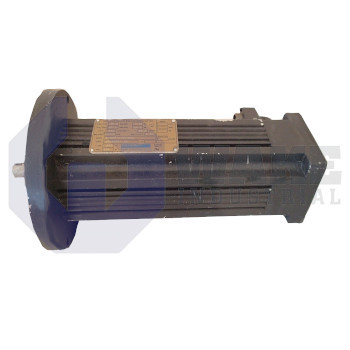
Wake Industrial LLC is not an authorized distributor of this product.
Wake Industrial LLC is not an authorized distributor of this product.
The Kollmorgen M-207-C-39-078 is part of the M Goldline Servo Motors series and features a continuous stall current of 10 Arms and a stall torque of 6.83 N-m at 25°C. It has a peak stall current of 33 Arms, a peak stall torque of 19.5 N-m, and operates with a back EMF constant of 37.7 Vrms/kRPM. The servo motor has a rotor inertia of 0.0018 kg-m² and a maximum line voltage of 250 Vrms.
Internal Product Review
The M-207-C-39-078 is a Kollmorgen M Goldline servo motor that stands out in precision motion applications, with 6.83 N-m stall torque at 25 C and a 0.624 N-m/Arms torque constant. A 10 Arms continuous stall current and 33 Arms peak stall current support confident performance through changing load conditions. Strong dynamic capability is highlighted by a maximum theoretical acceleration of 11100 rad/s².
 Have a part to sell?
 Wake Industrial Warranty
To contact sales for pricing and lead time:
Payment Methods


Shipping Methods


Our Credentials


Product Description:
The M-207-C-39-078 is a brushless servo motor produced by Kollmorgen within the M Goldline Servo Motors series. It is intended for precision velocity and position control in automated machinery, where rapid response and repeatability are required to coordinate axes, tooling, and material handling devices on the plant floor. Four magnetic poles interact with the stator field to support smooth brushless operation. That role makes the motor suitable for indexing axes, packaging equipment, and other motion systems that need predictable servo response.
Electrical performance centers on a continuous stall current of 10 Arms, which, when multiplied by the 0.624 N-m/Arms torque constant, yields the rated continuous torque output. Coil resistance is 0.82 ohms, which influences I²R heating at low speed, while the 37.7 Vrms/kRPM back-EMF constant corresponds to the voltage generated during regeneration. The windings accept up to 250 Vrms line input, and the motor inductance helps the drive’s current loop filter switching edges. Peak capability rises to 33 Arms and a peak stall torque of 19.5 N-m, providing short-term force for acceleration or load shock. The rotor’s low inertia of 0.0018 kg-m² supports rapid speed changes. At elevated temperature, the motor sustains 6.44 N-m of stall torque for continuous high-duty operation.
Dynamic behavior benefits from the winding inductance of 11 mH and a calculated maximum acceleration of 11100 rad/s², allowing tight position loops without overshoot. When the frame remains at 25 °C, stall torque reaches 6.83 N-m. This value derates slightly with temperature rise, but the thermal path offers only 0.62 °C/W of resistance. A thermal time constant of 21 minutes means internal heat rises slowly, letting intermittent overloads clear before steady-state limits are met. This thermal behavior helps the motor absorb short bursts of demand without reaching its steady-state limit too quickly.