


SS150B-P2 Danaher
Wake Industrial LLC is not an authorized distributor of this product.
- Straightforward Pricing: No Rush Fees, No Credit Card Fees
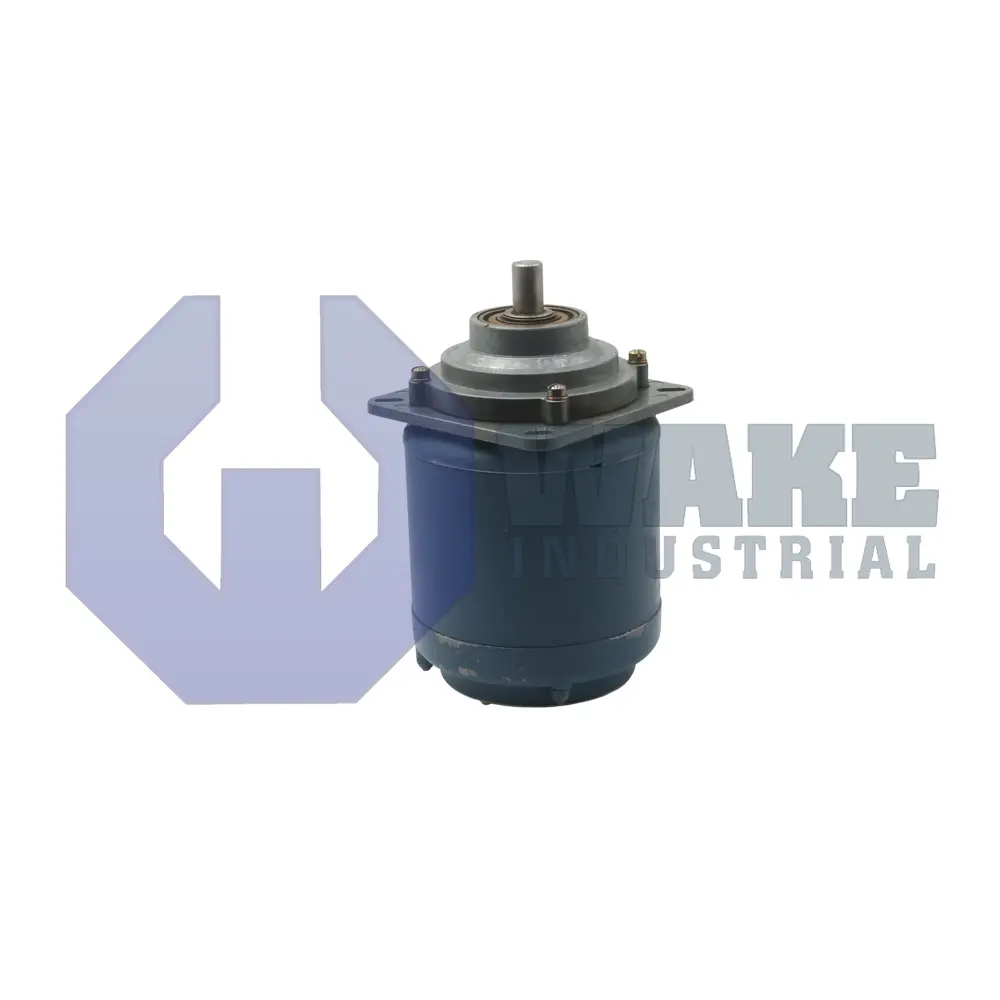
The Danaher SS150B-P2 is part of the Slo-Syn Synchronous Motors series and operates at a rated voltage of 120 Vac with a rated speed of 72 RPM. This single-phase motor features a minimum running torque of 150 oz-in, a line current of 0.45 A, and an overall length of 4.74 inches. It supports a maximum axial shaft load of 50 lb and comes with a pilot diameter of 2.186 inches.


To contact sales for pricing and lead time:
Payment Methods


Shipping Methods


Our Credentials


Product Description:
The SS150B-P2 is a synchronous stepping motor produced by Danaher for the Slo-Syn Synchronous Motors series. In position-holding or low-speed indexing stations, this motor converts a 60 Hz power supply into precise shaft movement without an external drive. By advancing one step during each half-cycle, it provides predictable rotary increments for open-loop motion sequences in packaging, metering, or feed systems. The synchronous design maintains a consistent relationship between the supply frequency and the resulting shaft speed.
The stator provides a minimum running torque of 150 oz-in, allowing the shaft to resist stalling under its rated mechanical load. Line excitation draws 0.45 A from a single-phase source at 120 VAC. This current passes through a 250 Ω phase resistor that dissipates 25 W to shape the coil waveform. A split-phase network contains a capacitor tuned for 60 Hz, establishing the 90-degree electrical offset required for bidirectional stepping. The rotor operates at 72 rpm when the supply frequency is nominal. The unit terminates on a screw-clamp terminal board, providing secure access to the resistor-capacitor connections. Its overall length is 4.74 inches, and the round frame seats on a 2.186-inch pilot. The 0.3750-inch keyed shaft accommodates compatible couplings without requiring a clamping-only connection.
The motor supports an axial thrust of 50 lb and a radial side load of 25 lb, allowing the shaft to carry suitable end-mounted gears or belt loads without exceeding the bearing limits. The rotor has an inertia of 0.062 oz-in-s², allowing pulse commands from a relay or solid-state switch to initiate motion with controlled acceleration. The phasing network uses a 3.75 µF capacitor to help keep the coil voltage balanced when the phase resistor is connected in series. Proper alignment of the pilot and keyed shaft helps prevent excessive bearing stress during operation. The compact housing supports installation in low-speed motion assemblies where available mounting space is limited.









