


M112-FF-206 Danaher
Wake Industrial LLC is not an authorized distributor of this product.
Wake Industrial LLC is not an authorized distributor of this product.
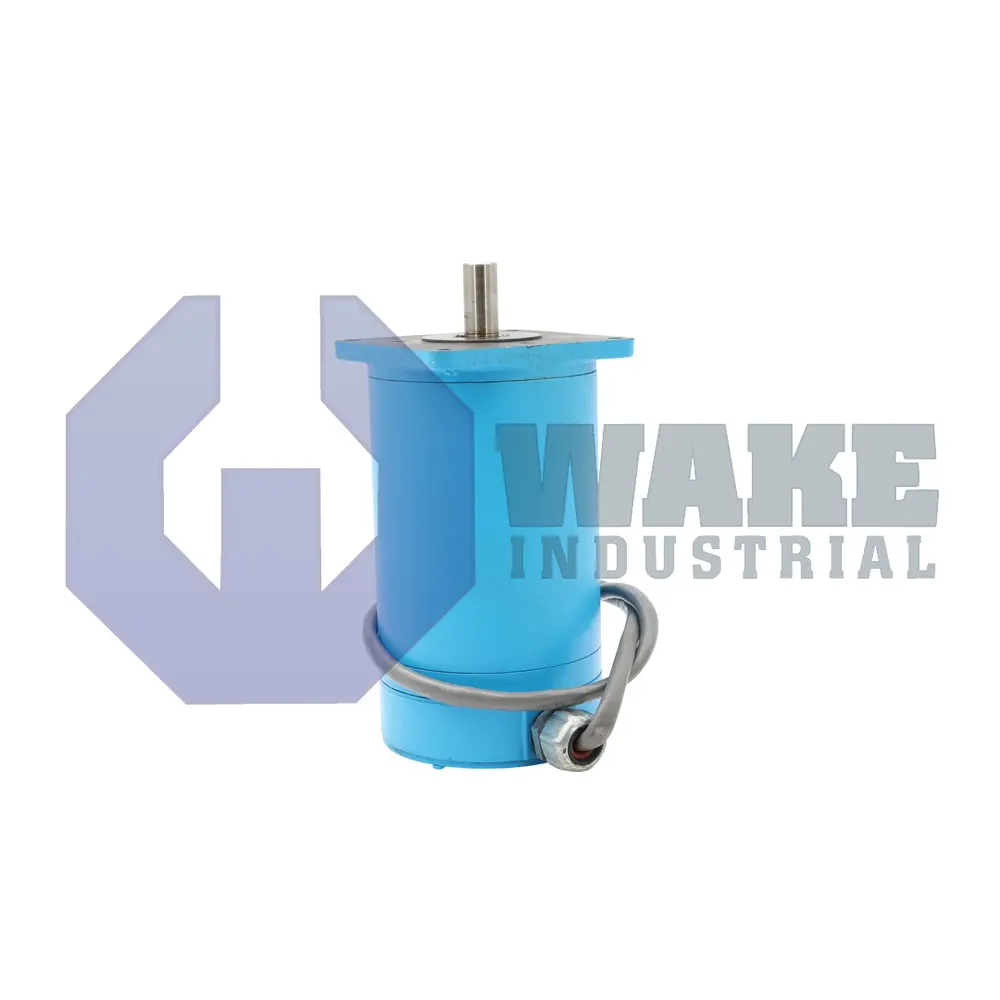
The M112-FF-206 is a stepping motor manufactured by Danaher and is part of the Slo-Syn Stepping Motors series. It has a bipolar holding torque of 1390 oz-in and a square flange type with a frame size of 110 mm. The motor features a step angle of 1.8 degrees and a shaft diameter of 0.625 inches, with a rated current of 6.0 A at 3.0 VDC.
Internal Product Review
The M112-FF-206 is a Danaher Slo-Syn stepping motor with 1390 oz-in bipolar holding torque and a precise 1.8° step angle. Rated at 6.0 A and 3.0 VDC, the motor shows strong low-voltage drive characteristics for demanding motion-control assemblies. A 100°C max case temperature supports dependable thermal performance, making M112-FF-206 a very capable choice for high-torque stepper applications.
 Have a part to sell?
 Wake Industrial Warranty
To contact sales for pricing and lead time:
Payment Methods


Shipping Methods


Our Credentials


Product Description:
The M112-FF-206 is a hybrid stepping motor produced by Danaher within the Slo-Syn Stepping Motors series. Designed for open-loop or microstepped drives, it converts pulse trains into precise angular motion for indexing equipment, pick-and-place heads, or small gantry axes. The unit uses a square mounting flange that fits NEMA-style brackets, and its 110 mm frame provides a large magnetic volume for torque production. Each full step advances the shaft by 1.8°, providing 200 discrete positions per revolution without external feedback. A compatible microstepping drive can divide these full steps into smaller commanded increments for smoother low-speed motion.
Bipolar excitation gives the energized motor a holding torque of 1390 oz-in, allowing tables or lead screws to remain fixed at standstill. The residual detent torque is 12 oz-in, providing limited position retention when power is removed. A rotor inertia of 2.75 lb-in² balances responsive acceleration with smooth damping. The windings have a rated phase current of 6.0 A and a rated phase voltage of 3.0 VDC, which must be considered when selecting the drive and power supply. A winding resistance of 0.49 ohms determines steady-state copper losses, while an inductance of 8.8 mH affects current rise time and switching performance. Proper current regulation helps protect the windings while allowing the motor to produce its available torque across the intended speed range.
The motor case may reach 100 °C without exceeding the insulation limit when the unit is mounted to a panel that can spread heat effectively. Radial side loads on the shaft are limited to 25 lb, while axial thrust loads are permitted up to 50 lb. These load limits allow suitable timing belts, pulleys, or screw couplings to be connected directly when alignment is maintained. The 0.625 in shaft diameter provides a solid mechanical interface and is supported by bearings sized for the permitted radial and axial forces. Mounting surfaces should remain flat so the square flange seats evenly and does not introduce additional bearing stress.









