


PPC-R02.2N-N-Q1-T2-NN-FW Bosch Rexroth Indramat
Wake Industrial LLC is not an authorized distributor of this product.
Wake Industrial LLC is not an authorized distributor of this product.
MPN: R911290640
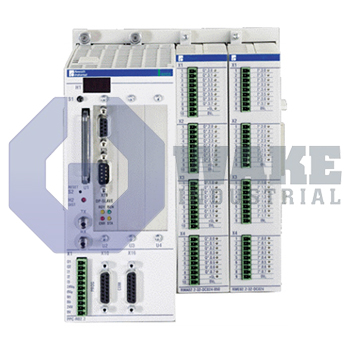
The Bosch Rexroth Indramat PPC-R02.2N-N-Q1-T2-NN-FW is a control unit from the PPC Controllers series with a RECO housing design. It features Ethernet 10 Mb interface ETH01 and supports cross communication using DAQ03. This design version 2 unit does not include memory expansion.
Internal Product Review
The PPC-R02.2N-N-Q1-T2-NN-FW is a Bosch Rexroth Indramat control unit with a RECO unit housing design that suits organized cabinet integration. Cross Communication through DAQ03 and a 10 Mb Ethernet interface via ETH01 support dependable data exchange and practical network connectivity. A well-matched controller for automation systems requiring stable communication performance.
 Have a part to sell?
 Wake Industrial Warranty
To contact sales for pricing and lead time:
Payment Methods


Shipping Methods


Our Credentials


Product Description:
The PPC-R02.2N-N-Q1-T2-NN-FW is a programmable control unit in the PPC Controllers series. Mounted in a RECO rack, it provides the processing resources that coordinate drives, I/O stations, and supervisory networks in automated machinery. The module issues motion commands, captures feedback, and manages machine states so sequential and simultaneous tasks remain synchronized during production. This makes it suitable for control architectures that need centralized logic inside a compact rack-based platform.
This controller communicates with neighboring Rexroth devices through DAQ03 cross communication, which uses a backplane link to exchange cyclic data without external wiring. For plant-level networking, it includes an ETH01 Ethernet interface that operates at 10 Mb/s and supports integration with PLCs and cell controllers over standard TCP/IP messaging. The unit is marked as design version 2, indicating the second design revision used for this controller type. Its electronics are enclosed in a RECO housing that slides into a compact terminal block frame to save panel depth and simplify removal during service. The board set is supplied without memory expansion, so application code and parameter data remain on the onboard flash and SRAM resources.
Its function as a control unit means the module handles coordination logic while power switching is carried out by separate drive inverters. That arrangement helps keep thermal load lower inside the rack and separates control processing from the power stage. As part of series 2, the controller follows the addressing structure used for this generation of the platform. Slot mechanics, connector pinouts, and diagnostic LED placement are arranged for use with matching rack modules, which supports orderly installation inside the same control system.