


MSK101E-0300-NN-S2-AP0-RNNN Bosch Rexroth Indramat
Wake Industrial LLC is not an authorized distributor of this product.
MPN: R911330518
No Tariffs On US Orders- Straightforward Pricing: No Rush Fees, No Credit Card Fees
Current response time:
6 Minutes
48 Seconds
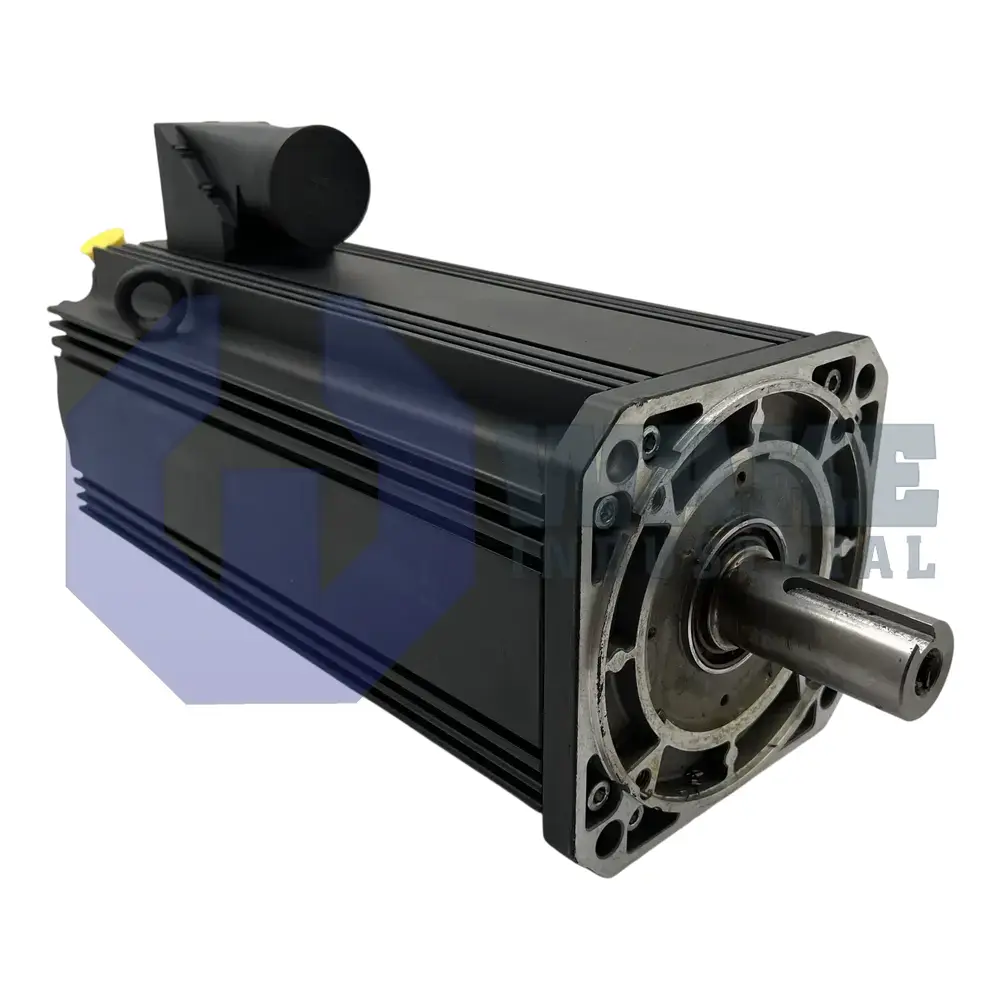
The Bosch Rexroth Indramat MSK101E-0300-NN-S2-AP0-RNNN is an IndraDyn S Synchronous Servomotor from the MSK IndraDyn S Synchronous Motors series. It uses natural convection cooling, features a shaft with keyway, and has an IP65 protection rating. This motor includes an optical singleturn EnDat2.1 encoder with 2048 signal periods and is designed without a holding brake.


To contact sales for pricing and lead time:
Payment Methods


Shipping Methods


Our Credentials


Product Description:
The MSK101E-0300-NN-S2-AP0-RNNN servo motor is built by Bosch Rexroth Indramat and belongs to the MSK IndraDyn S Synchronous Motors series. As an IndraDyn S synchronous servo motor, it converts drive current into precisely controlled torque for positioning tasks in automated machinery and handling axes. The 101 frame size and E length provide the torque density needed for medium-to-high-inertia loads while maintaining compatibility with standard drive controllers used in packaging, printing, and material-forming lines. This motor type is commonly used where repeatable start-stop motion and accurate speed control are required. It is suited for axes that must hold tight motion profiles during indexing, feeding, and synchronized transfer movements.
Thermal management relies on natural convection, so the motor dissipates heat through its housing without external fans. The housing is rated IP65, which helps keep dust and water jets away from the stator windings, and the insulation is rated for 155 °C operation. For feedback, the optical encoder uses the EnDat2.1 serial interface and provides 2048 signal periods per revolution, enabling fine position tracking across the speed range. The increased-concentricity mechanical design reduces shaft runout, which supports smoother motion and stable encoder operation. Winding code 0300 indicates the electrical constants expected by the associated controller.
The rotor uses a shaft with a keyway that accepts standard couplings, and the feedback device is a single-turn variant that reports absolute position within one revolution. Power leads exit on the A-side, which helps keep the power connection accessible when the motor is installed in compact machine frames. The cable outlet position can also simplify routing when adjacent feedback and motor connectors need clear separation. Operation is permitted at ambient temperatures from 0 to 40 °C, matching common control cabinet conditions. Because the unit is supplied without a holding brake, vertical axes must rely on external clamping or drive torque for standstill security.
Frequently Asked Questions about MSK101E-0300-NN-S2-AP0-RNNN:
Q: What cooling method does the MSK101E-0300-NN-S2-AP0-RNNN motor use?
A: The MSK101E-0300-NN-S2-AP0-RNNN is cooled solely by natural convection, so it operates without forced ventilation or fans.
Q: What type of encoder and resolution does the MSK101E-0300-NN-S2-AP0-RNNN motor use?
A: This model features an EnDat2.1 encoder interface with a resolution of 2048 signal periods for precise position feedback.
Q: What shaft type does the MSK101E-0300-NN-S2-AP0-RNNN synchronous motor have?
A: A keyway shaft is provided on this motor, allowing for reliable mechanical coupling with compatible devices.
Q: What is the allowed operating ambient temperature for the MSK101E-0300-NN-S2-AP0-RNNN?
A: The MSK101E-0300-NN-S2-AP0-RNNN operates within an ambient temperature range of 0°C to 40°C for safe and optimal performance.
Q: Does the MSK101E-0300-NN-S2-AP0-RNNN come with a holding brake?
A: This model is manufactured without a holding brake, so external means are necessary for holding torque.









