


MSK101D-0200-NN-S2-AG0-RNNN Bosch Rexroth Indramat
Wake Industrial LLC is not an authorized distributor of this product.
MPN: R911316678
No Tariffs On US Orders- Straightforward Pricing: No Rush Fees, No Credit Card Fees
Current response time:
6 Minutes
41 Seconds
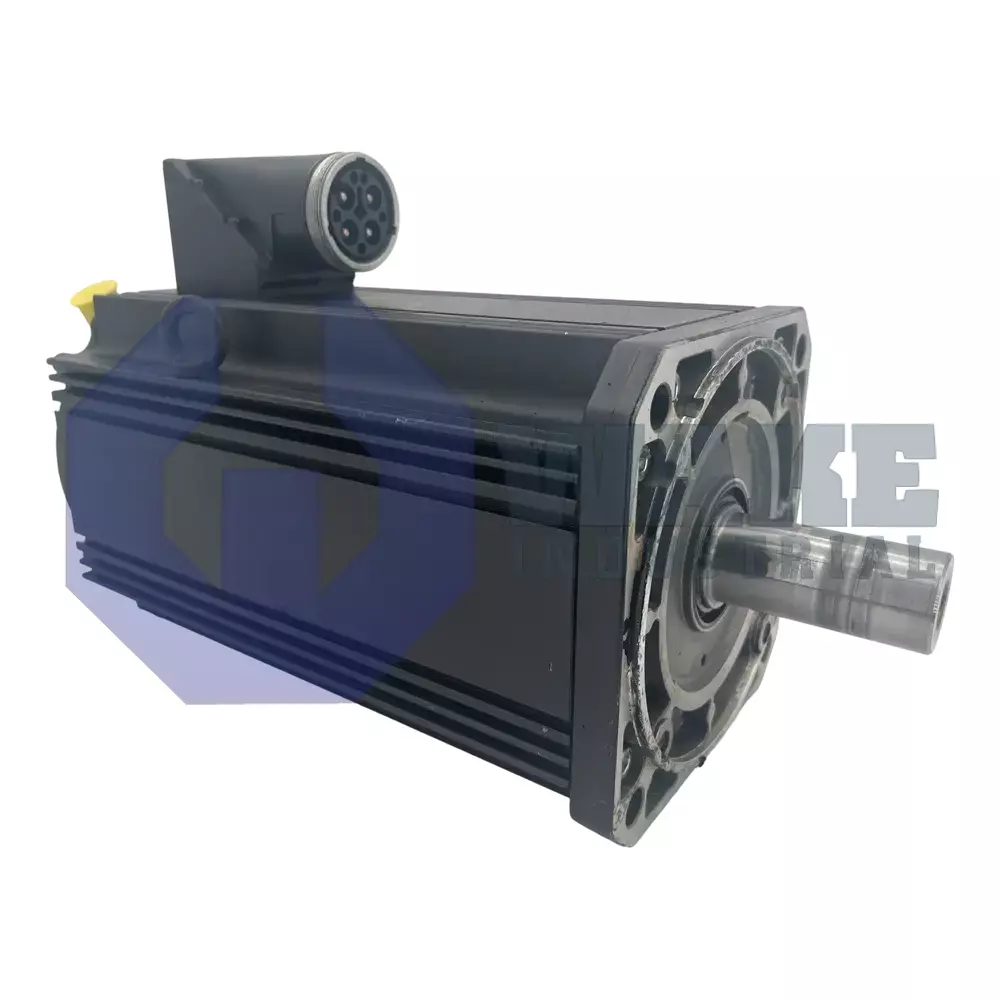
The Bosch Rexroth Indramat MSK101D-0200-NN-S2-AG0-RNNN is part of the MSK IndraDyn S Synchronous Motors series and uses natural convection cooling. This synchronous servomotor features a plain shaft, singleturn optical encoder with EnDat2.1 interface, and does not include a holding brake.


To contact sales for pricing and lead time:
Payment Methods


Shipping Methods


Our Credentials


Product Description:
The MSK101D-0200-NN-S2-AG0-RNNN is an IndraDyn S synchronous servo motor manufactured by Bosch Rexroth Indramat and supplied within the MSK IndraDyn S Synchronous Motors series. In automated machine tools, packaging lines, and material-handling axes, it converts controlled electrical input from an IndraDrive controller into precise mechanical motion, allowing both position and velocity loops to be closed with high accuracy for repetitive industrial cycles. Its synchronous design supports responsive torque production during acceleration, deceleration, and steady-state motion. That behavior is useful on axes that must change speed quickly while maintaining stable path control.
Heat produced in the stator is removed through natural convection, so only unobstructed ambient air is required to keep the winding temperature within its limits. The mechanical build uses increased concentricity, a design feature that minimizes shaft runout and supports smooth coupling to precision gearboxes. Rotor position is captured by an integrated encoder that communicates via EnDat 2.1; this bidirectional digital interface transmits position data and also allows parameter storage inside the feedback unit. Incremental tracks supply 2048 signal periods per revolution, and the scanning principle is optical, allowing low interpolation error for fine positioning at slow speeds. The feedback system helps the drive maintain accurate rotor alignment and smooth motion at low speed.
The feedback module is configured as single-turn, meaning absolute position information is retained for one full revolution without referencing, which is adequate for many rotary axes that never exceed 360 degrees of travel. For holding duties, the motor relies on external mechanics because it is delivered without a holding brake. The stator envelope corresponds to motor size 101, while length code D provides additional stack height for higher continuous torque. Electrical parameters follow winding code 0200, matching resistance and inductance to compatible IndraDrive amplifier ratings. A plain shaft eases direct coupling, and the power connector is positioned on the A-side so cabling can be routed parallel to the machine frame without bends that increase installation space. This arrangement can help in compact installations where cable clearance near guards or panels is limited.
Frequently Asked Questions about MSK101D-0200-NN-S2-AG0-RNNN:
Q: What cooling method does the MSK101D-0200-NN-S2-AG0-RNNN motor use?
A: The MSK101D-0200-NN-S2-AG0-RNNN motor uses natural convection for cooling and does not require external fans.
Q: What type of shaft is featured on the MSK101D-0200-NN-S2-AG0-RNNN motor?
A: This model is equipped with a plain shaft for output coupling.
Q: What encoder interface and technology are used in the MSK101D-0200-NN-S2-AG0-RNNN motor?
A: The MSK101D-0200-NN-S2-AG0-RNNN motor uses an EnDat2.1 encoder interface with optical technology.
Q: Is a holding brake included with the MSK101D-0200-NN-S2-AG0-RNNN motor?
A: This motor does not come with a holding brake as standard equipment.
Q: Where is the power connector located on the MSK101D-0200-NN-S2-AG0-RNNN motor?
A: The power connector on this model is positioned on the A-side of the motor.