


MSK101C-0200-FN-M1-BG0-NNNN Bosch Rexroth Indramat
Wake Industrial LLC is not an authorized distributor of this product.
MPN: R911369243
No Tariffs On US Orders- Straightforward Pricing: No Rush Fees, No Credit Card Fees
Current response time:
6 Minutes
34 Seconds
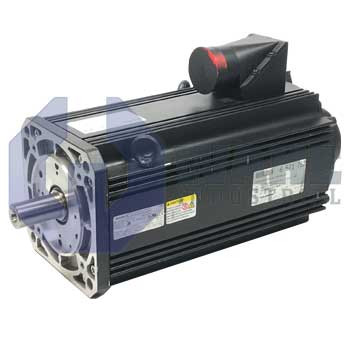
The Bosch Rexroth Indramat MSK101C-0200-FN-M1-BG0-NNNN is part of the MSK IndraDyn S Synchronous Motors series and features a liquid cooling system with a standard design. This servomotor has a 101 motor size, length C, and a B-Side power connector. It utilizes a plain shaft and includes a multiturn absolute optical encoder with Hiperface interface and 128 signal periods.


To contact sales for pricing and lead time:
Payment Methods


Shipping Methods


Our Credentials


Product Description:
The MSK101C-0200-FN-M1-BG0-NNNN is a synchronous servomotor produced by Bosch Rexroth Indramat and supplied within the MSK IndraDyn S Synchronous Motors series. As a rotary actuator, it converts controlled electrical power into precise mechanical motion for positioning axes, conveying modules, and pick-and-place stations on automated lines. Integration with compatible drive controllers supports feedback-based regulation, so the motor can deliver accurate speed and position control in multiaxis industrial machinery. The synchronous design also supports smooth torque delivery during demanding motion sequences with frequent starts, stops, and speed changes.
With a frame size of 101, the motor offers a large stator diameter that supports higher continuous torque than smaller housings in the same series. Heat is removed by liquid cooling, which circulates coolant around the windings to help keep internal temperatures stable during sustained high-load operation. Feedback data travels over a Hiperface link, so absolute position, incremental signals, and electronic nameplate data can share the same eight-wire cable. The sensing system uses optical scanning for accurate track detection, and mechanical output is transferred through a plain shaft that couples readily to pulleys, couplings, or gearboxes.
The position sensor provides 128 signal periods per mechanical revolution, and its multiturn absolute design lets the drive recover shaft position across multiple turns after power returns. Winding code 0200 sets the electrical characteristics used with compatible drive electronics. This variant is supplied without a holding brake, so stopping torque must be provided electrically or by external machine components. The motor also has length C, a power connector on side B, and a standard housing design that fits common installation layouts.
Frequently Asked Questions about MSK101C-0200-FN-M1-BG0-NNNN:
Q: What type of cooling is used in the MSK101C-0200-FN-M1-BG0-NNNN motor?
A: The MSK101C-0200-FN-M1-BG0-NNNN features liquid cooling for efficient heat dissipation during operation.
Q: Does the MSK101C-0200-FN-M1-BG0-NNNN motor have a holding brake?
A: This model is built without a holding brake.
Q: What encoder interface does the MSK101C-0200-FN-M1-BG0-NNNN use?
A: The motor incorporates a Hiperface encoder interface for feedback and control integration.
Q: What type of shaft does the MSK101C-0200-FN-M1-BG0-NNNN feature?
A: A plain shaft is used in this servo motor.
Q: What encoder technology is implemented in the MSK101C-0200-FN-M1-BG0-NNNN motor?
A: The encoder in this model utilizes optical technology with multiturn absolute capability.









