


MSK070D-0150-NN-S1-UP1-NNNN Bosch Rexroth Indramat
Wake Industrial LLC is not an authorized distributor of this product.
Wake Industrial LLC is not an authorized distributor of this product.
MPN: R911321583
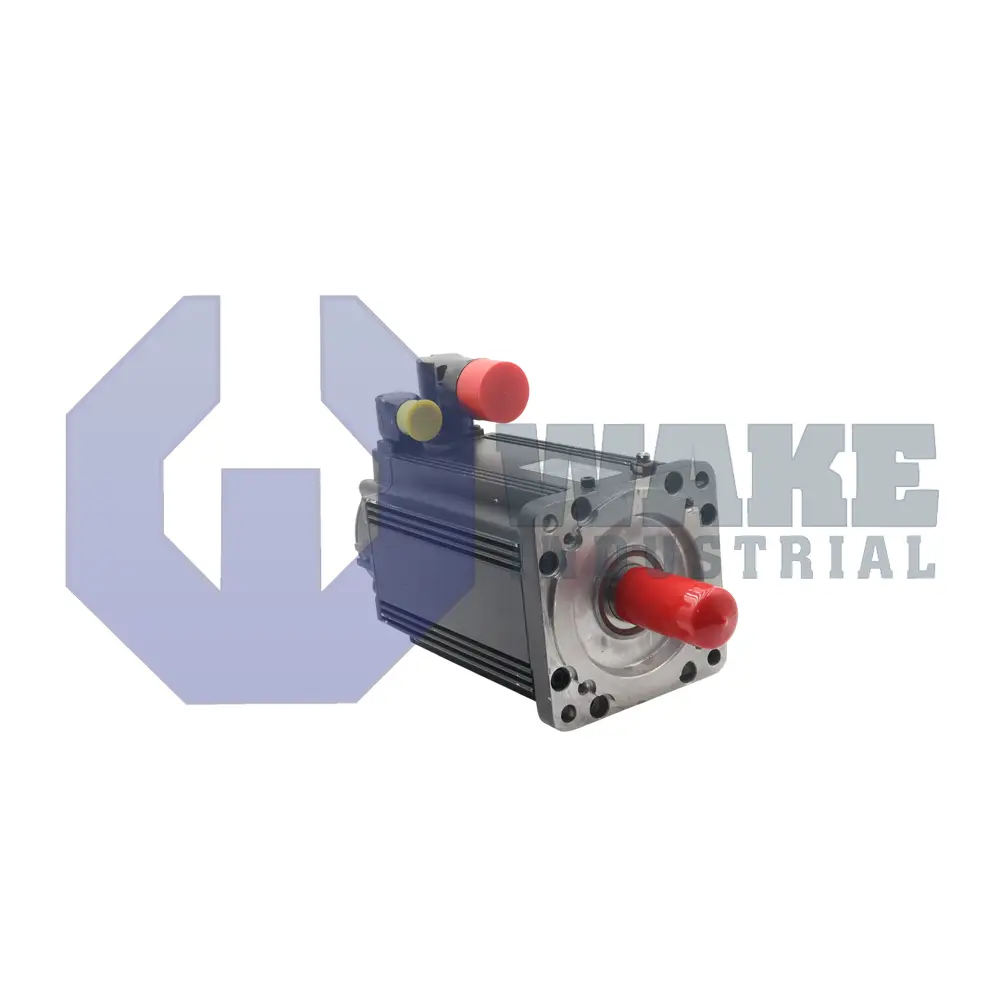
The Bosch Rexroth Indramat MSK070D-0150-NN-S1-UP1-NNNN is an IndraDyn S Synchronous Servomotor from the MSK IndraDyn S Synchronous Motors series. It features natural convection cooling and a shaft with keyway, as well as a holding brake with a torque of 23 Nm. The motor includes a rotatable 240° Hiperface encoder with optical singleturn technology and has an IP65 protection rating.
Internal Product Review
The MSK070D-0150-NN-S1-UP1-NNNN is an IndraDyn S synchronous servomotor with natural convection cooling. Hiperface feedback and an electrically released holding brake support accurate motion control and secure axis holding. A rotatable 240° encoder connector and IP65 protection make this motor especially appealing for flexible installation in industrial service.
 Have a part to sell?
 Wake Industrial Warranty
To contact sales for pricing and lead time:
Payment Methods


Shipping Methods


Our Credentials


Product Description:
The MSK070D-0150-NN-S1-UP1-NNNN is an IndraDyn S synchronous servomotor from Bosch Rexroth Indramat in the MSK IndraDyn S Synchronous Motors series. It converts drive-controller commands into controlled shaft rotation for industrial positioning and velocity control. Winding code 0150 and motor length D identify this version within the series and help match the motor to the required torque-speed range. This type of motor is used in machines where a servo axis must respond quickly to command changes and load variations. It is suitable for machine-tool and material-handling axes that require repeatable motion.
Thermal management is handled by natural convection, so installation must leave airflow paths around the housing. The enclosure meets the IP65 protection rating, sealing internal parts against dust and low-pressure water jets. An electrically released holding brake provides 23 Nm of torque when power is removed, helping hold vertical or suspended loads in place. Position feedback is provided by an encoder that delivers 128 signal periods per revolution, supporting accurate servo loops during low-speed contouring. The motor operates in ambient temperatures from 0 °C to 40 °C and does not require auxiliary cooling hardware. Sealed construction helps the motor operate near dust-producing or splash-prone equipment without exposing internal parts.
The single-turn feedback head employs the Hiperface interface and connects through a rotatable 240° plug, which helps with cable routing in tight spaces. Optical scanning of the code disk works with the compact 070 frame size to support low inertia and responsive motion. The winding insulation system is classified as 155, which is consistent with Class F thermal limits during continuous operation. A shaft with keyway transfers torque without slip, and the brake disengages automatically when the drive energizes. This combination supports stable feedback transmission and reliable torque transfer during repeated axis movement.