

MS2N10-E0BHN-CMVH3-NNNNE-NN Bosch Rexroth Indramat
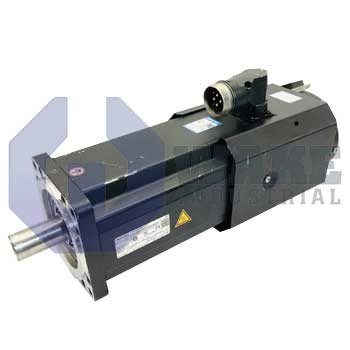
Wake Industrial LLC is not an authorized distributor of this product.
MPN: R914000320
No Tariffs On US Orders- Straightforward Pricing: No Rush Fees, No Credit Card Fees
The MS2N10-E0BHN-CMVH3-NNNNE-NN servo motor boasts a rated power of 5.5 kW, a maximum torque of 105 Nm, and a rated speed of 3000 rpm. As part of the MS2N Synchronous Servo Motors by Bosch Rexroth Indramat, it includes IP65 housing protection and advanced IndraDyn S multi-turn encoder feedback.


To contact sales for pricing and lead time:
Payment Methods


Shipping Methods


Our Credentials


Product Description:
The MS2N10-E0BHN-CMVH3-NNNNE-NN Synchronous Servo Motor is a precision-built model from Bosch Rexroth, a trusted name in motion and automation technology. This model belongs to the MS2N Synchronous Servo Motors series, designed for high-performance industrial applications. It ensures reliable and efficient torque output under demanding operational conditions. The motor features a natural cooling mode, which supports effective heat dissipation during continuous operation.
The MS2N10-E0BHN-CMVH3-NNNNE-NN Synchronous Servo Motor offers advanced position feedback with an encoder performance of 20 bit. It integrates a multiturn 4096 revolution encoder design, enabling precise control and positioning accuracy in automation environments. The electrical connection uses a double cable connection M40 / M17 which confirms stable electrical interfacing and secure connectivity. The shaft design is smooth without a sealing ring for direct mechanical coupling in applications that do not require additional sealing protection. Its frame size 10 structure and frame length E ensure compact installation within industrial systems. This MS2N Synchronous Servo Motor includes an electrically released holding brake that provides safe operational control. The brake offers a static holding torque of 90 Nm and a dynamic braking torque of 33 Nm for secure load holding during machine stops. The rated current of the holding brake is 1.5 A which optimizes power usage without compromising performance.
The winding speed of the MS2N10-E0BHN-CMVH3-NNNNE-NN Synchronous Servo Motor is 2000 rpm that delivers balanced speed and torque characteristics suited for industrial automation and precision machinery. The bearing type is standard for reliable and long-term rotation. The frame mounting type is B5 / IM3001 which provides compatibility with various machine configurations. The protection class IP64 safeguards the motor against dust and low-pressure water jets.
Frequently Asked Questions about MS2N10-E0BHN-CMVH3-NNNNE-NN:
Q: How does the 20-bit encoder resolution improve performance on the MS2N10-E0BHN-CMVH3-NNNNE-NN servo motor?
A: A 20-bit encoder yields 1,048,576 discrete positions per revolution, significantly improving resolution, repeatability and positional control over lower-resolution variants. This ensures finer motion control for precision manufacturing tasks.
Q: Where would this servo motor be typically applied in automation systems?
A: This motor suits high-precision machine tools, automated assembly lines, robotics, and indexing tables requiring torque up to ~300 Nm and high positional accuracy. Its features align it with Industry 4.0-capable servo drives needing encoder intelligence.
Q: What role does the electrically released holding brake (90 Nm static / 33 Nm dynamic) play in the MS2N10-E0BHN-CMVH3-NNNNE-NN servo motor?
A: The brake secures the load when the drive is de-energized, preventing unwanted motion or drift. With 90 Nm holding and 33 Nm dynamic torque, it ensures safe stand-still loads and controlled deceleration of the motor/axis.
Q: How does the smooth shaft without a sealing ring benefit this servo motor installation?
A: A smooth shaft (no seal) allows direct mechanical coupling without the groove or lip of a seal which reduces friction and facilitates easier mounting of reducers or gearboxes. It suits protected environments where shaft sealing is not mandatory, simplifying the mechanical interface.
Q: Why might one choose the dual-cable M40 / M17 connection on the MS2N10-E0BHN-CMVH3-NNNNE-NN servo motor?
A: The separate power (M40) and feedback (M17) cables allow optimized routing of current and signal returns, improving electrical stability and noise immunity. This separation is beneficial in high-dynamics or long-cable length installations.









