

MS2N05-B0BTN-CMSH1-NNNNN-GE160N2040BN-NN Bosch Rexroth Indramat
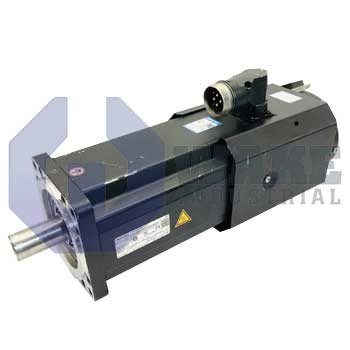
Wake Industrial LLC is not an authorized distributor of this product.
MPN: R911400910
No Tariffs On US Orders- Straightforward Pricing: No Rush Fees, No Credit Card Fees
The MS2N05-B0BTN-CMSH1-NNNNN-GE160N2040BN-NN synchronous servo motor features a rated torque of 0.48 Nm, a maximum torque of 1.4 Nm, a rated speed of 6000 rpm, and a compact flange size of 50 mm. Part of the MS2N Synchronous Servo Motors by Bosch Rexroth Indramat, it includes IP65 protection and a self-cooled design.


To contact sales for pricing and lead time:
Payment Methods


Shipping Methods


Our Credentials


Product Description:
The MS2N05-B0BTN-CMSH1-NNNNN-GE160N2040BN-NN Servo Motor is manufactured by Bosch Rexroth Indramat for industrial automations. It provides a rated speed of up to 5410 revolutions per minute. It produces rated power of 1.34 kilowatts. The motor performs at a rated torque value of 2.37 Newton-meters.
The MS2N05-B0BTN-CMSH1-NNNNN-GE160N2040BN-NN servo motor operates at 3.12 Amperes when carrying the standard load. When tested at 20°C, the winding resistance comes in at 2.7 Ohms. The rotor inertia of the motor is 0.00028 kg · m². The motor features a holding brake system. You need 24 Volts to make the brake operate. The rated brake current is 0.73 Amperes. At 10.00 Newton-meters, the holding brake torque of the motor is checked. The winding has a winding thermal time constant of 21.2 seconds. The MS2N05-B0BTN-CMSH1-NNNNN-GE160N2040BN-NN servo motor can operate at its fastest speed, which is 6000 revolutions per minute. The torque constant is measured as 0.89 Newton-meters per Ampere when the operating temperature is 20°C. At operating temperature, the maximum torque amount is 10.6 Newton-meters. Five pole pairs make up the design of this motor. The motor for this car weighs 5.1 kilograms. Suitable thermal and electrical conditions are maintained to guarantee continuous output.
The voltage constant for the MS2N05-B0BTN-CMSH1-NNNNN-GE160N2040BN-NN servo motor is 54.2 Volts per 1000 min¹. At a car speed of 60K, the torque reading is shown as 3.75 Newton-meters. We are drawing 4.55 Amperes so far. Under standstill conditions where the car is operating below 100K, the torque improves by 4.45 Newton-meters. 5.45 Amperes of current are measured in the standstill condition at 100 K. These basic specifications make the motors compatible with challenging motion control systems. This model fits well into highly precise automation systems. The system responds similarly to changes in load volume.
Frequently Asked Questions about MS2N05-B0BTN-CMSH1-NNNNN-GE160N2040BN-NN:
Q: Why does MS2N05-B0BTN-CMSH1-NNNNN-GE160N2040BN-NN use 5 pole pairs?
A: The MS2N05-B0BTN-CMSH1-NNNNN-GE160N2040BN-NN uses 5 pole pairs to ensure smooth torque generation and accurate field alignment.
Q: How does the 1.21 nF capacitance help MS2N05-B0BTN-CMSH1-NNNNN-GE160N2040BN-NN?
A: In MS2N05-B0BTN-CMSH1-NNNNN-GE160N2040BN-NN, 1.21 nF capacitance reduces noise and electromagnetic interference for stable signal handling.
Q: What is the function of 14.09 mH inductance in MS2N05-B0BTN-CMSH1-NNNNN-GE160N2040BN-NN?
A: The 14.09 mH inductance in MS2N05-B0BTN-CMSH1-NNNNN-GE160N2040BN-NN stabilizes current flow and improves motor control response.
Q: Why does MS2N05-B0BTN-CMSH1-NNNNN-GE160N2040BN-NN include thermal time constant?
A: MS2N05-B0BTN-CMSH1-NNNNN-GE160N2040BN-NN uses thermal time constant to manage temperature rise and protect winding insulation.
Q: How does 54.2 V/1000 min⁻¹ voltage constant benefit MS2N05-B0BTN-CMSH1-NNNNN-GE160N2040BN-NN?
A: MS2N05-B0BTN-CMSH1-NNNNN-GE160N2040BN-NN benefits from this voltage constant by improving back EMF control and voltage matching.