


KDA 3.1-100-3-LPD-W1 Bosch Rexroth Indramat
Wake Industrial LLC is not an authorized distributor of this product.
- Straightforward Pricing: No Rush Fees, No Credit Card Fees
Current response time:
5 Minutes
53 Seconds
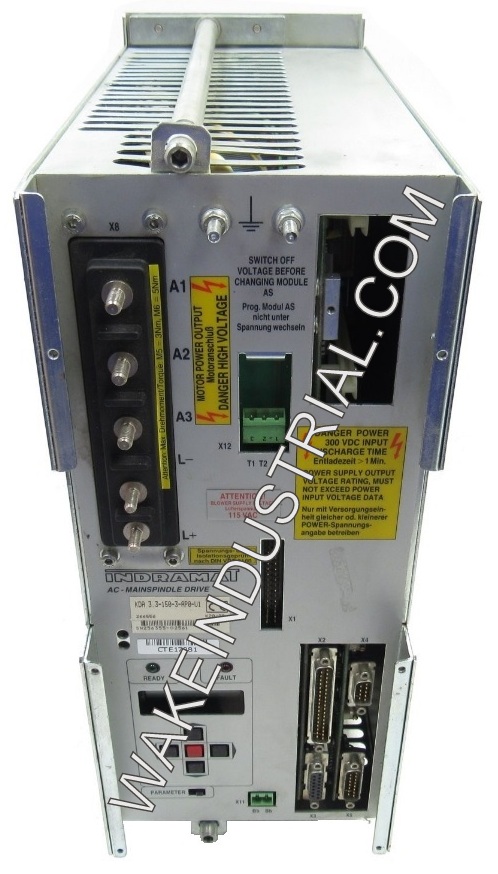
The Bosch Rexroth Indramat KDA 3.1-100-3-LPD-W1 is a spindle drive in the KDA Spindle Drives series, designed for use with a 300 VDC supply voltage and rated at 100 Amps. It utilizes forced cooling through a mounted heatsink blower operating at 220V and includes digital position command interfaces and a second encoder input for spindle or additional motor feedback.


To contact sales for pricing and lead time:
Payment Methods


Shipping Methods


Our Credentials


Product Description:
The KDA 3.1-100-3-LPD-W1 is a drive unit produced by Bosch Rexroth Indramat within the KDA Spindle Drives series. It sits between the rectified DC bus of a multi-axis system and a high-speed spindle motor, delivering regulated three-phase power so machine tools can maintain constant surface speed during cutting, drilling, or grinding. By combining internal current regulation with feedback from a spindle-mounted encoder, the drive enables closed-loop control of torque and velocity. That control behavior helps the spindle remain stable when cutting load changes during a machining cycle.
The drive draws its logic energy from an intermediate circuit held at 300 VDC, and it can supply up to 100 A of continuous output current to the motor windings. Power semiconductors mounted on a large aluminum plate are cooled by a heat sink-mounted blower, which helps keep junction temperatures within operating limits during heavy duty cycles. Air is forced through the fins, a method identified as forced cooling, so thermal derating is reduced when cabinet temperature rises. The blower is fed from an auxiliary source rated at 220 V at 50–60 Hz, allowing airflow to continue during short DC-bus interruptions and helping remove residual heat from the power stage.
The unit operates in ambient air from 5 to 45 °C without output reduction and may be mounted at elevations up to 1000 m above sea level before additional cooling measures are required. Speed references arrive over a SERCOS interface, providing a digital link between the spindle drive and the higher-level control. A dedicated connector marked as a second encoder input accepts feedback from the spindle itself or from an auxiliary motor. This input supports synchronized positioning and spindle-orientation functions used during tool changes, thread starts, and other sequences that require the shaft to stop at a known angle.