


KDA 3.1-100-3-DYI-U1 Bosch Rexroth Indramat
Wake Industrial LLC is not an authorized distributor of this product.
- Straightforward Pricing: No Rush Fees, No Credit Card Fees
Current response time:
4 Minutes
13 Seconds
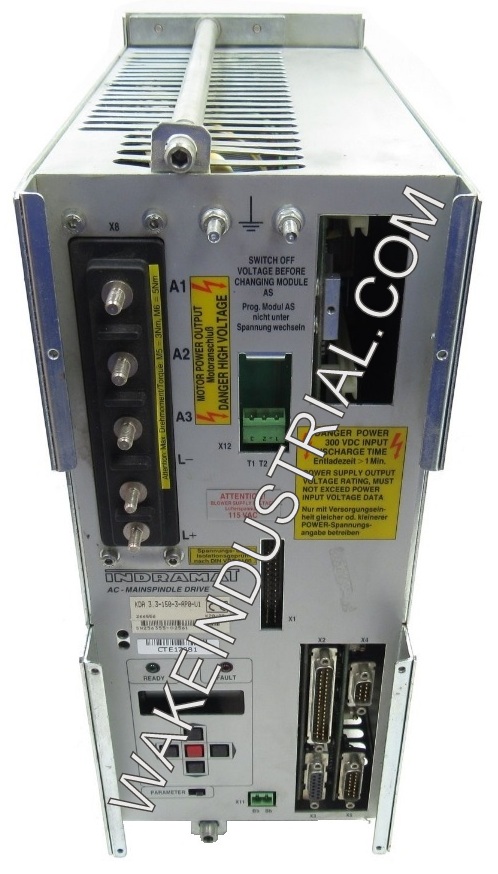
The Bosch Rexroth Indramat KDA 3.1-100-3-DYI-U1 is a spindle drive from the KDA Spindle Drives series. It features a rated current of 100 Amps and operates with a DC supply voltage of 300 VDC. The drive uses forced cooling with a mounted heatsink blower that runs on 115V at 50-60Hz and supports digital speed command values with a 16-bit parallel input.


To contact sales for pricing and lead time:
Payment Methods


Shipping Methods


Our Credentials


Product Description:
The KDA 3.1-100-3-DYI-U1 is a spindle drive manufactured by Bosch Rexroth Indramat for the KDA Spindle Drives series. It receives regulated DC power from an external supply module and generates three-phase output for high-speed machine-tool spindles. Generation 3 electronics support diagnostic compatibility with Indramat system managers, which helps the drive exchange operating status and fault information with the broader control system. It is intended for spindle applications where speed stability directly affects surface finish and process consistency during machining.
The power section is rated for a continuous bus voltage of 300 VDC, and the current stage can deliver up to 100 A to the motor windings during demanding cutting cycles and heavy acceleration. An integral heat sink blower is powered from 115 V at 50/60 Hz, which keeps the cooling system independent of the DC bus. Air moves through a mounted heat sink blower, and the unit uses forced cooling to keep semiconductor temperatures within safe limits during full-load operation and regenerative deceleration. The separate cooling supply also allows airflow to remain available when the main power section is not actively driving the motor.
The drive can be installed at elevations up to 1000 m above sea level and within an ambient temperature range of 5 to 45 °C, which suits many industrial machine enclosures and typical machine-room elevations. Speed commands are received through a 16-bit parallel digital interface, allowing fine command resolution when the CNC requests small spindle-speed changes or controlled speed matching. For motion coordination, the controller provides an incremental encoder output and includes a second encoder input and a synchronous input. These signal paths allow spindle orientation, rigid tapping, and synchronized peripheral motion when other machine elements must track spindle position.









