


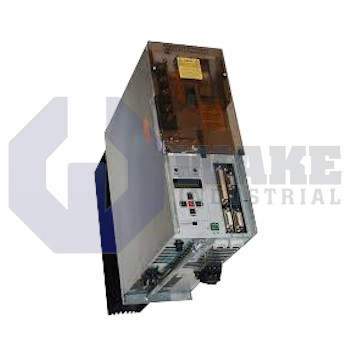
KDA 2.1-150-3-AQ0-W1 Bosch Rexroth Indramat
Wake Industrial LLC is not an authorized distributor of this product.
Wake Industrial LLC is not an authorized distributor of this product.
The Bosch Rexroth Indramat KDA 2.1-150-3-AQ0-W1 is a spindle drive rated for a current of 150 Amps and powered by a 300 VDC supply. Part of the KDA Spindle Drives series, it features forced cooling with a mounted heatsink blower and operates within an ambient temperature range of 5 to 45 degrees Celsius.
Internal Product Review
The KDA 2.1-150-3-AQ0-W1 spindle drive from Bosch Rexroth Indramat is engineered for demanding applications, delivering a rated current of 150 A and utilizing a 300 VDC supply voltage. Forced cooling with a mounted heatsink blower ensures efficient temperature management in ambient conditions from 5 to 45 degrees Celsius. This model stands out for its reliable performance and stable operation in rigorous environments.
 Have a part to sell?
 Wake Industrial Warranty
To contact sales for pricing and lead time:
Payment Methods


Shipping Methods


Our Credentials


Product Description:
The KDA 2.1-150-3-AQ0-W1 spindle drive is produced by Bosch Rexroth Indramat within the KDA Spindle Drives series. It is designed to regulate torque and speed for high-frequency spindle motors used in machining centers and other automated equipment. The drive converts a regulated DC bus into controlled three-phase output, while its integrated heat sink blower manages thermal loads inside a cabinet. By processing an external analog speed reference, the unit forms the link between a CNC controller and the electric spindle. It supports stable spindle operation during acceleration, cutting, and deceleration in machines that require responsive speed control.
It draws a continuous phase current of 150 A, giving it the headroom to accelerate large-diameter tool spindles without derating. The internal power section is supplied from a 300 VDC bus that is typically generated by an Indramat supply module, so the output stage remains stable even under fluctuating mains. Spindle velocity is dictated by an analog command voltage, allowing the same reference format used by legacy CNC hardware. Thermal control is handled by a mounted heat sink blower that pushes air directly across the power semiconductors, and the drive uses forced cooling so airflow is independent of spindle load. The blower itself is powered from a dedicated 220 V/50–60 Hz auxiliary line, which keeps the cooling circuit separate from the DC link. This separation allows the cooling hardware to operate independently of spindle demand changes.
The drive maintains full output over an ambient temperature range of 5 to 45 °C, so cabinet ventilation can be matched to typical shop-floor conditions instead of chilled air. Installation is permitted at elevations up to 1000 m above sea level without power reduction, which covers most industrial facilities. There is no additional interface option. Control integration therefore centers on the primary analog speed loop and fault contacts, which keeps the signal layout direct and avoids unused connectors in the cabinet. The cabinet should also allow unobstructed internal airflow so the cooling path remains effective during continuous spindle duty.









