


KDA 2.1-100-3-D0D-U1 Bosch Rexroth Indramat
Wake Industrial LLC is not an authorized distributor of this product.
Wake Industrial LLC is not an authorized distributor of this product.
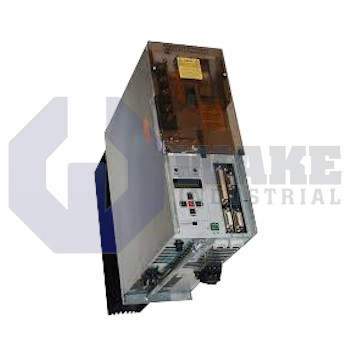
The Bosch Rexroth Indramat KDA 2.1-100-3-D0D-U1 is part of the KDA Spindle Drives series and is designed as a spindle drive with a rated current of 100 Amps. It operates with a 300 VDC supply voltage and features forced cooling using a mounted heatsink blower. The drive accepts digital position and speed command values, and is suitable for ambient temperatures from 5 to 45 degrees Celsius.
Internal Product Review
The KDA 2.1-100-3-D0D-U1 spindle drive from Bosch Rexroth Indramat features a mounted heatsink blower with forced cooling and operates on a 115V AC source for efficient thermal management. Rated at 100 A and designed for use with a 300 VDC supply voltage, it ensures reliable performance in demanding spindle applications. The digital 16-bit parallel speed command interface further supports precise control, making this spindle drive a strong choice for industrial environments.
 Have a part to sell?
 Wake Industrial Warranty
To contact sales for pricing and lead time:
Payment Methods


Shipping Methods


Our Credentials


Product Description:
The KDA 2.1-100-3-D0D-U1 is a spindle drive module produced by Bosch Rexroth Indramat for the KDA Spindle Drives series. Classified as a spindle drive, it converts a constant DC link into adjustable three-phase power so numerically controlled machine-tool spindles can accelerate, decelerate, and hold speed precisely. This type of module is suited for machine tools that need stable spindle speed during cutting, drilling, or milling cycles. The internal designation 2.1 indicates series 2 and version 1, which identifies the product generation used in Indramat multi-axis systems.
The unit operates from a bus voltage of 300 VDC and can deliver up to 100 A of continuous output current to the spindle motor, allowing high cutting forces without current foldback. Speed reference data reach the drive through a 16-bit parallel digital interface, while spindle orienting commands are handled through a separate digital position command value input. The heatsink blower uses a separate 115 V/50–60 Hz supply so cooling remains available independently of the DC bus status. Separating the speed reference from the position command allows the control system to manage normal spindle rotation and positioning functions through dedicated signal paths. The drive has no additional encoder input, so feedback wiring is limited to the primary resolver or encoder.
Thermal control relies on a mounted heat sink blower that operates with forced cooling to remove heat from the power semiconductor baseplate. This airflow arrangement carries switching heat away from the power section more effectively than passive cooling alone. Installation is specified for ambient temperatures from 5 to 45 °C and for sites up to 1000 m above sea level, helping the drive maintain proper thermal and insulation performance. Because the blower is integral, no separate cabinet air ducting is required. Clean intake air helps keep the cooling surfaces effective during sustained operation.









