


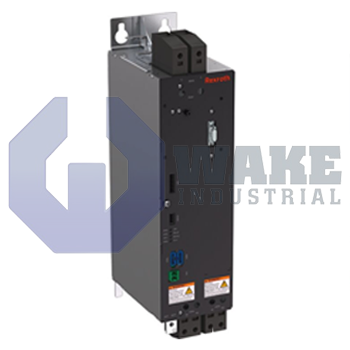
HLT05.1W-105K-N-D7-NNNN Bosch Rexroth Indramat
Wake Industrial LLC is not an authorized distributor of this product.
MPN: R911345204
No Tariffs On US Orders- Straightforward Pricing: No Rush Fees, No Credit Card Fees
The Bosch Rexroth Indramat HLT05.1W-105K-N-D7-NNNN is part of the HLT Braking Units series and has a continuous power rating of 105 kW. It supports a continuous DC current of 200 Amps and can handle a maximum input voltage of 980 Volts. Its peak power (for 2 seconds) is 205 kW, and it weighs 7.5 kilograms.


To contact sales for pricing and lead time:
Payment Methods


Shipping Methods


Our Credentials


Product Description:
The HLT05.1W-105K-N-D7-NNNN braking unit is produced by Bosch Rexroth Indramat as part of the HLT Braking Units series. Installed on the DC link of Indramat drive packages, it monitors link voltage and diverts surplus energy into external resistors, preventing overvoltage trips during rapid deceleration or load reversal. In automated production lines, presses, and gantry systems, the module functions as an energy safeguard, allowing drives to brake aggressively without exceeding the allowable bus voltage. Its compact design permits panel mounting next to power inverters. Because the resistor is mounted externally, braking energy can be routed away from the module while the control section remains dedicated to voltage monitoring and switching.
During continuous duty, the unit carries a DC link current of 200 A, corresponding to a sustained thermal power throughput of 105 kW. The electronic watchdog compares the measured link voltage with a programmable window, and operation is permitted up to a maximum input of 980 V. When the voltage rises to the switch-on threshold of 850 V, the power element connects the external resistor. Conduction is interrupted once the level returns below the minimum threshold of 820 V. A 30 V differential between the rising and falling points limits chatter, while a threshold delay of 30 V provides extra noise immunity. Control logic draws 470 mA from the 24 V auxiliary supply, and a balancing factor of 0.95 helps maintain symmetrical load sharing when several HLT modules are connected in parallel.
For momentary energy surges, the circuitry tolerates a peak dissipation of 205 kW for 2 s, while a short-time rating of 145 kW for 60 s bridges repetitive braking cycles. The minimum permissible braking resistance is 2.7 Ω, which sets the lower limit for resistor selection and keeps semiconductor current within the intended operating range. Under full load, the module releases 400 W of heat, falling to 20 W in standby. Fault resilience is reinforced by a short-circuit withstand of 85 kA rms, and the aluminum housing weighs only 7.5 kg. This combination supports installation in cabinets where braking demand, thermal load, and available space must be balanced carefully.









