


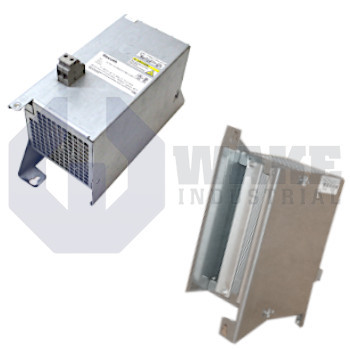
HLR01.1N-36K0-N02R7-A-007-NNNN Bosch Rexroth Indramat
Wake Industrial LLC is not an authorized distributor of this product.
MPN: R911313887
No Tariffs On US Orders- Straightforward Pricing: No Rush Fees, No Credit Card Fees
The Bosch Rexroth Indramat HLR01.1N-36K0-N02R7-A-007-NNNN is part of the HLR Brake Resistors series and has a continuous power rating of 36 kW and a nominal resistance of 3.0 Ohms. This resistor features a peak power of 144 kW, can absorb up to 2.592 kWs of energy, and weighs 93 kilograms. The device measures 995 mm wide, 710 mm high, and 490 mm deep.


To contact sales for pricing and lead time:
Payment Methods


Shipping Methods


Our Credentials


Product Description:
The HLR01.1N-36K0-N02R7-A-007-NNNN is a brake resistor manufactured by Bosch Rexroth Indramat and supplied within the HLR Brake Resistors series. In an automation line, this component is wired across the DC link of an inverter or servo drive so that surplus kinetic energy can be converted to heat instead of forcing the drive bus to over-voltage. By diverting regenerative current into a dedicated resistor stack, it protects power electronics and keeps axis deceleration predictable.
This model is built for a continuous thermal load of 36 kW, a figure that defines the heat it can dissipate indefinitely without exceeding its temperature limit. Short duty surges are handled at a peak of 144 kW, giving extra margin during rapid stops or emergency braking. Its element presents a 3.0 Ω nominal resistance, which fixes the brake current that will flow for any given DC-bus voltage. The resistor may remain energized for up to 18 s per cycle; this maximum on-time prevents damage to internal insulation and terminations. Bosch Rexroth labels the mechanical format as Size C, aligning mounting points and clearances with other C-type enclosures in the series.
Total absorbed energy per activation is limited to 2.592 kWs, so the application must allow adequate off-time for cooling once this threshold is reached. With a mass of 93 kg, the housing offers a useful thermal buffer but requires rigid support brackets. Panel planners must allocate a frontal width of 995 mm and a cabinet depth of 490 mm; the overall height is 710 mm and must remain unobstructed for airflow. These physical dimensions, combined with the specified energy rating, allow the resistor to be sited close to high-power drives while still maintaining clearances for heat convection.









