


HLR01.1N-14K5-N13R0-A-007-NNNN Bosch Rexroth Indramat
Wake Industrial LLC is not an authorized distributor of this product.
Wake Industrial LLC is not an authorized distributor of this product.
MPN: R911305864
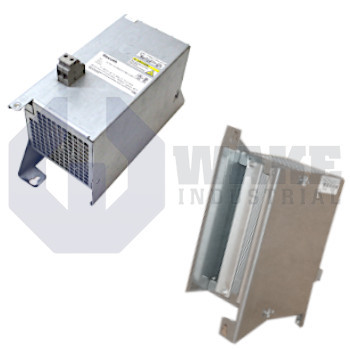
Ask for AvailabilityThe Bosch Rexroth Indramat HLR01.1N-14K5-N13R0-A-007-NNNN is part of the HLR Brake Resistors series and offers a braking power of 14.5 kW with a peak braking power of 46 kW. This resistor features a braking resistance of 14.6 Ohms and supports a maximum on time of 34 seconds. It measures 800 mm in width, 490 mm in depth, and 270 mm in height, and weighs 33 kilograms.
Internal Product Review
The HLR01.1N-14K5-N13R0-A-007-NNNN is a Bosch Rexroth Indramat brake resistor rated for 14.5 kW braking power with 14.6 Ω braking resistance. Peak braking power reaches 46 kW, and a 34 s max on time supports controlled deceleration in demanding drive systems. The 1566 kWs energy consumption rating makes this brake resistor an excellent choice for high-energy braking duty.
 Have a part to sell?
 Wake Industrial Warranty
To contact sales for pricing and lead time:
Payment Methods


Shipping Methods


Our Credentials


Product Description:
The HLR01.1N-14K5-N13R0-A-007-NNNN braking resistor is produced by Bosch Rexroth Indramat as part of the HLR Brake Resistors series. This component attaches to the DC bus of a drive controller and converts excess kinetic energy from a decelerating motor into thermal energy. By doing so, it keeps the bus voltage within safe limits and supports controlled braking in automated production cells, conveying equipment, and indexing machinery. Its electrical characteristics are matched to drive modules that cannot dissipate large regenerated currents internally, so it serves as an external protective element for the power stage.
During continuous operation, the device can absorb 14.5 kW of braking power without exceeding its steady-state temperature limit. The internal resistor network presents 14.6 Ω to the DC link, which sets the dissipation current for a given voltage and influences braking torque. For short duty peaks, it can withstand a load of 46 kW, giving the drive additional capacity during emergency stops or rapid reversals. Each braking pulse must stay within a maximum on-time of 34 s so the resistor core can cool between events. Over an entire motion sequence, the unit can dissipate 1566 kWs, which is used to calculate the allowable braking energy per cycle.
The housing measures 800 mm in width, 270 mm in height, and 490 mm in depth, giving it a flat profile that fits along the top rail of a control cabinet without protruding into service aisles. At 33 kg, the assembly requires a rigid mounting surface during installation. The rectangular footprint leaves airflow channels on both sides, which supports natural convection after repeated braking events. Because cooling relies on ambient air and surface area, the enclosure should be installed with adequate clearance around it to allow heat to dissipate properly.









