


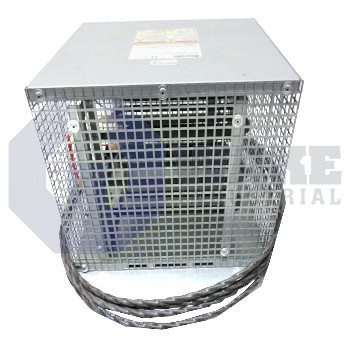
HLR01.1N-05K5-N28R2-A-007-NNNN Bosch Rexroth Indramat
Wake Industrial LLC is not an authorized distributor of this product.
MPN: R911319944
No Tariffs On US Orders- Straightforward Pricing: No Rush Fees, No Credit Card Fees
The Bosch Rexroth Indramat HLR01.1N-05K5-N28R2-A-007-NNNN is part of the HLR Brake Resistors series and has a permanent braking power of 5.5 kW with a maximum braking power of 26 kW. This Type B brake resistor has a resistance of 28.2 ohms and a weight of 13 kilograms. Its dimensions are 490 mm wide, 270 mm high, and 400 mm deep.


To contact sales for pricing and lead time:
Payment Methods


Shipping Methods


Our Credentials


Product Description:
The HLR01.1N-05K5-N28R2-A-007-NNNN is a brake resistor module built by Bosch Rexroth Indramat for use in the HLR Brake Resistors series. Installed on the DC link of an inverter, the unit converts excess kinetic energy produced during motor deceleration into heat and helps prevent overvoltage in the drive. This function is important on axes that stop quickly or carry high reflected inertia, because regenerated energy can raise bus voltage during rapid deceleration. By dissipating that energy, the resistor protects power electronics and supports controlled braking in material-handling cells, packaging machines, and other automated equipment that requires repeatable dynamic stops.
The housing has a width of 490 mm, a depth of 400 mm, and a height of 270 mm, so adequate airflow must be maintained around the fins to control surface temperature. With a mass of 13 kg, the assembly can be mounted directly to a cabinet frame in many mid-sized enclosures. Its core element has a resistance of 28.2 Ω, which sets the current drawn from the DC bus for a given voltage and therefore the instantaneous heat generated. The enclosure size also suits common 600 mm deep cabinets used for automated conveyor and servo press installations, provided that surrounding components do not block heat dissipation.
The resistor can absorb a momentary load of 26 kW and handle continuous dissipation of 5.5 kW, allowing it to manage short braking events as well as repeated operating cycles. During each braking sequence, the unit may accept up to 420 kWs of energy for a maximum interval of 16.2 s. Short, repeated stopping cycles must remain within both the power and energy limits so the element can cool between events. These values should be observed when braking profiles are set so the resistor stays within its thermal recovery capacity.









