


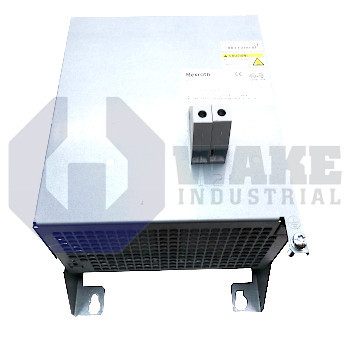
HLR01.1N-04K5-N18R0-A-007-NNNN Bosch Rexroth Indramat
Wake Industrial LLC is not an authorized distributor of this product.
Wake Industrial LLC is not an authorized distributor of this product.
MPN: R911306878
Ask for AvailabilityThe Bosch Rexroth Indramat HLR01.1N-04K5-N18R0-A-007-NNNN is part of the HLR Brake Resistors series and offers a braking power of 4.5 kW with a braking resistance of 20.2 Ohms. This brake resistor measures 400 mm wide, 490 mm deep, and 270 mm high, and weighs 13 kg. Its maximum on time is 13 seconds and it supports energy consumption up to 432 kWs.
Internal Product Review
The HLR01.1N-04K5-N18R0-A-007-NNNN is a Bosch Rexroth Indramat brake resistor built for controlled braking performance in industrial drive systems. A 4.5 kW braking power rating with 20.2 Ω resistance supports efficient energy dissipation and stable deceleration, while 432 kWs energy capacity and a 13 s max on time highlight strong thermal handling.
 Have a part to sell?
 Wake Industrial Warranty
To contact sales for pricing and lead time:
Payment Methods


Shipping Methods


Our Credentials


Product Description:
The HLR01.1N-04K5-N18R0-A-007-NNNN is a dynamic brake resistor produced by Bosch Rexroth Indramat in the HLR Brake Resistors series. It is used alongside Rexroth drive controllers to turn surplus kinetic energy from decelerating motors into heat instead of returning it to the DC link during repeated braking events. By presenting a precisely matched resistive load, the unit protects the power electronics from overvoltage during rapid stops or positioning cycles common in automated machinery. Because the device is passive, it does not interfere with control loops and only needs correct wiring to the chopper circuit.
During braking pulses, the resistor can absorb a continuous thermal load of 4.5 kW without exceeding its design temperature. The resistance value of 20.2 Ω sets the current that flows for a given DC-link voltage and shapes the deceleration profile. An energy capacity of 432 kWs indicates how much energy can be accepted in one event before a cool-down period is required. To protect the ceramic elements, the allowable conduction window is limited to 13 s per braking cycle; exceeding this interval would raise internal temperatures beyond safe limits and shorten service life.
The housing measures 400 mm wide, 490 mm deep, and 270 mm high, so it fits on panel backplates or inside machine frames while still allowing airflow. With a mass of 13 kg, the assembly mounts with standard brackets and does not require an oversized support structure. The enclosure offers enough surface area for convective cooling, and the terminal layout follows the standard arrangement used for this resistor line. Insulation clearances are maintained to support installation in drive cabinets with comparable brake resistor assemblies and standard panel spacing.









