


HDS05.2-W300N-HT19-02-FW Bosch Rexroth Indramat
Wake Industrial LLC is not an authorized distributor of this product.
- Straightforward Pricing: No Rush Fees, No Credit Card Fees
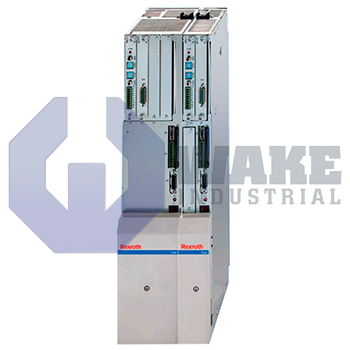
The Bosch Rexroth Indramat HDS05.2-W300N-HT19-02-FW is a HDS Drive Controller from the DIAX04 family, featuring a rated current of 300 Amps. Part of the HDS Drive Controllers series, it uses a built-in internal air blower for cooling and supports SERCOS command communication.


To contact sales for pricing and lead time:
Payment Methods


Shipping Methods


Our Credentials


Product Description:
The HDS05.2-W300N-HT19-02-FW drive controller is manufactured by Bosch Rexroth Indramat and belongs to the HDS Drive Controllers series. It acts as the power and control stage in a multi-axis system by converting DC-bus energy into controlled motor current for connected axes. This supports torque and speed regulation in machining centers, material-handling cells, and packaging lines. The unit also helps keep cabinet layouts organized because the control and power functions are combined in one module. That arrangement supports closed-loop axis behavior while reducing the number of separate modules needed for control distribution.
The controller can deliver up to 300 A of continuous output current for applications that require sustained torque during acceleration and load changes. Command and diagnostic data are exchanged through the SERCOS fiber-optic interface, allowing cyclic communication with higher-level motion control. Thermal loading is managed by a built-in air blower that moves cabinet air across the heat sink. This cooling method avoids the need for an external fan assembly mounted outside the cabinet. As part of the DIAX04 family, the unit uses the common mechanical format found across related rack modules. The product is Version 2, indicating the second release of this controller type.
The unit is assigned Line 05, which places it within the corresponding design line of the series. It is classified as an HDS Drive Controller, which distinguishes it from supply modules and other rack components. In rack-based installations, this arrangement allows the controller to coordinate with companion modules through the shared platform architecture. It is suited to systems where several axes must respond to coordinated commands from one control structure. The description stays focused on the core product role and removes unnecessary references to alternate versions or auxiliary sourcing notes.