


HDS04.2-W200N-HA05-01-FW Bosch Rexroth Indramat
Wake Industrial LLC is not an authorized distributor of this product.
MPN: R911190083
No Tariffs On US Orders- Straightforward Pricing: No Rush Fees, No Credit Card Fees
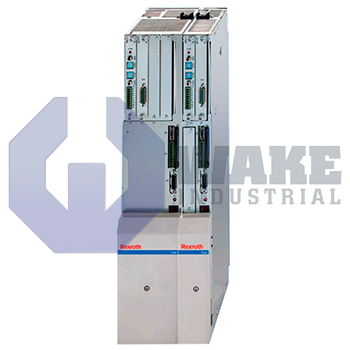
The Bosch Rexroth Indramat HDS04.2-W200N-HA05-01-FW is a drive controller from the HDS Drive Controllers series and part of the DIAX04 controller family. It features an analog command communication interface and a built-in internal air blower for cooling. The controller has a rated current of 200 Amps.


To contact sales for pricing and lead time:
Payment Methods


Shipping Methods


Our Credentials


Product Description:
The HDS04.2-W200N-HA05-01-FW is a drive controller manufactured by Bosch Rexroth Indramat and assigned to the HDS Drive Controllers series. Installed in a rack-based motion system, it serves as the power and control stage for a single axis, converting reference commands from a supervisory PLC into regulated motor current. By closing the speed and position loops inside the controller, it supports coordinated motion in machine tools, packaging stations, and material-handling modules. This arrangement lets one module handle both electrical power conversion and axis regulation, which keeps the drive structure compact and places motion control functions close to the motor connection.
The command channel is an ANALOG interface, so velocity or torque references reach the controller as ±10 V signals that are filtered and digitized before processing. Within the product family, the unit belongs to the DIAX04 controller platform, so its parameter structure and bus connectors match the rest of the rack. Thermal management relies on a built-in air blower, which draws cabinet air through heat-sink channels and supports continuous operation without an external exchanger. The power stage has a rated current of 200 A under nominal conditions, giving the controller the current capacity needed for heavy servo loads and repeated acceleration cycles.
This model is Version 2 and is supported by later Indramat diagnostic tools. It is part of Line 04, which keeps its mechanical dimensions and connector layout consistent with other fourth-line chassis. The unit is arranged for installation alongside companion modules in the same rack, where it operates as the regulated output stage for one motor axis. Because current control and loop processing are handled inside the controller, the connected axis can respond quickly to command changes while maintaining stable operation during varying load conditions. This helps support accurate starts, stops, and speed changes during production use.