


HDS03.2-W100N-HA19-01-FW Bosch Rexroth Indramat
Wake Industrial LLC is not an authorized distributor of this product.
- Straightforward Pricing: No Rush Fees, No Credit Card Fees
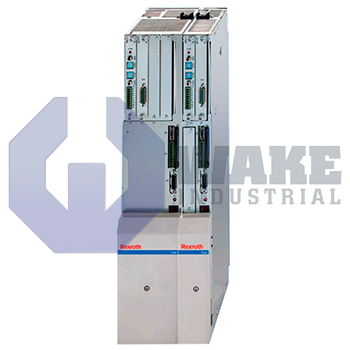
The Bosch Rexroth Indramat HDS03.2-W100N-HA19-01-FW is an HDS Drive Controller from the HDS Drive Controllers series, designed for use with the DIAX04 controller family. It features an analog command communication interface, a rated current of 100 A, and a built-in internal air blower for cooling.


To contact sales for pricing and lead time:
Payment Methods


Shipping Methods


Our Credentials


Product Description:
The HDS03.2-W100N-HA19-01-FW is a drive controller produced by Bosch Rexroth Indramat for coordinated motion tasks in multi-axis industrial machinery. As part of the HDS Drive Controllers series, it occupies a single slot in the drive rack and supplies regulated power for servo modules that control motor torque, velocity, and position. Within an automation cell, it receives setpoints from the machine control and converts them into timed current commands for closed-loop operation of tooling axes, transfer stations, and material-handling actuators. This role lets the controller support synchronized movement where several machine axes must respond quickly and remain stable under changing load conditions.
The unit interfaces with the system bus over the DIAX04 backplane and accepts command values through a dedicated analog interface. This input path allows legacy PLCs to send ±10 V references directly, which avoids extra signal conversion and keeps the control path straightforward. A continuous output capability of 100 A allows the power section to energize large motor windings during acceleration, while regenerated energy can return through the common DC link. Thermal management is handled by a built-in air blower that moves cooling air across the heat sink, so standard electrical cabinets do not need a separate fan tray for this unit.
The controller is part of Line 03 in the product range. The product is Version 2, a revision that refines the gate-drive circuitry for lower switching losses and supports higher ambient temperature. The same basic form factor is retained, so rack fit and module placement remain consistent with earlier lines. Lower switching losses can help reduce heat in the power stage during sustained operation, especially when nearby axes are running at the same time.









