


HDS03.2-W075N-HT02-01-FW Bosch Rexroth Indramat
Wake Industrial LLC is not an authorized distributor of this product.
- Straightforward Pricing: No Rush Fees, No Credit Card Fees
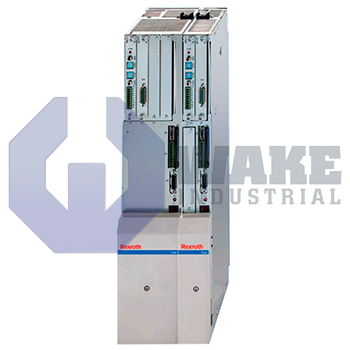
The Bosch Rexroth Indramat HDS03.2-W075N-HT02-01-FW is part of the HDS Drive Controllers series and belongs to the DIAX04 controller family. This drive controller features a rated current of 75 A and SERCOS command communication interface. It uses a built-in internal air blower for cooling.


To contact sales for pricing and lead time:
Payment Methods


Shipping Methods


Our Credentials


Product Description:
The HDS03.2-W075N-HT02-01-FW is a drive controller produced by Bosch Rexroth Indramat for the HDS Drive Controllers series. Intended for centralized mounting in machine-tool and material-handling systems, the unit converts shared DC-bus energy into precisely regulated servo power and supervises axis feedback. Within an automated cell, it acts as the coordinating node that ties individual inverter modules to the main control system, so commanded speed, torque, and position requests reach each axis at the correct time. That arrangement lets the main control system distribute motion commands across several axes while the controller regulates motor response at the drive level.
Control data enter the device through the optical SERCOS interface, enabling deterministic communication between the motion CPU and multiple drives on a single ring. Continuous thermal management is handled by a built-in air blower, so cabinet air is pulled through the heat sink without external ducting. The optical link also reduces susceptibility to electrical noise in cabinet environments with high switching currents. The controller supplies up to 75 A of output current, matching medium-power servo motors that demand high acceleration torque. It belongs to the DIAX04 family, so its plug-in connectors, software structure, and diagnostic codes align with other members of that platform. The unit is part of Line 03.
The drive is Version 2. It is classified as an HDS Drive Controller, so it can share a common DC bus and a blower tray with adjacent axes to reduce overall panel depth. The modular layout uses the same mechanical keying patterns found across the product range, which helps keep module placement and connection alignment consistent. This arrangement supports compact multi-axis cabinets where several drive sections are installed side by side.