


HDS03.2-W075N-HS65-01-FW Bosch Rexroth Indramat
Wake Industrial LLC is not an authorized distributor of this product.
- Straightforward Pricing: No Rush Fees, No Credit Card Fees
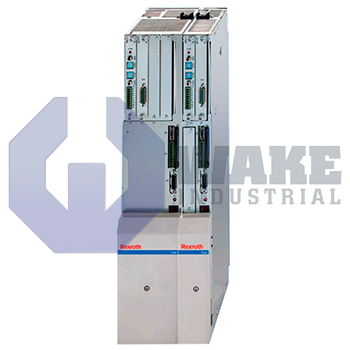
The Bosch Rexroth Indramat HDS03.2-W075N-HS65-01-FW is part of the HDS Drive Controllers series. It is a DIAX04 family drive controller with a rated current of 75 Amps and features a SERCOS command communication interface. The unit uses a built-in internal air blower for cooling.


To contact sales for pricing and lead time:
Payment Methods


Shipping Methods


Our Credentials


Product Description:
The HDS03.2-W075N-HS65-01-FW drive controller is manufactured by Bosch Rexroth Indramat for the HDS Drive Controllers series. It is installed in modular automation cabinets where it channels DC bus energy to servo or induction motors while monitoring motor feedback in real time. By interpreting motion commands from a higher-level control, the device modulates motor current so that programmed velocity, position, and torque profiles are maintained during packaging, printing, and material-handling cycles. Its role as both a power converter and monitoring unit allows multiple axes to operate with coordinated timing inside automated production systems.
The drive exchanges setpoints and status words over the SERCOS fiber-optic ring, a deterministic network that synchronizes several axes with millisecond-level timing across the control system. This data path is the command communication interface, supporting compatibility with Indramat master controls and third-party PLCs that use the protocol. Thermal management is handled by a built-in air blower that pulls cabinet air through the heat sink, eliminating the need for external ducting and helping remove heat from power semiconductors during continuous operation. The unit belongs to Line 03 and can deliver a continuous output of 75 A, allowing it to drive medium-power axes under sustained load without relying on oversized external hardware.
Within the DIAX04 family, this module is identified as Version 2. This revision includes refined current regulators and extended diagnostic memory, which improve current response and provide more room for recorded operating data during faults or transient events. The drive remains suited for coordinated multi-axis control, where fast feedback processing, stable current regulation, and detailed status reporting help maintain predictable motion behavior during repeated machine cycles.