


CDB02.1B-ET-EC-EC-NN-S5-S5-NN-NN-FW Bosch Rexroth Indramat
Wake Industrial LLC is not an authorized distributor of this product.
Wake Industrial LLC is not an authorized distributor of this product.
MPN: R911374312
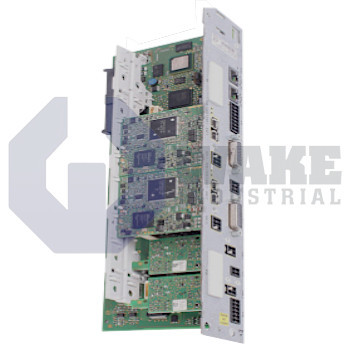
The Bosch Rexroth Indramat CDB02.1B-ET-EC-EC-NN-S5-S5-NN-NN-FW is part of the CDB Control Units series and features two analog inputs and outputs at ±10 V with a 14 bit input resolution. It supports 14 digital inputs, 8 configurable digital I/O, and four probe inputs. This unit also offers a 100Base-TX Ethernet standard and has a base power consumption of 23 watts.
Internal Product Review
The CDB02.1B-ET-EC-EC-NN-S5-S5-NN-NN-FW is a Bosch Rexroth Indramat CDB control unit with 100Base-TX Ethernet and a 500 µs communication cycle. A 125 µs current control cycle and 250 µs velocity control cycle give the platform impressively crisp motion response. From an integration standpoint, 14-bit analog input resolution gives the control unit a notably refined signal interface.
 Have a part to sell?
 Wake Industrial Warranty
To contact sales for pricing and lead time:
Payment Methods


Shipping Methods


Our Credentials


Product Description:
The CDB02.1B-ET-EC-EC-NN-S5-S5-NN-NN-FW belongs to the CDB Control Units series produced by Bosch Rexroth Indramat. It is the plug-in control section that mounts on an IndraDrive power module and supervises motion, feedback, and local I/O for servo axes and inverter-based machinery. Because the control unit sits directly on the drive platform rather than in a separate controller housing, it reduces interconnection complexity and keeps signal handling close to the power electronics. By combining analog acquisition, digital signaling, and real-time Ethernet on one board, the unit supports coordinated axis control in packaging lines, material-handling stations, and similar automated equipment.
A 5 V supply delivers 500 mA to external encoders, while the two ±10 V analog inputs are digitized at 14-bit resolution to support fine process setpoints such as torque or tension. The same voltage range is available on 2 analog outputs, and each channel updates in steps of 24 mV per increment for precise command signaling. Base power draw is limited to 23 W, which helps keep cabinet heat low while the board handles 14 digital inputs, eight configurable digital I/O points, and four probe inputs. This combination allows the control section to process sensor signals and output commands without requiring separate interface hardware for routine axis functions.
Current, velocity, and position loops are processed every 125 µs, 250 µs, and 500 µs respectively, supporting stable torque control and repeatable positioning during rapid speed changes. Field communication with the higher-level PLC refreshes on a 500 µs bus cycle, which helps coordinate motion commands with machine-level logic. An integrated 100Base-TX port supports standard Ethernet cabling for diagnostics or HMI traffic, and four probe inputs capture edge-triggered position data with deterministic timing. In addition, 4 optional slots can accept encoder or fieldbus add-on cards so the control section can be matched to different feedback formats or network protocols.









