


CDB02.1B-ET-EC-EC-EC-NN-NN-EC-NN-FW Bosch Rexroth Indramat
Wake Industrial LLC is not an authorized distributor of this product.
Wake Industrial LLC is not an authorized distributor of this product.
MPN: R911344841
Ask for AvailabilityThe Bosch Rexroth Indramat CDB02.1B-ET-EC-EC-EC-NN-NN-EC-NN-FW is part of the CDB Control Units series. It features two analog inputs, two analog outputs, and fourteen digital inputs. This unit supports multi-encoder interfaces for both axes and uses MultiEthernet communication, with a total of four optional slots.
Internal Product Review
The CDB02.1B-ET-EC-EC-EC-NN-NN-EC-NN-FW is a Bosch Rexroth Indramat CDB control unit with MultiEthernet communication and support for the HMD01 power section. Four optional slots and four probe inputs give the control platform strong integration flexibility for multi-axis machine architectures. Multi-Encoder support on Axis 1 and Axis 2 stands out as a valuable feature for precise feedback handling.
 Have a part to sell?
 Wake Industrial Warranty
To contact sales for pricing and lead time:
Payment Methods


Shipping Methods


Our Credentials


Product Description:
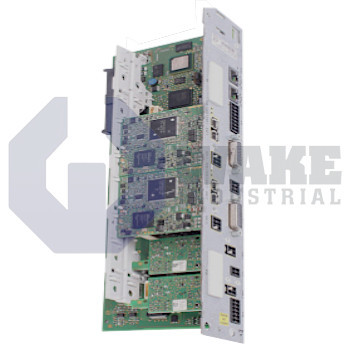
The CDB02.1B-ET-EC-EC-EC-NN-NN-EC-NN-FW is a modular dual-axis control card produced by Bosch Rexroth Indramat for the CDB Control Units series. Installed inside an HMD drive stack, the board provides the command layer that links motion controllers with inverter power modules. In an automation cell, it coordinates servo drives, collects field data, and forwards it to higher-level PLCs or Ethernet networks. By handling encoder signals, discrete I/O, and analog references, the card forms the interface between machine sensors and the drive current regulators.
The board accepts 2 analog inputs for speed or torque references and routes these signals through 16-bit converters to the internal processor. It can generate 2 analog outputs so the drive can retransmit process variables to supervisory hardware. For discrete control, the card offers 14 digital inputs, each individually debounced for limit switches or start signals. Communication with upper-level systems occurs over MultiEthernet, allowing parameter access through EtherNet/IP, PROFINET, or Sercos III from the same port. The board mates with the HMD01 power section through an edge connector, sharing the DC bus and control power. Axis position feedback is accepted on both channels through multi-encoder interfaces, and additional encoder sockets support secondary encoders or probing heads. Machine status can also be mapped to configurable DIO lines, while the analog channels can read external measuring transducers. No integrated safety technology is present, so STO or SS1 functions must be provided by a separate device.
The card carries 4 optional slots for added function modules such as fieldbus couplers or safety relays. Precision position latching is managed by 4 probe inputs, each edge-triggered for capture tasks in high-speed machining. The local I/O map is further extended by 8 configurable DIO, allowing more complex handshake sequences without external terminal blocks. Even with these resources, the controller weighs only 0.480 kg, which keeps backplane loading low in dense drive assemblies. This layout suits packaging, printing, and handling systems that need compact integration of feedback, local I/O, and network communication across two controlled axes.