


CDB01.1C-SE-ENS-ENS-EN1-NNN-S1-S-NN-FW Bosch Rexroth Indramat
Wake Industrial LLC is not an authorized distributor of this product.
Wake Industrial LLC is not an authorized distributor of this product.
MPN: R911316317
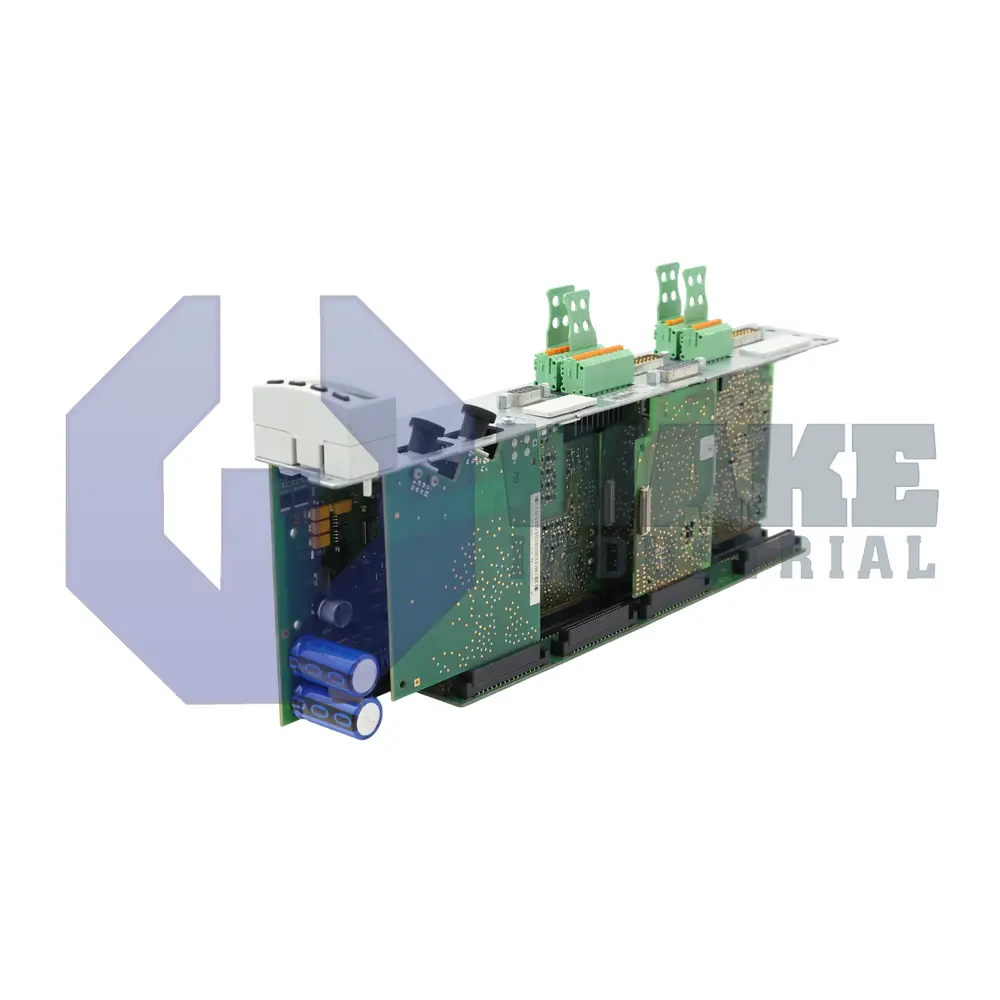
The Bosch Rexroth Indramat CDB01.1C-SE-ENS-ENS-EN1-NNN-S1-S-NN-FW is part of the CDB Control Units series. It features two analog outputs, supports SERCOS fiber optic communication, and operates with a control voltage of 24 V DC. This unit has 18 digital inputs and can control two axes.
Internal Product Review
The CDB01.1C-SE-ENS-ENS-EN1-NNN-S1-S-NN-FW is a high-performance Bosch Rexroth Indramat control unit featuring SERCOS fiber optic communication and dual-axis capability. With fast current and position control cycles of 125 µs and 500 µs respectively, it delivers precise motion control. This model stands out for its combination of multiple digital inputs and advanced encoder supply current, making it a strong choice for demanding automation environments.
 Have a part to sell?
 Wake Industrial Warranty
To contact sales for pricing and lead time:
Payment Methods


Shipping Methods


Our Credentials


Product Description:
The CDB01.1C-SE-ENS-ENS-EN1-NNN-S1-S-NN-FW is a modular drive control unit manufactured by Bosch Rexroth Indramat and delivered within the CDB Control Units series. It installs in an IndraDrive system to supervise two axes of motion, translating PLC commands into coordinated speed, torque, and position references for attached power sections. By combining bus communication, closed-loop regulation, and local I/O handling, the device streamlines multi-axis coordination in automated packaging, handling, and machining equipment. This arrangement allows one control unit to manage synchronized axis behavior while keeping command processing and feedback evaluation in the same hardware platform.
Field communication is handled through the optical ring provided by SERCOS (Fiber Optic), ensuring deterministic telegram timing. Logic electronics are sustained by a separate 24 V DC feed so diagnostic memory stays active during main-power removal. The current controller updates every 125 µs, and the velocity and position loops follow at 250 µs and 500 µs, maintaining tight dynamic response across both channels. Machine wiring terminates on 18 digital inputs, supplemented by two digital outputs and two unipolar analog outputs for process variables. Gate patterns for the inverters are generated at 4 kHz, lowering acoustic noise and torque ripple on connected motors. With no option cards installed, the control section draws only 7.5 W, which helps reduce heat buildup inside the cabinet and supports stable operation alongside other drive components.
Precision triggering is available through two touch-probe inputs that sample encoder position in the same control frame that closes at 500 µs. Feedback devices can be powered directly because the encoder supply delivers up to 500 mA. Mechanical fastening of the fiber connectors must observe a maximum tightening torque of 0.6 N·m to protect the sleeves. This combination supports accurate event capture for registration marks, cutoff positions, and other time-sensitive machine functions. The integrated I/O and dual-axis control structure also reduce the need for separate interface hardware in compact motion systems.