


CDB01.1C-S3-ENS-ENS-EN2-NNN-NN-S-NN-FW Bosch Rexroth Indramat
Wake Industrial LLC is not an authorized distributor of this product.
MPN: R911326811
No Tariffs On US Orders- Straightforward Pricing: No Rush Fees, No Credit Card Fees
Current response time:
3 Minutes
36 Seconds
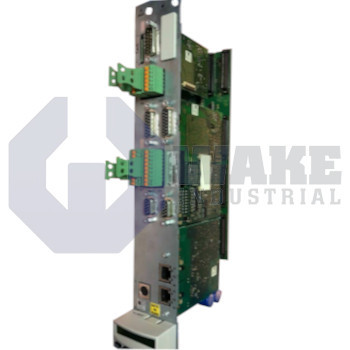
The Bosch Rexroth Indramat CDB01.1C-S3-ENS-ENS-EN2-NNN-NN-S-NN-FW is part of the CDB Control Units series. It uses SERCOS III for control communication, provides a control supply of DC 24 V, and features digital and analog outputs rated at 24 V / 0.5 A and 5 V / 1 mA respectively. The unit supports an RS232 serial interface and Sercos III port with RJ-45 8-pin connectors.


To contact sales for pricing and lead time:
Payment Methods


Shipping Methods


Our Credentials


Product Description:
The CDB01.1C-S3-ENS-ENS-EN2-NNN-NN-S-NN-FW control unit is built by Bosch Rexroth Indramat for the CDB Control Units series. Inserted into a compatible power section, it supplies the logic and communication functions that synchronize individual servo axes with a higher-level controller in automated assembly cells and machining centers. Its task is to receive motion commands, monitor feedback, and issue drive-enable or fault signals so that the surrounding machinery runs to programmed positions and speeds.
The board communicates over SERCOS III through an 8-pin RJ-45 port and also offers an RS232 serial interface for service tasks. Logic electronics draw from a DC 24 V control supply, with a typical inrush of 6 A and a steady base power demand of 9 W. Two analog outputs are available, and each is limited to 5 V / 1 mA for reference values or sensor excitation. Six digital inputs accept up to 24 V / 3 mA, while four transistor outputs can source 24 V / 0.5 A to peripheral relays or indicators. A dry relay contact rated at DC 24 V / 1 A is provided for drive-ready signaling, and the SERCOS status LED shows ring activity without external tools.
High-speed measurement tasks are handled by the EN2 encoder channel, which supports square-wave feedback at 1000 kHz and runs from its own 5 V supply. The ENS channel is energized by 12 V and accepts TTL inputs up to 400 kHz, allowing incremental encoders on auxiliary axes to be tracked in real time. A probe input with an accuracy of 1 μs captures registration marks, and adjustable debouncing can filter short pulses with settings up to 60 ms. This arrangement supports position capture, homing, and interlocked axis control inside the drive system.









