


CDB01.1C-PB-EN1-EN1-NNN-MEM-L1-S-NN-FW Bosch Rexroth Indramat
Wake Industrial LLC is not an authorized distributor of this product.
MPN: R911320520
No Tariffs On US Orders- Straightforward Pricing: No Rush Fees, No Credit Card Fees
Current response time:
5 Minutes
50 Seconds
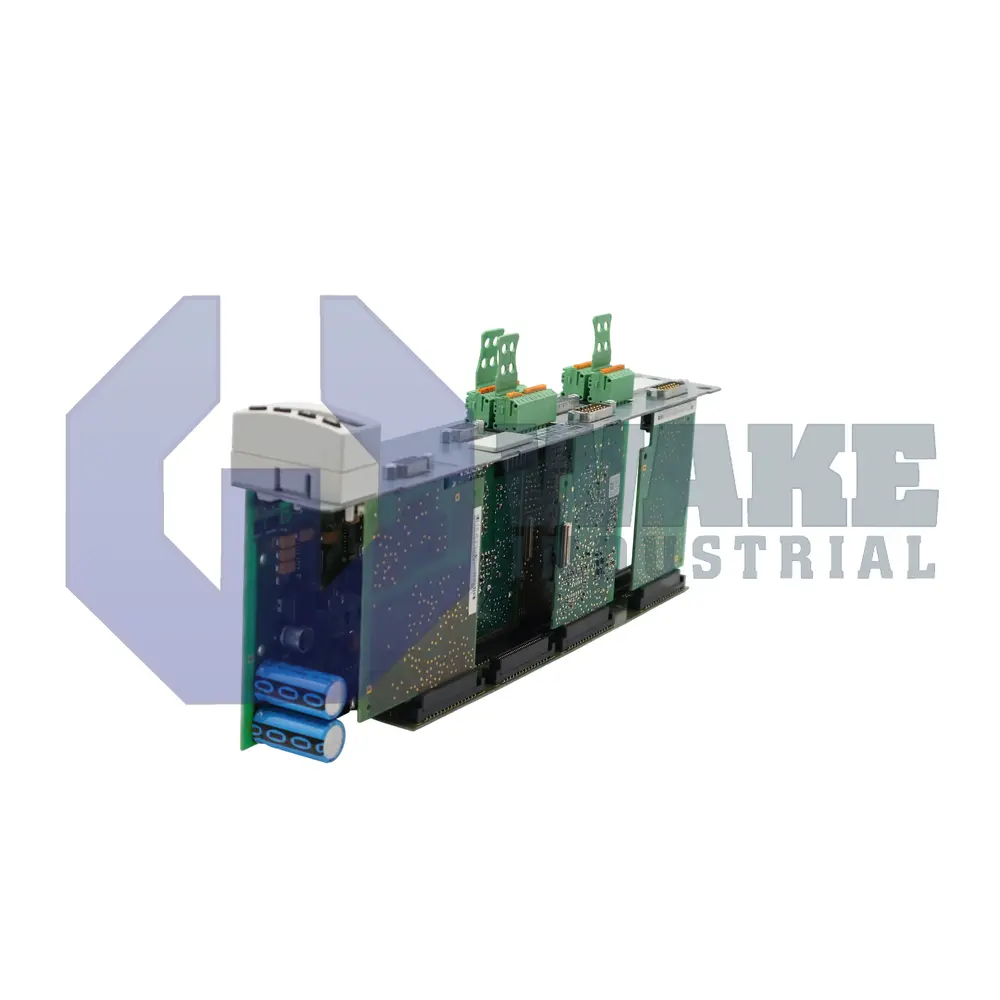
The Bosch Rexroth Indramat CDB01.1C-PB-EN1-EN1-NNN-MEM-L1-S-NN-FW is a control unit from the CDB Control Units series featuring two axes and a base power consumption of 9 watts. It supports PROFIBUS-DP fieldbus communication and encoder emulation with SSI and incremental formats. The unit provides two resolver or HSF encoder interfaces, a digital output current of 500 mA, and a single-line display control panel.


To contact sales for pricing and lead time:
Payment Methods


Shipping Methods


Our Credentials


Product Description:
Bosch Rexroth Indramat includes the CDB01.1C-PB-EN1-EN1-NNN-MEM-L1-S-NN-FW in its CDB Control Units series. This plug-in card acts as the command layer for a drive controller, coordinating motion, managing fieldbus traffic, and generating encoder signals that synchronize servo loops. In automated lines, it replaces discrete logic boards by combining functional safety, communication, and low-level I/O conditioning into a single module that mounts inside a compatible power section.
The control card supervises 2 axes, letting the machine builder configure independent or interpolated movement from a shared processor. Each analog output changes in steps of 19.5 mV/inc, giving the downstream inverter fine voltage resolution for torque or speed commands. Internal losses remain modest because the board draws 9 W at base load, which simplifies cabinet cooling. When switching discrete devices, its digital outputs can source up to 500 mA per channel. Data exchange occurs over the PROFIBUS-DP fieldbus, and the front edge carries a 9-pin D-Sub female connector to match standard bus cabling. Operators adjust parameters through a single-line display control panel, while an emergency halt is executed under Stop Category 0 so power is removed without delay.
For feedback handling, the card offers encoder emulation in SSI or incremental formats and routes real sensor data through 2 × Resolver/HSF inputs energized by an 8 V HSF supply at a resolver carrier of 4 kHz. The built-in emulation generator can drive differential lines at 1 MHz over cabling up to 40 m without signal repeaters, allowing drives farther along the line to share position information. During power-up, the circuitry withstands an inrush of 6 A, and generated pulses may extend for up to 60 ms so external controllers can recognize status events under heavy communication loads.