

2AD132D-B35OA2-BD03-D2N3 Bosch Rexroth Indramat
Wake Industrial LLC is not an authorized distributor of this product.
MPN: R911284926
No Tariffs On US Orders- Straightforward Pricing: No Rush Fees, No Credit Card Fees
Current response time:
4 Minutes
58 Seconds
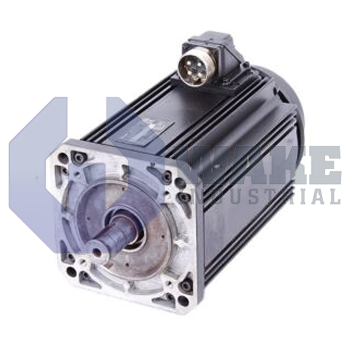
Bosch Rexroth Indramat AC Motor in the 2AD Series. This Motor is an Asynchronous Motor Type that has a Motor Size of 132, and a Motor Length of D."


To contact sales for pricing and lead time:
Payment Methods


Shipping Methods


Our Credentials


Product Description:
The 2AD132D-B35OA3-AS03-A2V2 is special reinforced bearing motor in the Rexroth 2AD series under the type class of Alternating Current motor. In terms of environmental performance, the motor is built to offer optimal performance in 0 - 45 centigrade and can be safely stored between -20 degrees C and +80 degrees C, ensuring reliable performance in both active and idle conditions. With reinforced bearings, the motor can take up different load demands, and the type of vibration also changes from regular to special due to the usage of reinforced bearings in the motor. They are best for heavy loads, and engineers recommend using it in high load applications.
The top intermittent speeds is 7500 rpm, subject to appropriate load and thermal management. The thermal time constant of the motor is crucial in motor as it provides insightful behavioral response changes of the system and in this particular model, it is 55 minutes, and the sound pressure level is 75 dB. The 2AD132D-B35OA3-AS03-A2V2 motor includes a Positive Temperature Coefficient (PTC) sensor for real-time thermal monitoring, activating protective mechanisms when critical thresholds are approached. For perfect control and precision, this variant has high resolution type encoder in it.
The motor is rated to deliver a nominal power output of approximately 22 kW kilowatts. The nominal torque is rated precisely at 140 Nm under standard environmental conditions. The nominal current of the motor is rated at 54 A, while the nominal voltage is rated at 290 V. The bearings are heavy-duty, and the motor has no holding brake. The 2AD132D-B35OA3-AS03-A2V2 motor utilizes radial cooling as its cooling mode, allowing ambient air to dissipate heat generated during continuous operation by blowing from side B to A.