


X20AI4622 B & R Automation
Wake Industrial LLC is not an authorized distributor of this product.
Wake Industrial LLC is not an authorized distributor of this product.
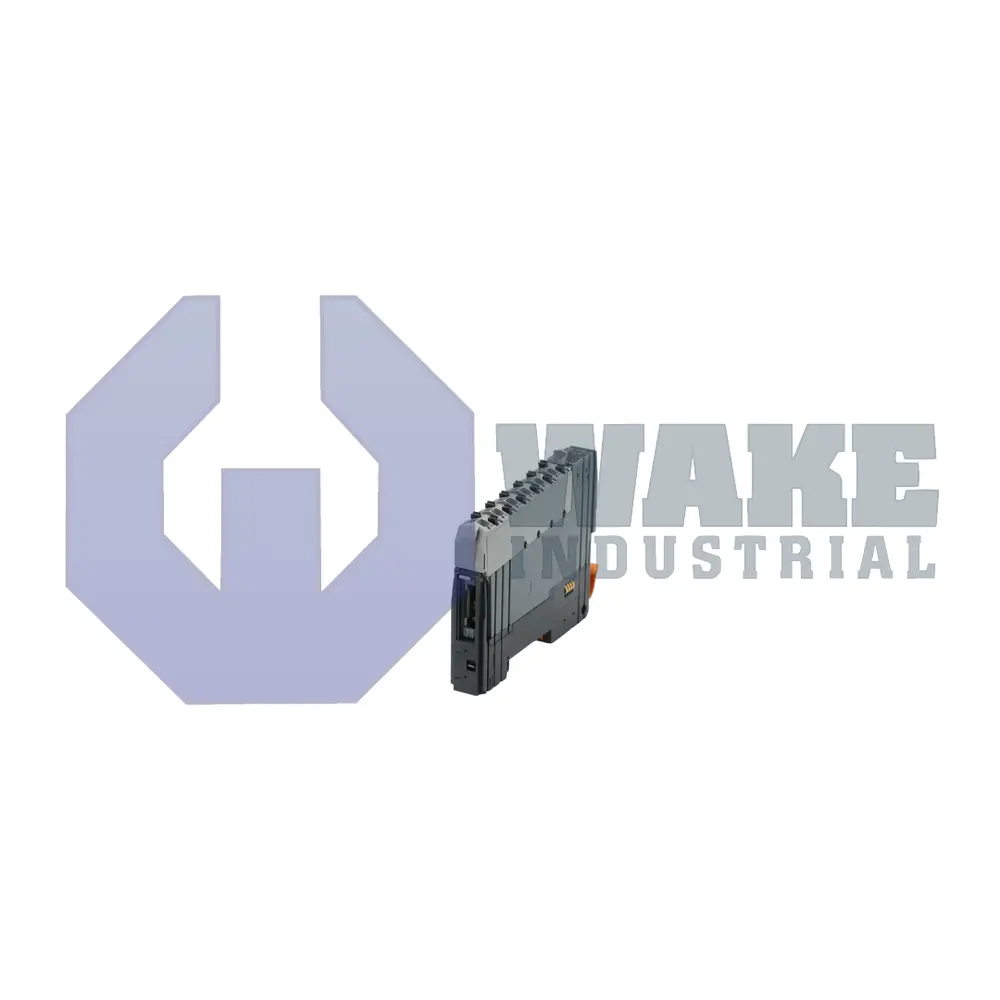
The B & R Automation X20AI4622 is an analog input module from the X20 Fieldbus Input Output Modules series. It features four input channels, each with a 13-bit converter resolution and supports current ranges from 0 to 20 mA or 4 to 20 mA. The module operates with a voltage range of ±10 V and requires 0.01 W bus power.
Internal Product Review
The X20AI4622 is a high-quality analog input module featuring 4 channels and 13-bit converter resolution. Support for ±10 V and 4 to 20 mA signals gives the module excellent flexibility for precise industrial input handling.
 Have a part to sell?
 Wake Industrial Warranty
To contact sales for pricing and lead time:
Payment Methods


Shipping Methods


Our Credentials


Product Description:
B&R Automation's X20AI4622 is an analog input slice that belongs to the X20 Fieldbus Input Output Modules series. Installed together with controller and power segments on the X20 rail, it receives low-level process signals and forwards digitized values over the backplane bus. The product is used in industrial automation to bring current or voltage data from transmitters, position sensors, or pressure devices into programmable logic controllers for closed-loop control and monitoring. This arrangement lets the control system collect several analog measurements from one compact station without requiring a separate signal conversion device.
The module provides 4 differential input channels, letting a single slice acquire multiple process variables without extra wiring space. Each channel is processed through a 13-bit converter, so the digital result offers 8192 discrete steps; this resolution is sufficient for fractional-percent accuracy in typical control loops. For sensors that output industry-standard currents, the board accepts a span of 0 to 20 mA, while applications that require live-zero diagnostics can instead select the 4 to 20 mA range. Voltage sources are also supported, and the front terminals handle bipolar signals up to ±10 V, allowing direct integration of many transducers without external attenuation.
In continuous operation, the slice draws only 0.01 W from the internal system bus, minimizing the thermal load on a densely packed rack. The analog circuitry itself is supplied by an isolated feed that dissipates 1.10 W, so cabinet power planning can account for the module's local heat contribution. Because loop-powered transmitters are expected to furnish their own excitation, the module imposes just 0.00 W of sensor power demand, preventing unexpected loading of field circuits. Separating system-bus consumption from analog-circuit dissipation helps keep power budgeting clearer when several slices are installed in one assembly.









