


2VM52-000-11 Pacific Scientific
Wake Industrial LLC is not an authorized distributor of this product.
Wake Industrial LLC is not an authorized distributor of this product.
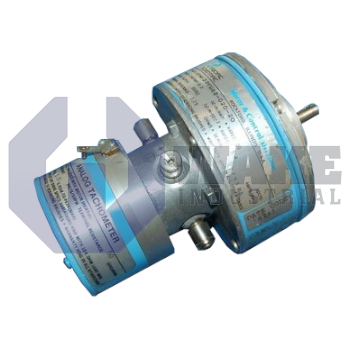
The Pacific Scientific 2VM52-000-11 is a PMDC servo motor from the Low Inertia PMDC Servomotors series. It features a hollow rotor with basket-wound rotor construction and uses Alnico V-7 magnet material. The motor comes with ball bearings and carbon field replaceable brushes, and has a shaft-mounted commutator.
Internal Product Review
The 2VM52-000-11 is a Pacific Scientific PMDC servo motor with brushed commutation, well suited for straightforward motion-control applications. Hollow-rotor construction and a basket-wound rotor support fast response and smooth servo behavior. Field-replaceable carbon brushes add practical maintenance value and make service planning easier.
 Have a part to sell?
 Wake Industrial Warranty
To contact sales for pricing and lead time:
Payment Methods


Shipping Methods


Our Credentials


Product Description:
The 2VM52-000-11 is a permanent-magnet DC servo motor manufactured by Pacific Scientific and offered within the Low Inertia PMDC Servomotors series. As a low-inertia actuator, it is built to deliver fast acceleration and precise speed regulation for pick-and-place arms, indexing tables, and other motion axes that demand tight following of command profiles in industrial automation environments. Its permanent-magnet design eliminates field windings, which further lowers inertia and reduces electrical losses. The motor is a PMDC servo motor and is intended for operation with external drives that control armature voltage.
Mechanical service life is supported by ball bearings on both ends of the shaft, and the energizing elements use carbon brushes that ride on a slotted commutator. Those brushes are field-replaceable, allowing service without removing the motor from the machine. Torque production comes from a classic brushed commutation system that switches armature current mechanically, while magnetic flux is supplied by Alnico V-7 permanent magnets that maintain stable field strength over a wide temperature range. The motor is supplied without an analog tachometer and without an optical encoder, so speed or position feedback must be provided by external sensors in the drive system.
The internal armature uses a basket-wound configuration and a hollow rotor profile; together these features remove unnecessary rotating mass and keep inertia low for rapid dynamic response. The copper winding assembly is carried on a shaft-mounted commutator, so the commutator rotates with the shaft and helps maintain brush alignment during operation. The motor has no dedicated cooling provision, so the housing relies solely on ambient airflow and conduction to dissipate losses. The design also eliminates rotating iron to reduce cogging torque, keeping the envelope compact for tight mounting spaces.









