


OSP-P100 Okuma
Wake Industrial LLC is not an authorized distributor of this product.
Wake Industrial LLC is not an authorized distributor of this product.
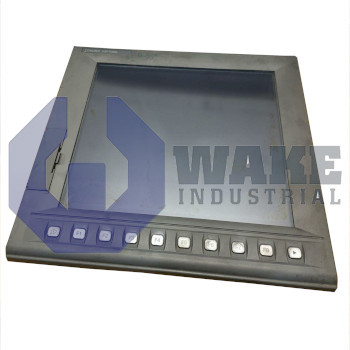
The Okuma OSP-P100 is a panel PC from the OSP CNC Monitors series, released in 2000. It runs on a Windows operating system and has a touch screen user interface. The monitor also features a dedicated screen for ATC/APC diagnosis and uses a coin battery for BIOS backup along with a UPS battery for power-loss backup.
Internal Product Review
The OSP-P100 is an Okuma panel PC CNC monitor built on a PC-base CNC platform. Windows operation and a touch screen interface give this unit efficient navigation and practical usability at the machine. A dedicated ATC/APC diagnosis screen adds strong service value, making the OSP-P100 a solid choice for CNC monitoring.
 Have a part to sell?
 Wake Industrial Warranty
To contact sales for pricing and lead time:
Payment Methods


Shipping Methods


Our Credentials


Product Description:
The OSP-P100 monitor is produced by Okuma within the OSP CNC Monitors series. As a CNC operator panel, it combines display, computing, and input functions so operators can program, visualize tool paths, and supervise process variables directly at the machine. It is intended for installations where a dedicated human-machine interface must survive continuous duty on turning centers, machining centers, and ancillary automation. By integrating the graphics controller and communication ports behind the screen, the unit reduces cabinet wiring and supports retrofit work on older controllers that require a modern visualization node.
Its construction is classified as a panel PC, meaning the motherboard, storage, and display assembly share a sealed front bezel that mounts flush on the enclosure door. The monitor uses a PC-based CNC architecture, so standard computing components handle visualization and I/O while the control platform manages machine functions. A factory-installed Windows environment hosts motion applications, part editors, and maintenance utilities, allowing software updates through standard networking methods. Interaction occurs through a touchscreen, eliminating membrane keypads and enabling contextual soft keys. During a mains interruption, an internal UPS battery maintains volatile memory and permits orderly shutdown to help prevent file corruption on the machine control disk.
Long-term settings are protected by a coin battery that backs up BIOS parameters and preserves boot sequences after extended storage. For service work on tool changers or pallet changers, an ATC/APC diagnostic function is available on a dedicated screen, which helps isolate mechanical faults without leaving production pages. The controller's 2000 release placed it in a generation that adopted Ethernet connectivity, supporting networked program transfer and communication with related control equipment.









