


E4809-045-106-G Okuma
Wake Industrial LLC is not an authorized distributor of this product.
- Straightforward Pricing: No Rush Fees, No Credit Card Fees
Current response time:
5 Minutes
3 Seconds
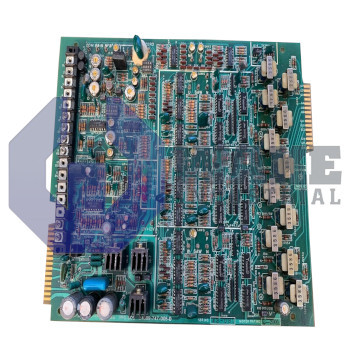
The Okuma E4809-045-106-G is a CRT Processor Board from the E4809 CNC Boards series. It supports color graphics output, three character display modes, and a total of four graphic screens. The board is compatible with OSP 5000 and 5020 controls and provides interfaces for keyboards, panels, and serial communication.


To contact sales for pricing and lead time:
Payment Methods


Shipping Methods


Our Credentials


Product Description:
The E4809-045-106-G is a CRT processor board developed by Okuma for the E4809 CNC Boards series. It serves as the display and graphics control module inside OSP numerical controllers, where it generates video signals and manages operator-panel communication for milling and turning centers. By combining video processing with panel data routing, the board converts internal machine data into visual information used for setup, monitoring, and diagnostics. In normal machine operation, it handles the screen activity that allows the control to present operating data to the monitor and receive panel responses.
At the hardware level, the board is a CRT Processor Board with logic for raster-scan timing, character generation, and color mixing. It supports 3 character display modes, and an internal character interface transfers ASCII codes from the CPU so text can appear without bitmap overhead. A Color graphics interface handles vector and bitmap elements, allowing the operator to view multicolored tool paths instead of monochrome outlines. Up to 4 graphic screens can reside in memory and be selected during operation. An LED data output line drives panel indicators, the CRT video output port sends the composite signal to the monitor, and compatibility with OSP 5000/5020 controls allows the board to operate within that controller family.
Additional interfaces shape how the CNC exchanges data with the operator and external equipment. The integrated keyboard data input channel forwards keystrokes from the front-panel matrix to the processor, while a dedicated serial interface exchanges part programs with DNC computers over RS signaling. Continuous traffic over the panel communication link moves switch states captured by the panel switch input group into memory so ladder logic can react without delay. On-board panel I/O diagnostics check lamp drive lines, and the buzzer data output provides audible alerts that can be synchronized with messages shown on the CRT display.









