


E4809-045-038-A Okuma
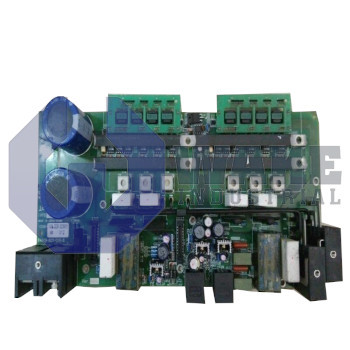
Wake Industrial LLC is not an authorized distributor of this product.
MPN: 1911-1103-332-55
No Tariffs On US Orders- Straightforward Pricing: No Rush Fees, No Credit Card Fees
Current response time:
6 Minutes
54 Seconds
The Okuma E4809-045-038-A is part of the E4809 CNC Boards series and features a Centronics parallel port type. It offers a serial channel CN0, with a maximum baud rate of 19200 bps and supports an 8-bit JIS data format with no default parity and 2 default stop bits.


To contact sales for pricing and lead time:
Payment Methods


Shipping Methods


Our Credentials


Product Description:
The E4809-045-038-A is a communication interface board produced by Okuma for the E4809 CNC Boards series. Installed inside machine controllers, this board handles serial and parallel data exchange between an Okuma CNC and external peripherals such as program loaders, terminals, or diagnostic PCs, allowing automated equipment to share part programs and status information with supervising systems.
At power-up the channel identified by the alias TT: is active; this label is what the control software references when directing data to the board. The default transmission speed is 4800 baud, a moderate rate that balances reliability with legacy cabling length. For applications that require slower device handshaking the board can drop to the minimum rate of 110 bps, while high-speed transfers are supported up to 19200 bps. Data words leave the port in the 8-bit JIS format so Japanese Industrial Standard encoded characters are passed without conversion. Each character concludes with 2 bits of stop signaling, giving connected equipment sufficient time to latch the byte before the next one starts.
Error detection relies on a parity setting of None; the board instead expects higher-level protocols to verify message integrity. Because the ready line is marked as Not Used, downstream hardware must rely on software-driven handshaking rather than a dedicated hardware acknowledge. When file transfers are executed through the board’s parallel connector, the signal arrangement matches the widely adopted Centronics pinout, allowing direct connection to printers or buffer boxes without custom wiring. For serial operations, users address physical port CN0, ensuring that the correct driver channel is enabled in the CNC parameters and that speed, word length, and stop timing remain consistent with the limits outlined earlier.